
Material · organic
Marine shell
North America — Southeast, North America — Eastern Woodlands, North America — Southwest, Mesoamerica, South America — Andes
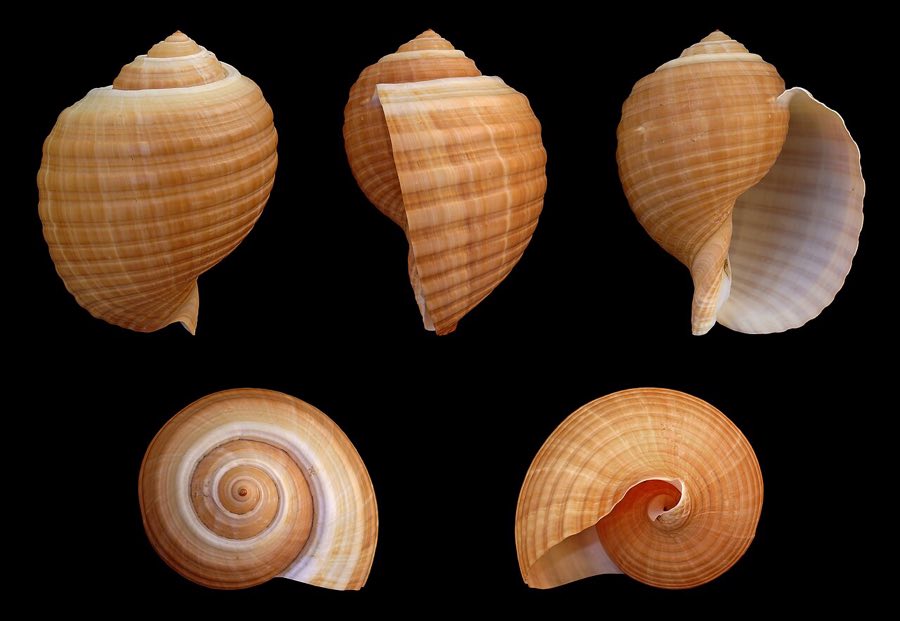
Marine shell was traded far inland from the Gulf and Atlantic coasts as whelk, conch and marginella for beads, gorgets, cups and pendants in the Southeast, Ohio Valley and Southwest, and Spondylus from Ecuador was the sacred shell of the Andes. Mississippian engraved gorgets and Hopewell shell cups are the great forms. Shell is fragile and often chalky when found.
| Kind | organic |
|---|---|
| Regions | North America — Southeast, North America — Eastern Woodlands, North America — Southwest, Mesoamerica, South America — Andes |
Sources
Whelk and conch came from the Gulf of Mexico and the Atlantic coast of Florida; Olivella and Glycymeris from the Gulf of California and the Pacific coast; Spondylus from the warm waters off Ecuador. Inland sites hundreds of miles from the coast received shell through hand-to-hand exchange.
Identification
Ancient shell is chalky, layered and often bleached white, with drill holes tapered from both sides and engraving that shows tool tracks; fresh shell is glossy. Busycon whelk gives large columella beads and gorgets; Spondylus is red or orange. Species can often be identified from structure.
Substitutes and fakes
Engraved gorgets are faked on modern shell with rotary tools and bleached; genuine gorgets show layered flaking and worn holes. Fresh columella beads and modern Spondylus carvings are also sold as ancient.
Cite this article
Stratum Strata. "Marine shell" (Material). Stratum Strata pack 2026.09, as of 2026-09-21. https://stratum.black/strata/materials/marine-shell. Accessed 2026-09-21.
@misc{stratum-marine-shell,
  title        = {Marine shell},
  author       = {{Stratum Strata}},
  howpublished = {\url{https://stratum.black/strata/materials/marine-shell}},
  year         = {2026},
  note         = {Material article, Stratum Strata pack 2026.09, as of 2026-09-21; sources: stratum, commons. Accessed 2026-09-21.}
}
Citations carry the pack version and the article's as-of date so they resolve to the same text later. The facts themselves belong to the sources listed below; cite those for the science.