
Culture · Late Preclassic
Shaft Tomb Tradition
300 BCE–400 CE, Mesoamerica
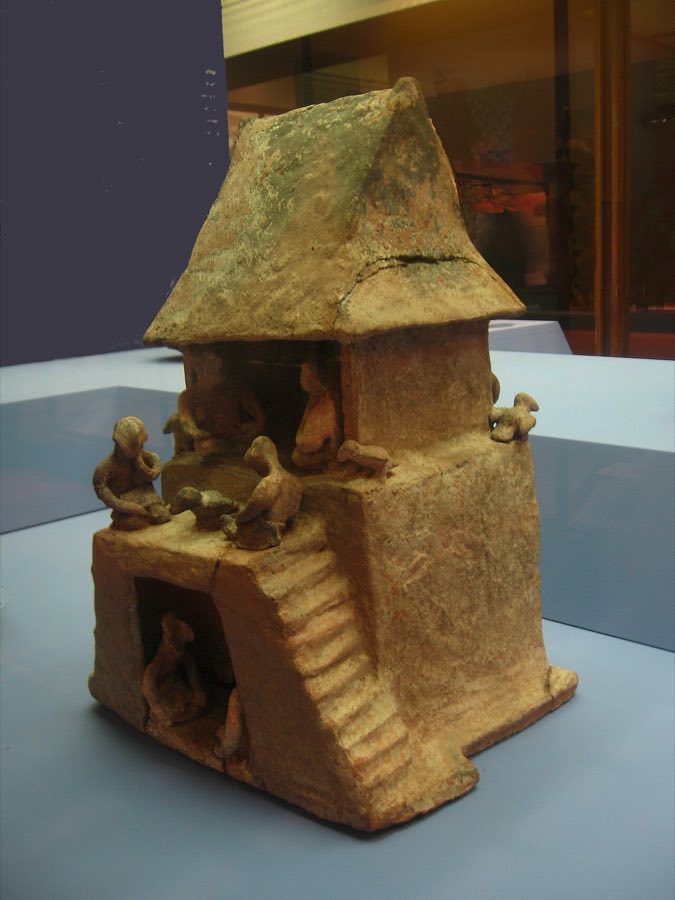
The shaft tomb tradition of west Mexico buried its dead in chambers at the bottom of vertical shafts up to 20 m deep between about 300 BCE and 400 CE, in the modern states of Colima, Jalisco and Nayarit, contemporary with the Teuchitlán circular ceremonial complexes near Guadalajara. The tombs held large hollow ceramic figures: red-burnished Colima dogs, warriors and vessels; cream-and-red Jalisco 'Ameca-Etzatlán' figures with elongated heads; polychrome Nayarit 'Ixtlán del Río' couples and house models. Almost every piece in collections came from looting between the 1930s and 1970s, when the style was popular with artists and Hollywood collectors, and the only scientifically excavated intact tomb is Huitzilapa, found in 1993.
| Dates | 300 BCE–400 CE |
|---|---|
| Period | Late Preclassic |
| Region | Mesoamerica |
| Areas | Colima, Jalisco, Nayarit, Michoacán (fringe) |
| Typical objects | Figurine, Vessel, Jar, Bowl |
| Typical materials | Terracotta, Obsidian, Marine shell |
Identification
Colima is red-burnished monochrome; Jalisco is larger, with sheep-faced elongated heads and slip in cream, red and black; Nayarit is polychrome with exaggerated noses, nose rings and small legs, and includes village scenes. Chupícuaro figurines from Guanajuato are earlier, solid and painted in geometric patterns.
Legality
Mexico's Federal Law on Monuments and Archaeological, Artistic and Historic Zones (1972) declares all pre-Hispanic objects the inalienable property of the nation and bans their export; the United States enforces this through the 1970 US–Mexico treaty on recovery of stolen archaeological property and the National Stolen Property Act rather than a CPIA designated list. Documented export before 1972 is the lawful basis for sale.
Reproductions and fakes
West Mexican figures have been forged since the 1950s in Colima and Guadalajara, often fired from moulds and aged with soil and manganese 'root marks'; thermoluminescence testing is standard, and genuine pieces show irregular burnishing, mineral deposits in cracks and a gritty pale core.
Cite this article
Stratum Strata. "Shaft Tomb Tradition" (Culture). Stratum Strata pack 2026.09, as of 2026-09-21. https://stratum.black/strata/cultures/shaft-tomb-tradition. Accessed 2026-09-21.
@misc{stratum-shaft-tomb-tradition,
  title        = {Shaft Tomb Tradition},
  author       = {{Stratum Strata}},
  howpublished = {\url{https://stratum.black/strata/cultures/shaft-tomb-tradition}},
  year         = {2026},
  note         = {Culture article, Stratum Strata pack 2026.09, as of 2026-09-21; sources: stratum, commons. Accessed 2026-09-21.}
}
Citations carry the pack version and the article's as-of date so they resolve to the same text later. The facts themselves belong to the sources listed below; cite those for the science.