Culture · Achaemenid
Achaemenid
550–330 BCE, Near East & Mesopotamia
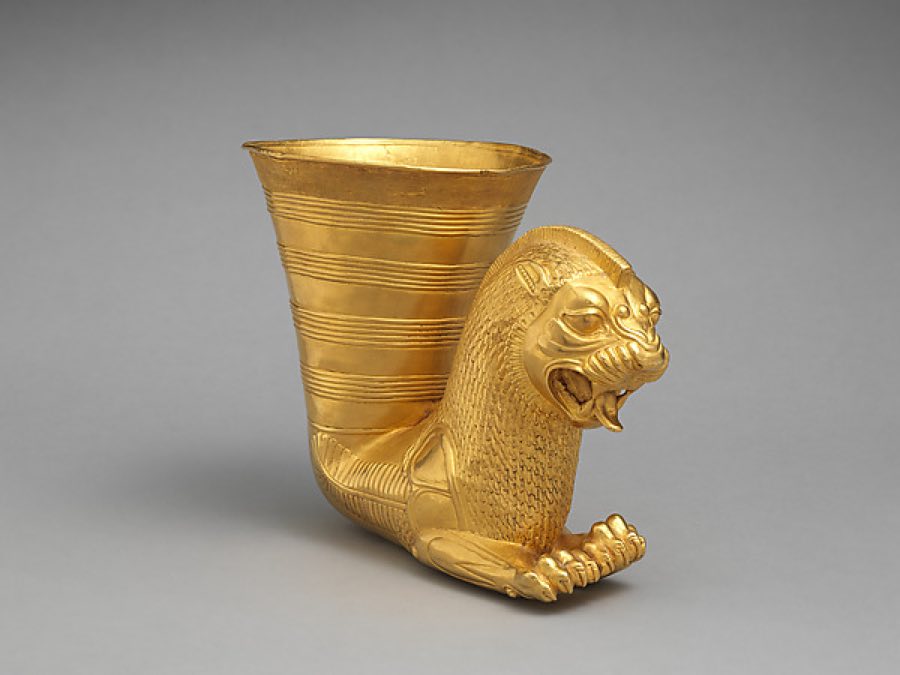
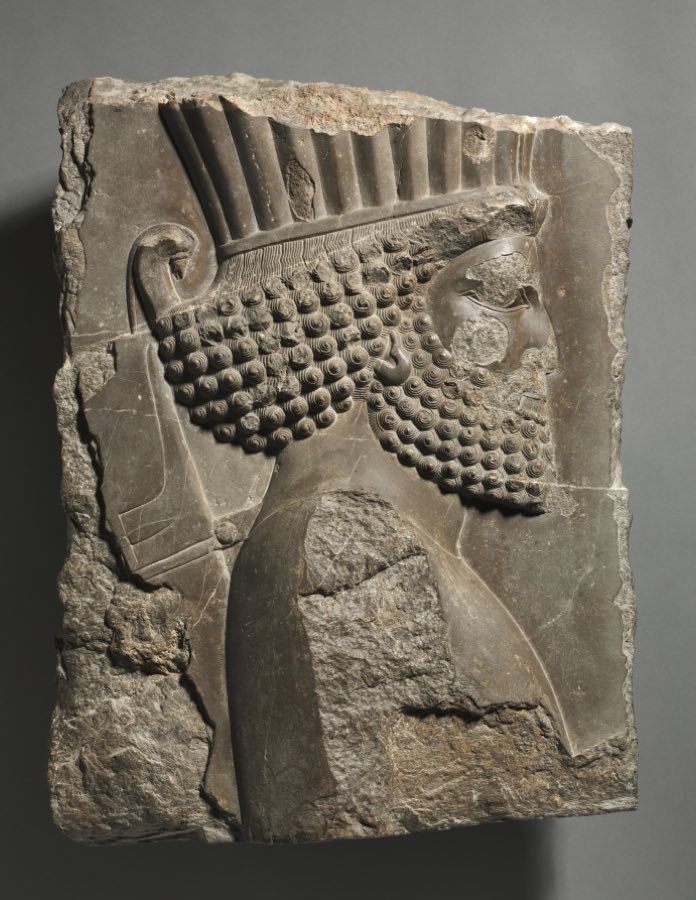
The Achaemenid Empire founded by Cyrus the Great in 550 BCE ruled from the Aegean to the Indus until Alexander destroyed it in 330 BCE, administered from Persepolis, Susa, Babylon and Ecbatana. Its court art in relief sculpture, gold and silver vessels, and cylinder and stamp seals is a controlled imperial style drawing on Assyrian, Babylonian, Egyptian and Greek craftsmanship. The trade sees sigloi and darics, silver phialai and rhyta, bronze weapons, glass bowls and seals showing the royal hero. The Oxus Treasure in the British Museum is the classic assemblage of Achaemenid goldwork.
| Dates | 550–330 BCE |
|---|---|
| Period | Achaemenid |
| Region | Near East & Mesopotamia |
| Areas | Iran (Fars, Persepolis, Pasargadae), Mesopotamia, Anatolia (Sardis), Levant, Egypt (27th Dynasty), Central Asia (Bactria, Sogdiana) |
| Typical objects | Coin, Seal, Vessel, Bowl, Bracelet, Spearhead, Dagger |
| Typical materials | Silver, Gold, Bronze, Terracotta, Glass |
Identification
Achaemenid seals show the royal hero grappling lions or griffins under the winged disc, cut in chalcedony; Persian silver bowls have lobed or petalled decoration and rhyta end in a lion or griffin protome. Bronze trilobate arrowheads and iron akinakes short swords are common weapons. Anatolian 'Graeco-Persian' gems mix Greek style with Persian subjects.
Legality
Iran's National Heritage Protection Act (1930) and later amendments make antiquities state property and prohibit export; Iraq's Antiquities and Heritage Law No. 55 (2002) does the same, and Iraq (since 2008), Syria, Egypt, Turkey, Jordan and Afghanistan have US CPIA restrictions or emergency restrictions. Iranian antiquities are additionally subject to US OFAC sanctions on trade with Iran, so imports of Persian material need pre-1979 provenance.
Reproductions and fakes
Achaemenid silver vessels and gold appliqués are forged extensively, including on a large scale in the 1970s with genuine ancient silver; laboratory analysis and stylistic comparison with Persepolis and Oxus material are essential. Darics are among the most-faked ancient gold coins.
Photographs
Elsewhere
- met: 324291
- Wikidata: Q389688
- Wikipedia: Achaemenid Empire
Cite this article
Stratum Study. "Achaemenid" (Culture). Stratum Study pack 2026.09, as of 2026-09-21. https://stratum.black/study/cultures/achaemenid. Accessed 2026-09-21.
@misc{stratum-achaemenid,
  title        = {Achaemenid},
  author       = {{Stratum Study}},
  howpublished = {\url{https://stratum.black/study/cultures/achaemenid}},
  year         = {2026},
  note         = {Culture article, Stratum Study pack 2026.09, as of 2026-09-21; sources: stratum, wikidata, met, cleveland. Accessed 2026-09-21.}
}
Citations carry the pack version and the article's as-of date so they resolve to the same text later. The facts themselves belong to the sources listed below; cite those for the science.