
Material · metal
Silver
Europe — Mediterranean, Europe — Western & Central, Europe — Northern & British Isles, Near East & Mesopotamia, South America — Andes
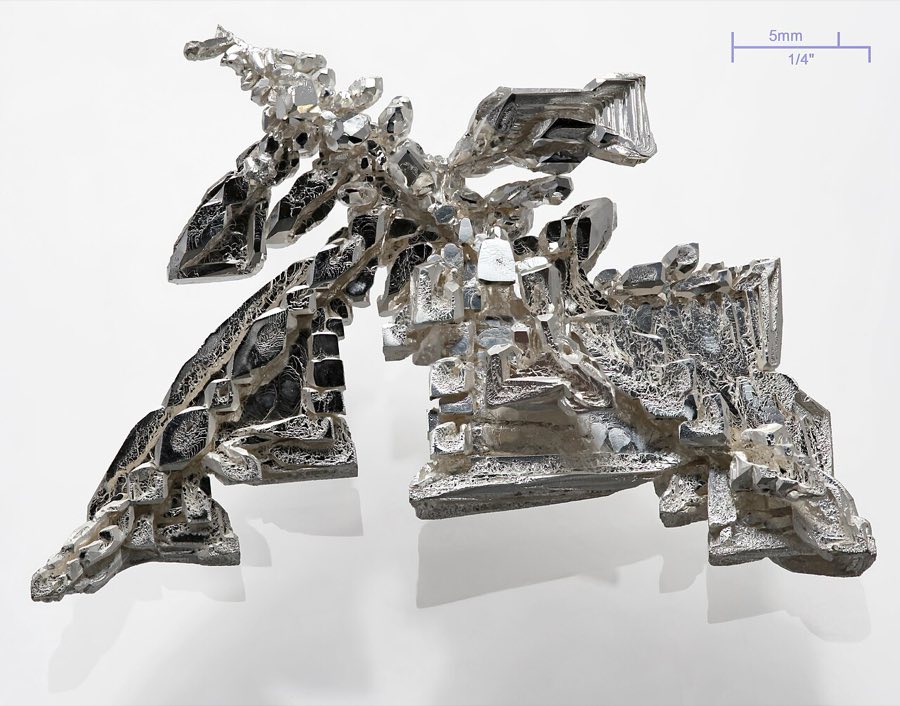
Silver was used for coinage, vessels, jewellery and ornaments from the third millennium BCE, with Greek, Roman, Sasanian and medieval coins the most abundant silver antiquities, and Anglo-Saxon, Viking and Andean silverwork the great craft categories. It tarnishes black and, when buried, corrodes to brittle horn silver. Hack-silver hoards mark the Viking bullion economy.
| Kind | metal |
|---|---|
| Regions | Europe — Mediterranean, Europe — Western & Central, Europe — Northern & British Isles, Near East & Mesopotamia, South America — Andes |
Sources
Ancient silver came from Laurion in Attica, the Iberian mines of Rio Tinto and Cartagena, Sardinia, Anatolia, the Hindu Kush and, in the Americas, Potosí and the Andean highlands. Lead isotope ratios in the silver can often point to the ore field.
Identification
Ancient silver is alloyed with copper and shows a grey to black tarnish, purple-black horn silver corrosion and crystalline embrittlement; coins show flow lines from striking. Modern silver is bright and ductile. Lead isotope analysis sources it.
Substitutes and fakes
Silver coins are cast and struck as fakes in great numbers; genuine coins show flow lines, edge cracks and toning. Silver jewellery is reproduced from originals and artificially toned.
Elsewhere
- Wikidata: Q1090
- Wikipedia: silver
Cite this article
Stratum Study. "Silver" (Material). Stratum Study pack 2026.09, as of 2026-09-21. https://stratum.black/study/materials/silver. Accessed 2026-09-21.
@misc{stratum-silver,
  title        = {Silver},
  author       = {{Stratum Study}},
  howpublished = {\url{https://stratum.black/study/materials/silver}},
  year         = {2026},
  note         = {Material article, Stratum Study pack 2026.09, as of 2026-09-21; sources: stratum, wikidata, commons. Accessed 2026-09-21.}
}
Citations carry the pack version and the article's as-of date so they resolve to the same text later. The facts themselves belong to the sources listed below; cite those for the science.