Culture · Early Medieval
Anglo-Saxon
450–1066 CE, Europe — Northern & British Isles
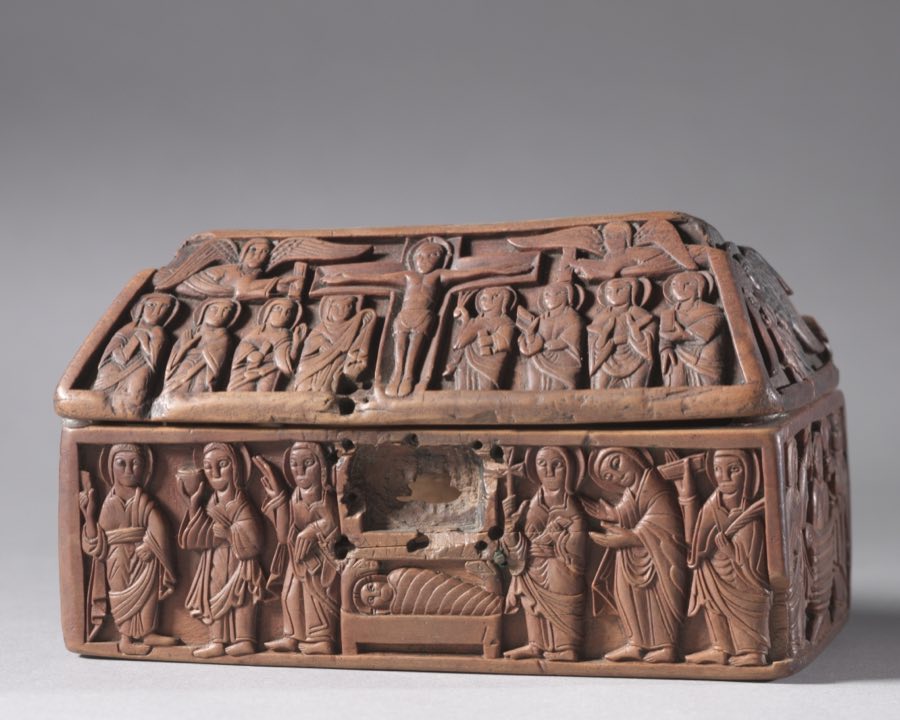
The Anglo-Saxons were the Germanic peoples who settled and ruled England from the fifth century until the Norman conquest of 1066, converting to Christianity in the seventh century and creating kingdoms that unified under Wessex. Early cemeteries with furnished graves, the ship burial at Sutton Hoo and the Staffordshire Hoard define their material culture. Collectors hold brooches, beads, strap ends, pins, sceattas and pennies, mostly metal-detected finds recorded through the PAS.
| Dates | 450–1066 CE |
|---|---|
| Period | Early Medieval |
| Region | Europe — Northern & British Isles |
| Areas | England |
| Typical objects | Brooch, Coin, Bead, Sword |
| Typical materials | Bronze, Silver, Iron, Gold |
Identification
Early Anglo-Saxon brooches come in cruciform, square-headed, small-long, saucer and disc forms in gilt copper alloy, with chip-carved animal ornament; beads are glass and amber. Middle and Late Saxon material includes strap ends with animal heads, hooked tags, pins, stirrup mounts and Winchester-style ornament. Coins run from thrymsas and sceattas to broad pennies with mint and moneyer.
Legality
In England and Wales, Anglo-Saxon finds from private land with landowner permission are legal and are recorded with the Portable Antiquities Scheme; gold, silver and hoards must be reported under the Treasure Act, and a 2023 amendment extends Treasure to significant base-metal finds. Grave goods from cemeteries excavated professionally are museum property.
Reproductions and fakes
Anglo-Saxon brooches and pennies are reproduced for reenactors and jewellery makers and then appear on the market as old finds; look for mould seams, modern gilding and pins that are too straight. Sceattas and pennies are struck from modern dies and are hard to detect without die comparison. Garnet cloisonné work offered privately is almost always modern.
Elsewhere
- Wikidata: Q24175580
- Wikipedia: Anglo-Saxon culture
Cite this article
Stratum Study. "Anglo-Saxon" (Culture). Stratum Study pack 2026.09, as of 2026-09-21. https://stratum.black/study/cultures/anglo-saxon. Accessed 2026-09-21.
@misc{stratum-anglo-saxon,
  title        = {Anglo-Saxon},
  author       = {{Stratum Study}},
  howpublished = {\url{https://stratum.black/study/cultures/anglo-saxon}},
  year         = {2026},
  note         = {Culture article, Stratum Study pack 2026.09, as of 2026-09-21; sources: stratum, wikidata, cleveland. Accessed 2026-09-21.}
}
Citations carry the pack version and the article's as-of date so they resolve to the same text later. The facts themselves belong to the sources listed below; cite those for the science.