
Material · lithic
Chert
North America — Eastern Woodlands, North America — Southeast, North America — Great Plains, North America — Southwest
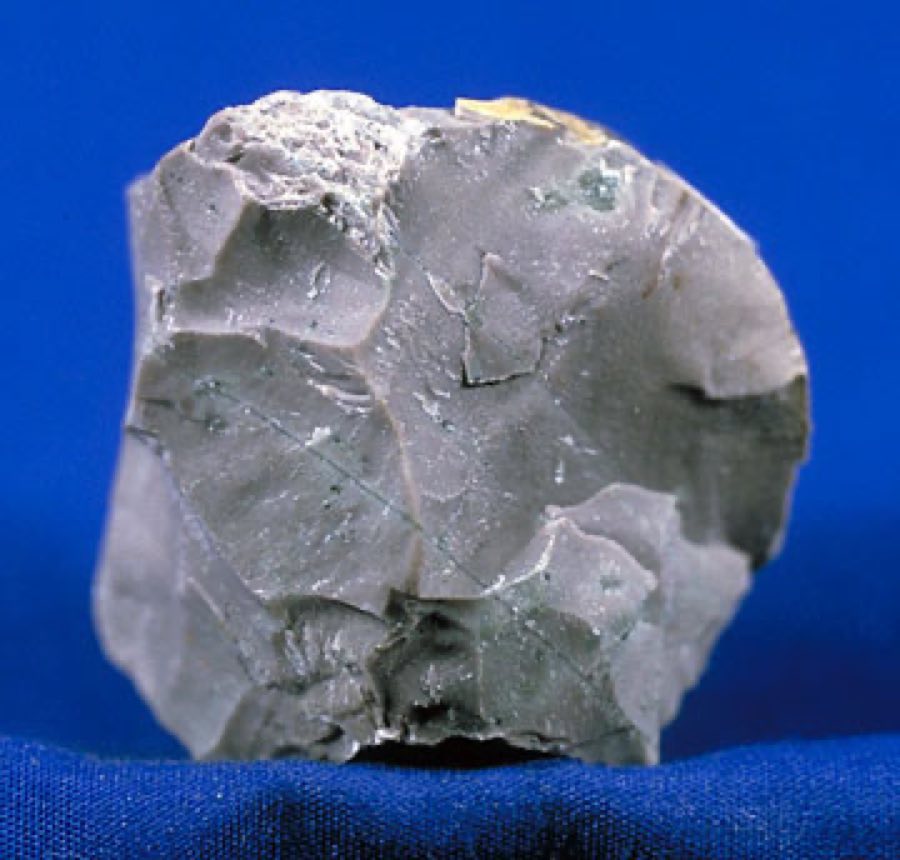
Chert is the generic term for cryptocrystalline sedimentary silica used for chipped-stone tools throughout North America and the world when the specific source is not identified. It occurs as nodules and beds in limestone and as cobbles in gravels. Most points in any collection are simply 'chert'.
| Kind | lithic |
|---|---|
| Regions | North America — Eastern Woodlands, North America — Southeast, North America — Great Plains, North America — Southwest |
Sources
Chert occurs worldwide in Palaeozoic and Mesozoic limestones and dolomites and in gravels derived from them; in North America notable formations include the Burlington, Fort Payne, Edwards, Vanport and Onondaga. Local outcrops supplied most everyday tools while the finest cherts were carried and traded long distances.
Identification
Chert is opaque to slightly translucent, in any colour, with a conchoidal fracture and a dull to waxy lustre; identification to source requires comparison with type collections or geochemistry. Heat treatment adds gloss and reddens iron-bearing varieties. Patina forms by leaching.
Substitutes and fakes
All chert points can be reproduced, and modern heat treatment and chemical patination are the usual disguises. Look for patina that penetrates flake scars evenly, edge wear and reliable provenance.
Elsewhere
- Wikidata: Q1070438
- Wikipedia: chert
Cite this article
Stratum Study. "Chert" (Material). Stratum Study pack 2026.09, as of 2026-09-21. https://stratum.black/study/materials/chert. Accessed 2026-09-21.
@misc{stratum-chert,
  title        = {Chert},
  author       = {{Stratum Study}},
  howpublished = {\url{https://stratum.black/study/materials/chert}},
  year         = {2026},
  note         = {Material article, Stratum Study pack 2026.09, as of 2026-09-21; sources: stratum, wikidata, commons. Accessed 2026-09-21.}
}
Citations carry the pack version and the article's as-of date so they resolve to the same text later. The facts themselves belong to the sources listed below; cite those for the science.