Culture · Middle Horizon
Wari
600–1000 CE, South America — Andes
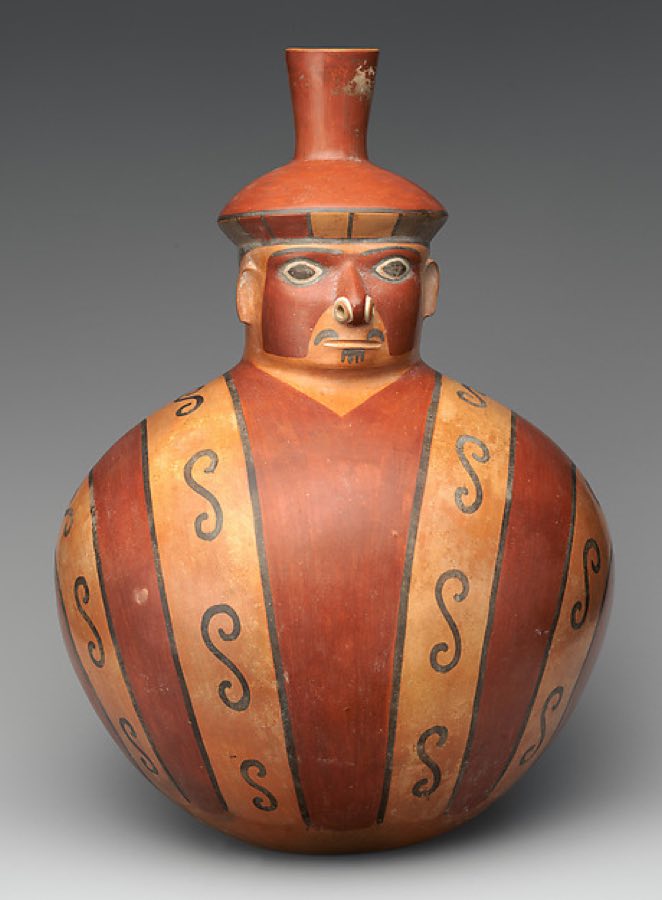
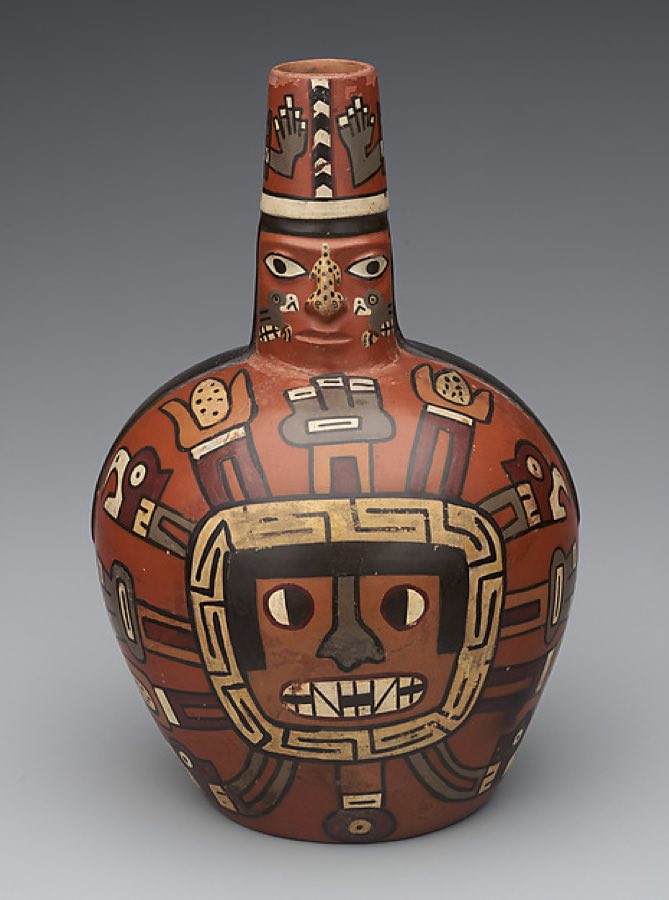
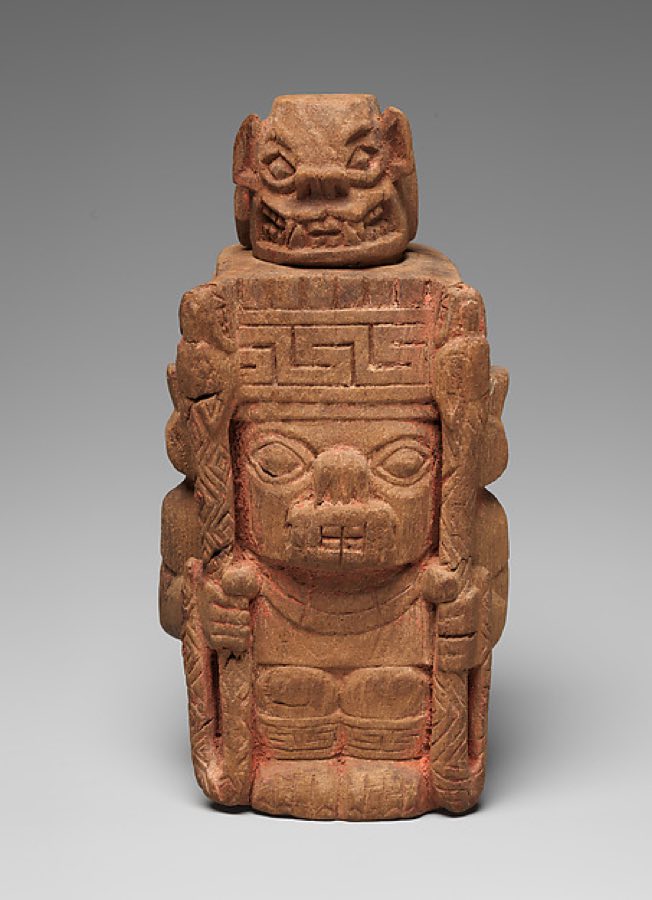
Wari was the first expansive state in the Andes, ruling from its capital near Ayacucho between about 600 and 1000 CE and building planned administrative centres such as Pikillacta and Viracochapampa along highland roads later used by the Inca. Its art shares the Staff God and profile winged attendants with contemporary Tiwanaku, rendered on polychrome ceramics, tapestry tunics of extraordinary thread count and small turquoise figurines. The Wari tunic, with its compressed and abstracted figures, is the finest textile of the ancient Americas. Royal tombs at El Castillo de Huarmey, excavated in 2012, showed the wealth of the elite.
| Dates | 600–1000 CE |
|---|---|
| Period | Middle Horizon |
| Region | South America — Andes |
| Areas | Ayacucho (Huari), Central and southern Peruvian highlands, Peruvian coast (Pachacamac, Nasca), Cusco region (Pikillacta) |
| Typical objects | Vessel, Bowl, Figurine, Pendant, Bead |
| Typical materials | Terracotta, Turquoise, Marine shell, Gold, Silver, Bronze |
Identification
Wari pottery is a thick polychrome with black outlines around cream, red, grey and purple zones, often on face-neck jars and large urns; Tiwanaku pottery is thinner and the kero beaker is its signature shape. Wari tapestry tunics are interlocked and warp-faced with the design distorted toward the edges. Turquoise and shell figurines about 50 mm high and 'four-cornered hats' in knotted pile are diagnostic.
Legality
Peru's Law 28296 (2004) on the National Cultural Heritage declares all pre-Columbian objects the property of the nation and bans export; a US–Peru CPIA agreement has been in force since 1997 covering all pre-Columbian archaeological material, so Wari objects need documented presence outside Peru before that date. Wari textiles are the most frequently smuggled category.
Reproductions and fakes
Wari tunics and hats are forged from ancient fibre and, more often, genuine fragments are reassembled and completed; ceramics are copied in Ayacucho and Lima. Genuine textiles show consistent fading and wear, and genuine pots have worn bases and mineral deposits.
Photographs
Elsewhere
- met: 315052
Cite this article
Stratum Study. "Wari" (Culture). Stratum Study pack 2026.09, as of 2026-09-21. https://stratum.black/study/cultures/wari. Accessed 2026-09-21.
@misc{stratum-wari,
  title        = {Wari},
  author       = {{Stratum Study}},
  howpublished = {\url{https://stratum.black/study/cultures/wari}},
  year         = {2026},
  note         = {Culture article, Stratum Study pack 2026.09, as of 2026-09-21; sources: stratum, met. Accessed 2026-09-21.}
}
Citations carry the pack version and the article's as-of date so they resolve to the same text later. The facts themselves belong to the sources listed below; cite those for the science.