Culture · Late Intermediate Period
Chimú
1000–1470 CE, South America — Andes
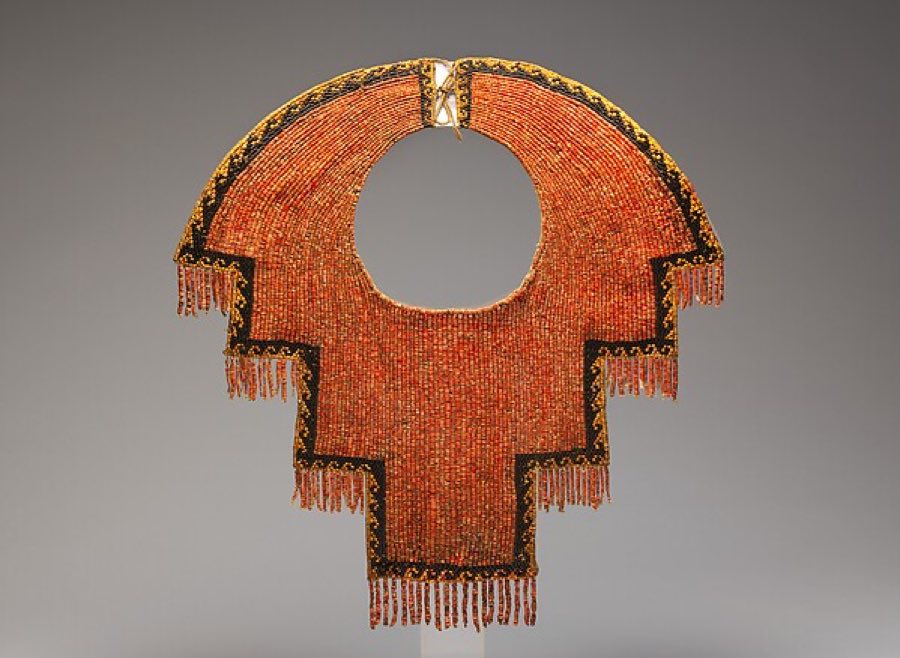
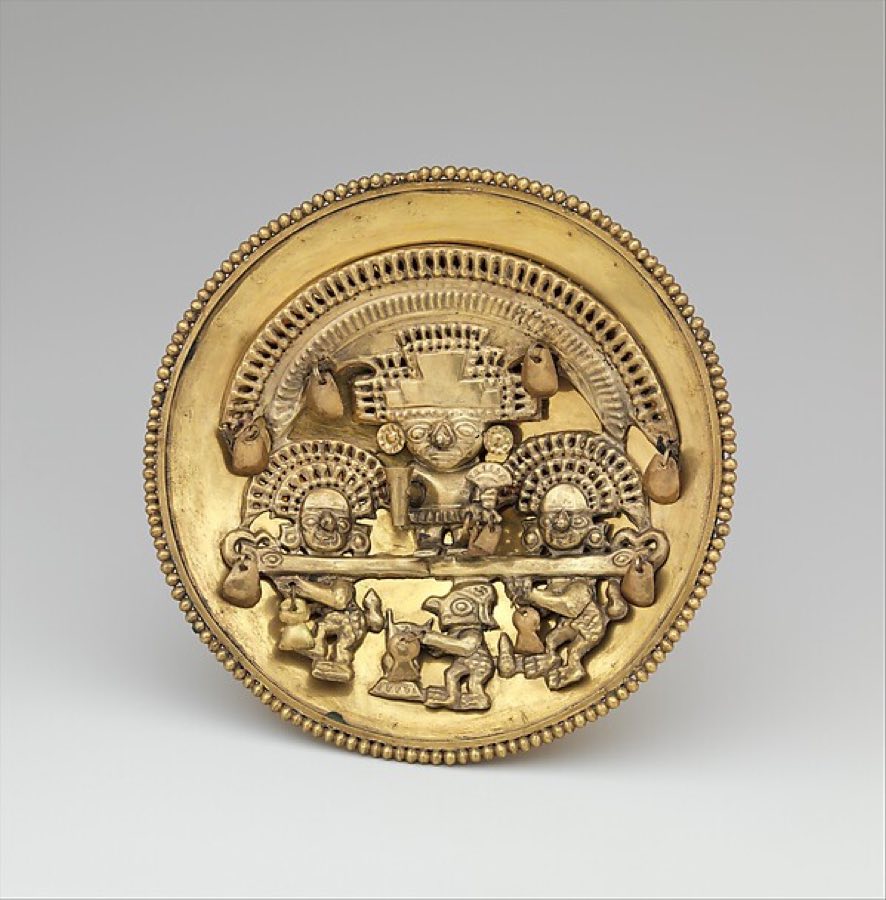
The kingdom of Chimor ruled Peru's north coast from Chan Chan, the largest adobe city in the Americas, from about 1000 CE until the Inca conquered it around 1470. Chimú craftsmen mass-produced black reduction-fired pottery in moulds, hammered gold and silver into masks, ear spools, beakers and tumi knives, and wove tapestries and feather cloth. The royal compounds of Chan Chan were looted from the sixteenth century onward and much Chimú gold in collections comes from that long history of huaquero digging. After the conquest, Chimú metalworkers were moved to Cusco to work for the Inca.
| Dates | 1000–1470 CE |
|---|---|
| Period | Late Intermediate Period |
| Region | South America — Andes |
| Areas | Peruvian north coast (Moche, Chicama, Jequetepeque, Lambayeque valleys), Chan Chan |
| Typical objects | Vessel, Bottle, Mask, Pendant, Bead, Bracelet |
| Typical materials | Terracotta, Gold, Silver, Bronze, Marine shell, Turquoise |
Identification
Chimú blackware with moulded relief and spout monkeys is distinctive; Chimú gold masks have a flat face, almond eyes and dangling pendants, often with red cinnabar paint, and are of thin sheet with a high silver content. Lambayeque (Sicán) precedes Chimú with the Sicán lord's face; Inca-Chimú hybrids show Inca shapes in Chimú fabric.
Legality
Peru's Law 28296 (2004) makes all pre-Columbian objects national property and bans export; the US–Peru CPIA agreement (since 1997) restricts import of all pre-Columbian archaeological material, and Peru actively seeks repatriation. Chimú gold and silver require particularly rigorous pre-1997 provenance.
Reproductions and fakes
Blackware is reproduced from moulds taken off originals; gold masks and tumi knives are forged in modern sheet with fake cinnabar. Genuine metal shows fine cracking, wear at the perforations and hammered surfaces; genuine pottery has a worn base and interior deposits.
Photographs
Elsewhere
- met: 319053
- Wikidata: Q901198
- Wikipedia: Chimú culture
Cite this article
Stratum Study. "Chimú" (Culture). Stratum Study pack 2026.09, as of 2026-09-21. https://stratum.black/study/cultures/chimu. Accessed 2026-09-21.
@misc{stratum-chimu,
  title        = {Chimú},
  author       = {{Stratum Study}},
  howpublished = {\url{https://stratum.black/study/cultures/chimu}},
  year         = {2026},
  note         = {Culture article, Stratum Study pack 2026.09, as of 2026-09-21; sources: stratum, wikidata, met. Accessed 2026-09-21.}
}
Citations carry the pack version and the article's as-of date so they resolve to the same text later. The facts themselves belong to the sources listed below; cite those for the science.