
Culture · Late Bronze Age
Urnfield
1300–750 BCE, Europe — Western & Central
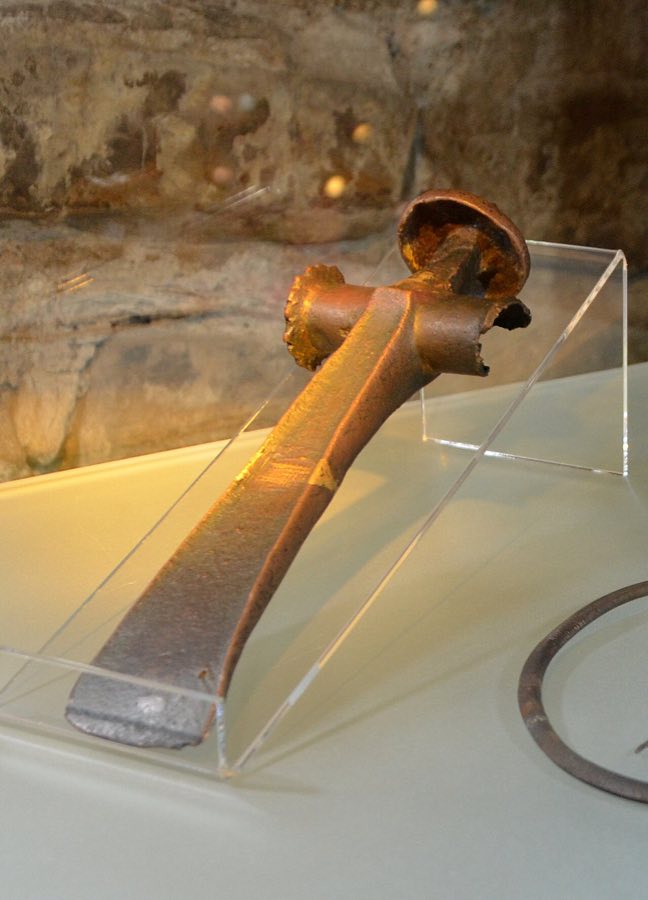
The Urnfield culture spans the Late Bronze Age of central Europe, Italy and eastern France from about 1,300 to 750 BCE and takes its name from cremation cemeteries where ashes were buried in urns. It saw a huge expansion of bronze production, the introduction of the slashing sword and the deposition of hoards of scrap and votive metal. Collectors hold socketed axes, leaf-shaped swords, spearheads, knives, razors, pins and sheet-bronze vessels, most from hoards found before modern laws.
| Dates | 1300–750 BCE |
|---|---|
| Period | Late Bronze Age |
| Region | Europe — Western & Central |
| Areas | Central Europe, Italy, Eastern France |
| Typical objects | Axe head, Sword, Urn, Brooch |
| Typical materials | Bronze, Terracotta |
Identification
Leaf-shaped flange-hilted swords, socketed axes with loops, socketed spearheads, knives with flanged hilts and razors are the main tool and weapon types; violin-bow and arc fibulae appear alongside long pins. Sheet-bronze cups, buckets and cauldrons with rivets are a high-end category. Pottery is fluted and burnished with knobbed decoration.
Legality
In Germany, Austria, Switzerland, France and Italy Bronze Age finds belong to the state or Land and hoards must be reported; export of significant items needs a licence. Material with old auction or collection records is legitimately traded, but recent metal-detected hoards are not.
Reproductions and fakes
Bronze Age swords and axes have been reproduced since the nineteenth century, and modern casts with acid-induced green patina are common on internet auctions. Look for casting seams left unfinished, patina without stratification or mineral inclusions, and blade edges without hammer hardening. X-ray fluorescence can reveal modern alloy compositions.
Elsewhere
- Wikidata: Q223998
- Wikipedia: Urnfield culture
Cite this article
Stratum Study. "Urnfield" (Culture). Stratum Study pack 2026.09, as of 2026-09-21. https://stratum.black/study/cultures/urnfield. Accessed 2026-09-21.
@misc{stratum-urnfield,
  title        = {Urnfield},
  author       = {{Stratum Study}},
  howpublished = {\url{https://stratum.black/study/cultures/urnfield}},
  year         = {2026},
  note         = {Culture article, Stratum Study pack 2026.09, as of 2026-09-21; sources: stratum, wikidata, commons. Accessed 2026-09-21.}
}
Citations carry the pack version and the article's as-of date so they resolve to the same text later. The facts themselves belong to the sources listed below; cite those for the science.