
Culture · Hallstatt
Hallstatt
800–450 BCE, Europe — Western & Central
The Hallstatt culture of the early Iron Age, about 800 to 450 BCE, spread across Austria, southern Germany, Switzerland, eastern France and Bohemia, taking its name from the salt-mine cemetery at Hallstatt in Austria. It saw the rise of princely hillforts such as the Heuneburg, wagon burials with gold and Mediterranean imports, and the first iron swords. Collectors hold bronze and iron brooches, belt plates, pins, bracelets, and ceramics; swords and gold are museum material.
| Dates | 800–450 BCE |
|---|---|
| Period | Hallstatt |
| Region | Europe — Western & Central |
| Areas | Austria, Southern Germany, Eastern France, Bohemia |
| Typical objects | Brooch, Sword, Dagger, Vessel |
| Typical materials | Bronze, Iron, Gold |
Identification
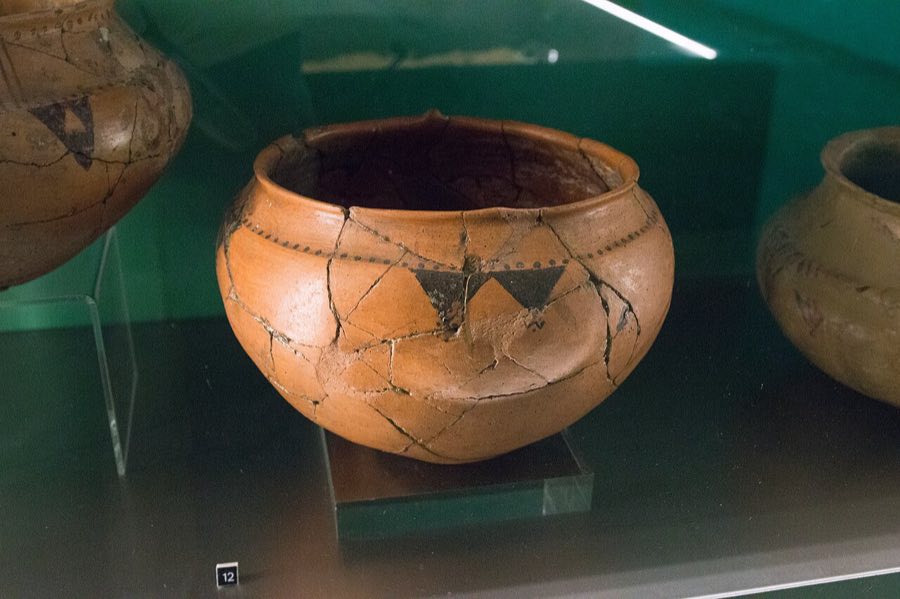
Hallstatt metalwork includes boat, serpentine and drum fibulae, long iron swords with pommels of iron or bronze, antenna-hilted daggers, sheet-bronze belt plates with repoussé and situlae decorated with processions. Pottery is polychrome painted with geometric and figurative designs. Graphite-coated black ware and Attic imports date rich graves.
Legality
Hallstatt finds in Austria, Germany, Switzerland, France and the Czech Republic are state property with reporting duties and export controls, and the Hallstatt cemetery itself is a World Heritage site. Old collection material from nineteenth-century excavations is the main legitimate source.
Reproductions and fakes
Hallstatt fibulae and belt plates are reproduced and patinated for the reenactment and collector markets; genuine bronze shows layered patina with cuprite under malachite and wear on the spring and catch. Iron objects with an even black surface and no lamination are usually modern.
Elsewhere
- Wikidata: Q202165
- Wikipedia: Hallstatt culture
Cite this article
Stratum Strata. "Hallstatt" (Culture). Stratum Strata pack 2026.09, as of 2026-09-21. https://stratum.black/strata/cultures/hallstatt. Accessed 2026-09-21.
@misc{stratum-hallstatt,
  title        = {Hallstatt},
  author       = {{Stratum Strata}},
  howpublished = {\url{https://stratum.black/strata/cultures/hallstatt}},
  year         = {2026},
  note         = {Culture article, Stratum Strata pack 2026.09, as of 2026-09-21; sources: stratum, wikidata, commons. Accessed 2026-09-21.}
}
Citations carry the pack version and the article's as-of date so they resolve to the same text later. The facts themselves belong to the sources listed below; cite those for the science.