
Site · Austria
Hallstatt
Hallstatt, La Tène, 1300–400 BCE
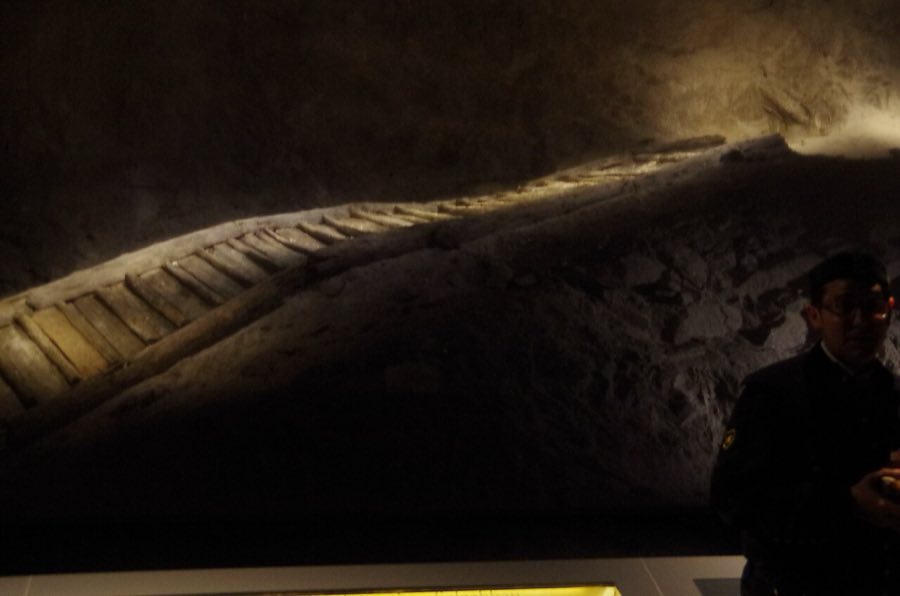
Hallstatt is the type site of the Early Iron Age, where the wealth from salt mining between about 1300 and 400 BCE created a cemetery rich enough to define a European period. Ongoing excavations in the mine by the Natural History Museum Vienna have found prehistoric mining preserved in salt, the oldest known wooden staircase and evidence of pork curing. The village beside the lake is one of Austria's most visited places.
| Country | Austria |
|---|---|
| Dates | 1300–400 BCE |
| Status | UNESCO World Heritage Site (Hallstatt-Dachstein/Salzkammergut Cultural Landscape, 1997) with a show mine and a museum |
| Managed by | Salzwelten GmbH (mine) and Natural History Museum Vienna (excavations); Museum Hallstatt |
| Access | The Salzwelten show mine is reached by funicular and open from spring to autumn; the Hallstatt Museum in the village displays cemetery finds year-round. |
| Coordinates | 47.562, 13.649 (public site) |
What was found
Johann Georg Ramsauer excavated about 1,000 graves between 1846 and 1863, with bronze vessels, swords, daggers, fibulae and imported goods that named the period; the mine has yielded Bronze Age and Iron Age wooden tools, leather sacks, textiles and a preserved wooden staircase of 1344 BCE.
Rules
Nothing may be collected; Austria's Denkmalschutzgesetz (Monument Protection Act) makes archaeological finds reportable and subject to the Federal Monuments Authority, with excavation only under permit. This article is for study and context only and is not a collecting locality.
Elsewhere
Cite this article
Stratum Strata. "Hallstatt" (Site). Stratum Strata pack 2026.09, as of 2026-09-21. https://stratum.black/strata/sites/hallstatt. Accessed 2026-09-21.
@misc{stratum-hallstatt,
  title        = {Hallstatt},
  author       = {{Stratum Strata}},
  howpublished = {\url{https://stratum.black/strata/sites/hallstatt}},
  year         = {2026},
  note         = {Site article, Stratum Strata pack 2026.09, as of 2026-09-21; sources: stratum, wikidata, commons. Accessed 2026-09-21.}
}
Citations carry the pack version and the article's as-of date so they resolve to the same text later. The facts themselves belong to the sources listed below; cite those for the science.