Culture · Late Antique
Byzantine
330–1453 CE, Europe — Mediterranean
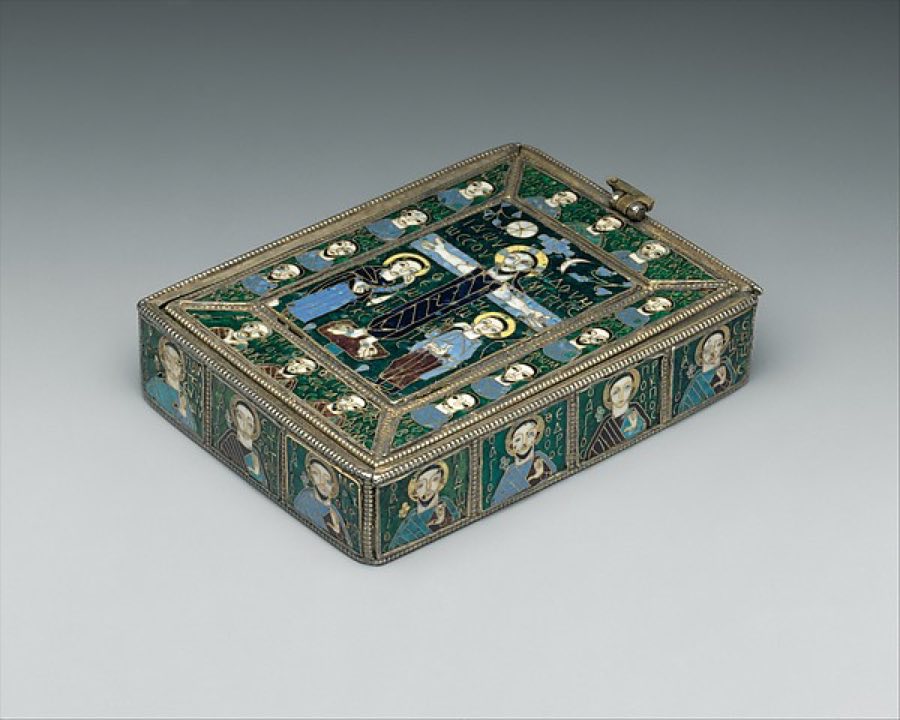
The Byzantine Empire is the Eastern Roman state from the founding of Constantinople in 330 CE to its fall in 1453, Greek-speaking and Orthodox Christian, with its territory shrinking from the whole eastern Mediterranean to a few Aegean cities. Its coinage, the gold solidus and copper follis, was the international currency of the early Middle Ages; its lead seals, tens of thousands of which survive, record officials and churchmen. Dealers meet Byzantine bronze crosses, buckles and belt fittings, oil lamps, glass, pilgrim flasks from the Holy Land, steelyard weights and icons of later date. Early Byzantine material overlaps with Late Antique Roman.
| Dates | 330–1453 CE |
|---|---|
| Period | Late Antique |
| Region | Europe — Mediterranean |
| Areas | Constantinople, Anatolia, Greece and the Balkans, Syria and the Levant, Egypt (to 641), Italy (Ravenna, Sicily) |
| Typical objects | Coin, Seal, Brooch, Pendant, Oil lamp, Amulet, Glass vessel, Vessel |
| Typical materials | Gold, Silver, Bronze, Lead, Glass, Terracotta |
Identification
Byzantine coins are recognised by frontal imperial busts, Christian reverses and Greek legends; lead seals have a Greek monogram or inscription and an image of the Virgin or a saint. Bronze crosses with flared arms, 'Byzantine' belt buckles of the Corinth and Syracuse types, and ampullae of St Menas are common small finds. Middle Byzantine glazed white ware and sgraffito pottery follows the earlier Late Roman red slip.
Legality
Turkey's Law 2863 on the Protection of Cultural and Natural Property (1983) makes all antiquities state property and bans export; Greek Law 3028/2002 does the same; Cyprus, Italy, Bulgaria, Syria, Egypt, Jordan and Lebanon each have patrimony laws, and Cyprus (with a specific emphasis on Byzantine ecclesiastical objects), Greece, Italy, Bulgaria, Egypt and Syria are covered by US CPIA restrictions or emergency import restrictions. Byzantine ecclesiastical objects from occupied northern Cyprus are a special concern.
Reproductions and fakes
Byzantine gold coins are faked in cast and modern-struck form; lead seals are cast in lead from originals and lack the struck edge; bronze crosses and buckles are cast from originals with sprayed patina. Genuine bronze shows layered green and red corrosion and worn suspension loops.
Photographs
Elsewhere
- met: 472562
- Wikidata: Q928904
- Wikipedia: Byzantine culture
Cite this article
Stratum Strata. "Byzantine" (Culture). Stratum Strata pack 2026.09, as of 2026-09-21. https://stratum.black/strata/cultures/byzantine. Accessed 2026-09-21.
@misc{stratum-byzantine,
  title        = {Byzantine},
  author       = {{Stratum Strata}},
  howpublished = {\url{https://stratum.black/strata/cultures/byzantine}},
  year         = {2026},
  note         = {Culture article, Stratum Strata pack 2026.09, as of 2026-09-21; sources: stratum, wikidata, met. Accessed 2026-09-21.}
}
Citations carry the pack version and the article's as-of date so they resolve to the same text later. The facts themselves belong to the sources listed below; cite those for the science.