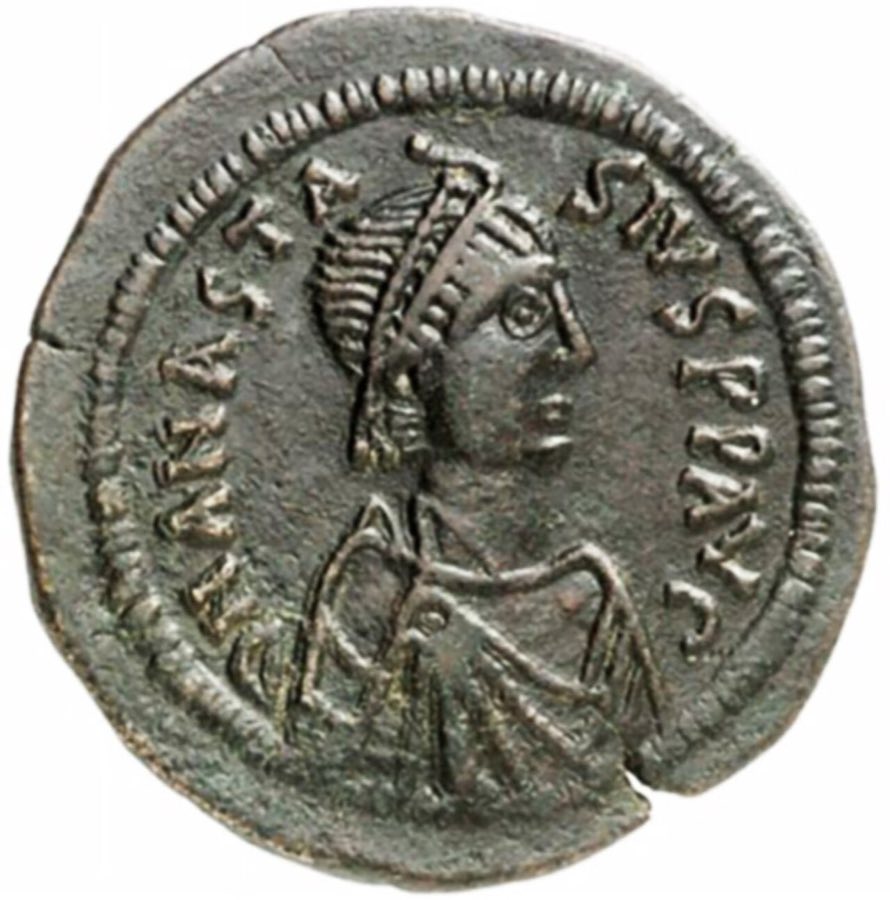

Coin · Late Antique
Follis
294–350 CE, Roman
The follis is the silver-washed bronze coin introduced by Diocletian's reform of 294 CE and struck by the tetrarchs and Constantine's house, shrinking steadily to a small nummus by 350. It is found in vast numbers across the late empire and is the entry-level ancient coin. Mint marks identify the striking mint.
| Object | Coin |
|---|---|
| Dates | 294–350 CE |
| Period | Late Antique |
| Cultures | Roman |
| Regions | Europe — Mediterranean, Europe — Western & Central, Europe — Northern & British Isles |
Diagnostic traits
Bronze coin with a thin silver wash introduced by Diocletian; shrinks steadily in size through the Constantinian period.
Identification
Early folles are large, about 27 mm, with a laureate bust and Genius reverse; later ones are smaller with campgate, soldiers-and-standards and VOT types. The silver wash rarely survives. Mint marks in the exergue distinguish it from later Byzantine folles.
Reproductions and fakes
Rarely faked because of low value, but cleaned and repatinated coins are common. Bulk uncleaned lots often contain modern fakes of rarer types.
Cite this article
Stratum Strata. "Follis" (Artifact type). Stratum Strata pack 2026.09, as of 2026-09-21. https://stratum.black/strata/types/follis. Accessed 2026-09-21.
@misc{stratum-follis,
  title        = {Follis},
  author       = {{Stratum Strata}},
  howpublished = {\url{https://stratum.black/strata/types/follis}},
  year         = {2026},
  note         = {Artifact type article, Stratum Strata pack 2026.09, as of 2026-09-21; sources: stratum, commons. Accessed 2026-09-21.}
}
Citations carry the pack version and the article's as-of date so they resolve to the same text later. The facts themselves belong to the sources listed below; cite those for the science.