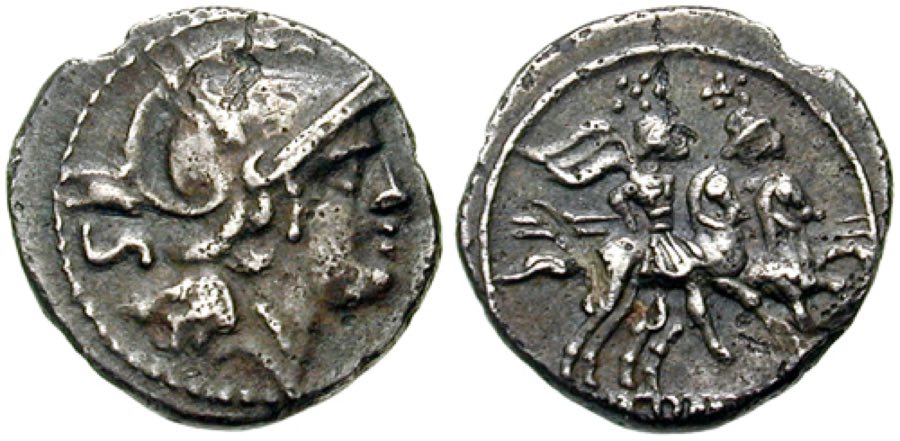

Coin · Roman Empire
Sestertius
27 BCE–270 CE, Roman
The sestertius is the large brass coin of the Roman Empire from Augustus to about 270 CE, struck in orichalcum with the emperor's portrait and an allegorical reverse marked SC. Its size gave engravers room for the finest imperial portraits. Well-preserved sestertii are among the most desirable Roman bronzes.
| Object | Coin |
|---|---|
| Dates | 27 BCE–270 CE |
| Period | Roman Empire |
| Cultures | Roman |
| Regions | Europe — Mediterranean, Europe — Western & Central |
Diagnostic traits
Large brass (orichalcum) coin of about 33 mm with a portrait obverse and an allegorical reverse marked SC.
Identification
About 33 mm and 25 g in yellow brass with SC on the reverse distinguish it from the smaller dupondius and as; Republican sestertii are tiny silver coins. Patina ranges from green to brown. Later sestertii shrink and turn to bronze.
Reproductions and fakes
Tooled and repatinated genuine coins are common, and cast fakes and Paduan Renaissance imitations exist; look for smoothed fields, re-engraved details and unnatural patina. Weight and style are the checks.
Elsewhere
- Wikidata: Q208041
- Wikipedia: sestertius
Cite this article
Stratum Study. "Sestertius" (Artifact type). Stratum Study pack 2026.09, as of 2026-09-21. https://stratum.black/study/types/sestertius. Accessed 2026-09-21.
@misc{stratum-sestertius,
  title        = {Sestertius},
  author       = {{Stratum Study}},
  howpublished = {\url{https://stratum.black/study/types/sestertius}},
  year         = {2026},
  note         = {Artifact type article, Stratum Study pack 2026.09, as of 2026-09-21; sources: stratum, wikidata, commons. Accessed 2026-09-21.}
}
Citations carry the pack version and the article's as-of date so they resolve to the same text later. The facts themselves belong to the sources listed below; cite those for the science.