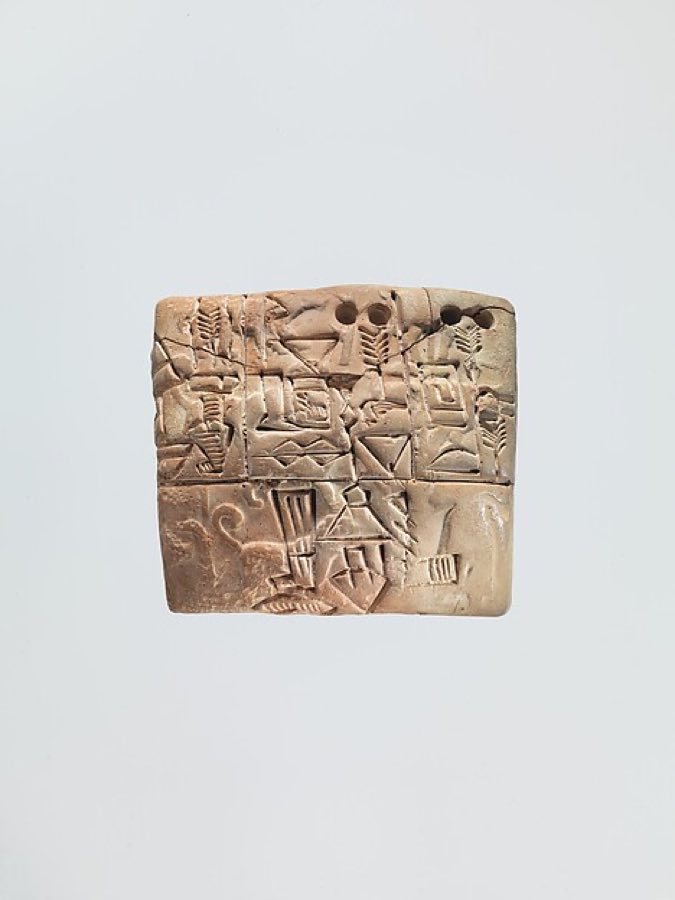
Tablet · Early Dynastic
Cuneiform tablet
3200 BCE–100 CE, Sumerian
The cuneiform tablet is the clay writing medium of Mesopotamia from about 3,200 BCE to the first century CE, impressed with wedge-shaped signs by a reed stylus and used for accounts, letters, contracts, literature and school exercises. Most are administrative records from Ur III and Old Babylonian archives. Tablets are traded widely but are subject to Iraqi patrimony law and import restrictions.
| Object | Tablet |
|---|---|
| Dates | 3200 BCE–100 CE |
| Period | Early Dynastic |
| Cultures | Sumerian |
| Regions | Near East & Mesopotamia |
Diagnostic traits
Pillow-shaped clay tablet impressed with wedge-shaped signs using a reed stylus; most are administrative records.
Identification
Pillow-shaped clay with wedge impressions and often a seal impression distinguishes it from stamped bricks and cones; sign forms, language and format date it. Sun-dried tablets are fragile; baked ones survive better. Envelopes and case tablets occur.
Reproductions and fakes
Forged in modern clay with copied or pseudo-signs and baked; thermoluminescence and an epigrapher's reading expose them. Many genuine tablets on the market are illicit, and museums decline unprovenanced examples.
Photographs
Elsewhere
- met: 329081
Cite this article
Stratum Study. "Cuneiform tablet" (Artifact type). Stratum Study pack 2026.09, as of 2026-09-21. https://stratum.black/study/types/cuneiform-tablet. Accessed 2026-09-21.
@misc{stratum-cuneiform-tablet,
  title        = {Cuneiform tablet},
  author       = {{Stratum Study}},
  howpublished = {\url{https://stratum.black/study/types/cuneiform-tablet}},
  year         = {2026},
  note         = {Artifact type article, Stratum Study pack 2026.09, as of 2026-09-21; sources: stratum, met. Accessed 2026-09-21.}
}
Citations carry the pack version and the article's as-of date so they resolve to the same text later. The facts themselves belong to the sources listed below; cite those for the science.