Culture · Iron Age
Phoenician
1200–146 BCE, Europe — Mediterranean
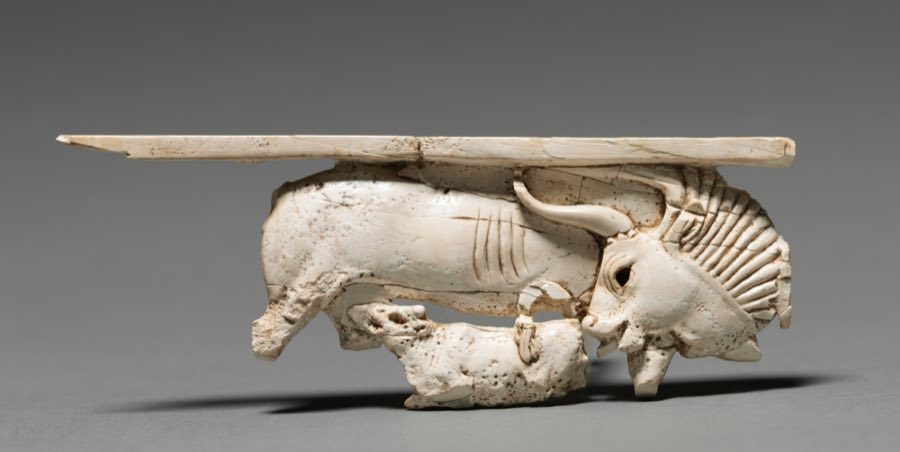
The Phoenicians were the maritime traders of the Levantine coast from about 1200 BCE, whose colonies from Cyprus to Cadiz and above all Carthage carried their alphabet, purple dye, glass and metalwork across the Mediterranean. The Punic west continued after Tyre fell to Alexander in 332 BCE until Carthage was destroyed by Rome in 146 BCE. Phoenician material culture is eclectic, mixing Egyptian, Assyrian and Greek motifs, and the trade sees core-formed glass, glass head pendants, terracotta masks and figurines, scarabs and Punic coinage. Tophet sanctuaries with urns and stelae are the most sensitive class of site.
| Dates | 1200–146 BCE |
|---|---|
| Period | Iron Age |
| Region | Europe — Mediterranean |
| Areas | Lebanon coast (Tyre, Sidon, Byblos), Cyprus, Carthage and Tunisia, Sardinia, Sicily, Southern Spain, Malta |
| Typical objects | Glass vessel, Bead, Amulet, Figurine, Amphora, Coin, Oil lamp |
| Typical materials | Glass, Terracotta, Faience, Bronze, Silver, Gold |
Identification
Core-formed glass unguent bottles in dark blue with yellow and turquoise trails and rod-formed bearded head beads are the signature glass; Egyptianising amulets in faience are near-identical to Egyptian ones but come from western cemeteries. Punic terracotta masks with grimacing faces and Tanit-sign stelae are unmistakable. Silver Punic coins show Tanit and a horse or palm.
Legality
Lebanon's Antiquities Law of 1933 makes all antiquities state property and bans export; Tunisia's Code du patrimoine (1994) does the same; Cyprus, Italy, Spain and Malta have national patrimony laws and Cyprus and Italy are CPIA designated countries for the United States. Lebanese and Tunisian material without pre-1970s documentation is a red flag.
Reproductions and fakes
Head beads and core-formed glass are reproduced in Egypt and Turkey with a glossy surface and no iridescence; genuine glass shows weathering, pitting and flaking. Punic terracottas are also cast from museum moulds.
Elsewhere
- Wikidata: Q1048468
- Wikipedia: Phoenicians
Cite this article
Stratum Study. "Phoenician" (Culture). Stratum Study pack 2026.09, as of 2026-09-21. https://stratum.black/study/cultures/phoenician. Accessed 2026-09-21.
@misc{stratum-phoenician,
  title        = {Phoenician},
  author       = {{Stratum Study}},
  howpublished = {\url{https://stratum.black/study/cultures/phoenician}},
  year         = {2026},
  note         = {Culture article, Stratum Study pack 2026.09, as of 2026-09-21; sources: stratum, wikidata, cleveland. Accessed 2026-09-21.}
}
Citations carry the pack version and the article's as-of date so they resolve to the same text later. The facts themselves belong to the sources listed below; cite those for the science.