
Culture · Lower Palaeolithic
Acheulean
1700000–200000 BCE, Europe — Western & Central
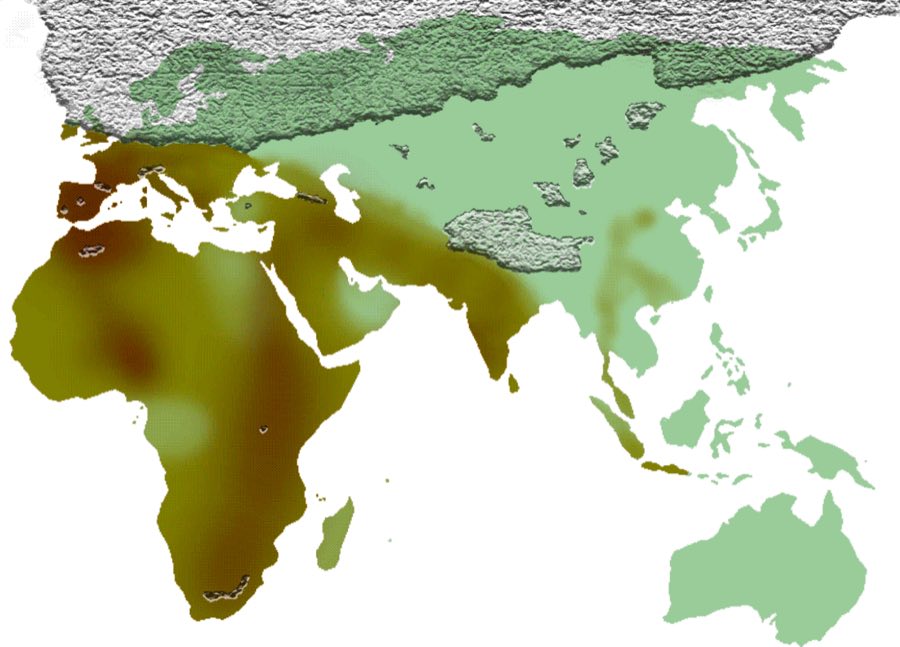
The Acheulean is the handaxe-making tradition of Homo erectus and later hominins, spanning roughly 1.7 million to 200,000 years ago across Africa, Europe and southern and western Asia. It is defined by bifacially worked handaxes and cleavers and represents the longest-lived tool tradition in human history. Collectors hold handaxes from British river gravels, French and Spanish sites and, increasingly, the Sahara, along with cleavers and cores.
| Dates | 1700000–200000 BCE |
|---|---|
| Period | Lower Palaeolithic |
| Region | Europe — Western & Central |
| Areas | Africa, Europe, South and West Asia |
| Typical objects | Handaxe, Core, Scraper |
| Typical materials | Flint, Quartzite |
Identification
Handaxes are worked over both faces around the whole edge into ovate, cordate, pointed or limande forms; early ones are thick and hard-hammer flaked, later ones thin with soft-hammer finishing and twisted edges. Cleavers have a straight transverse bit. River-gravel examples are rolled and stained ochre to chocolate, while cave and loess finds are fresh.
Legality
In Britain, Palaeolithic finds from private land or foreshore are the finder's and are recorded through the Portable Antiquities Scheme; in France, Spain and Italy the state claims archaeological finds and export requires permits. Saharan handaxes from Morocco, Algeria, Libya and Mauritania are exported illegally from countries that forbid it, so their legal status is poor despite their abundance on the market.
Reproductions and fakes
Modern knappers make handaxes readily and age them with rolling in a cement mixer and iron staining; genuine gravel pieces show differential staining, edge abrasion on ridges and sometimes chattermarks from river transport. Saharan pieces are also 'improved' by retouching genuine blanks. A handaxe with fresh, sharp arrises and uniform colour is suspect.
Elsewhere
- Wikidata: Q210774
- Wikipedia: Acheulean
Cite this article
Stratum Study. "Acheulean" (Culture). Stratum Study pack 2026.09, as of 2026-09-21. https://stratum.black/study/cultures/acheulean. Accessed 2026-09-21.
@misc{stratum-acheulean,
  title        = {Acheulean},
  author       = {{Stratum Study}},
  howpublished = {\url{https://stratum.black/study/cultures/acheulean}},
  year         = {2026},
  note         = {Culture article, Stratum Study pack 2026.09, as of 2026-09-21; sources: stratum, wikidata, commons. Accessed 2026-09-21.}
}
Citations carry the pack version and the article's as-of date so they resolve to the same text later. The facts themselves belong to the sources listed below; cite those for the science.