
Material · lithic
Slate
North America — Arctic & Subarctic, North America — Pacific Coast, Egypt & Nile Valley
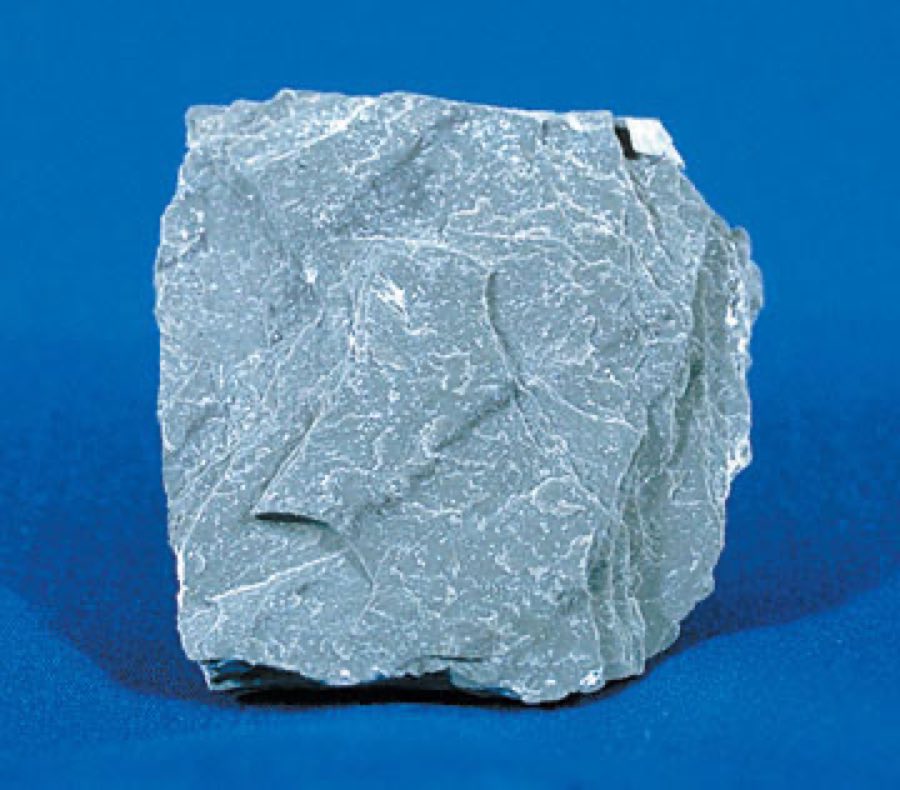
Slate is the fine-grained metamorphic rock ground into ulus, knives and lance blades by Arctic and Northwest Coast peoples and into cosmetic palettes by Predynastic Egyptians. Ground-slate technology is a hallmark of Thule and Norton cultures. Egyptian palettes are technically greywacke or siltstone but are traditionally called slate.
| Kind | lithic |
|---|---|
| Regions | North America — Arctic & Subarctic, North America — Pacific Coast, Egypt & Nile Valley |
Sources
Arctic slate comes from local outcrops and beach cobbles across Alaska, the Canadian Arctic and Greenland; Egyptian palette stone came from the Wadi Hammamat in the Eastern Desert. Arctic peoples also ground slate from river cobbles when outcrops were far away.
Identification
Slate is grey, green or black, fine-grained and fissile, with a dull surface that takes a smooth grind; ground-slate tools show grinding striations and a bevelled edge. Egyptian palettes are dark greenish grey and dense. Weathering is slight.
Substitutes and fakes
Arctic slate tools are reproduced by modern carvers; genuine pieces show ancient grinding and wear. Predynastic palettes are faked in Luxor from local stone.
Elsewhere
- Wikidata: Q207079
- Wikipedia: slate
Cite this article
Stratum Strata. "Slate" (Material). Stratum Strata pack 2026.09, as of 2026-09-21. https://stratum.black/strata/materials/slate. Accessed 2026-09-21.
@misc{stratum-slate,
  title        = {Slate},
  author       = {{Stratum Strata}},
  howpublished = {\url{https://stratum.black/strata/materials/slate}},
  year         = {2026},
  note         = {Material article, Stratum Strata pack 2026.09, as of 2026-09-21; sources: stratum, wikidata, commons. Accessed 2026-09-21.}
}
Citations carry the pack version and the article's as-of date so they resolve to the same text later. The facts themselves belong to the sources listed below; cite those for the science.