Culture · Predynastic
Naqada
4000–3100 BCE, Egypt & Nile Valley
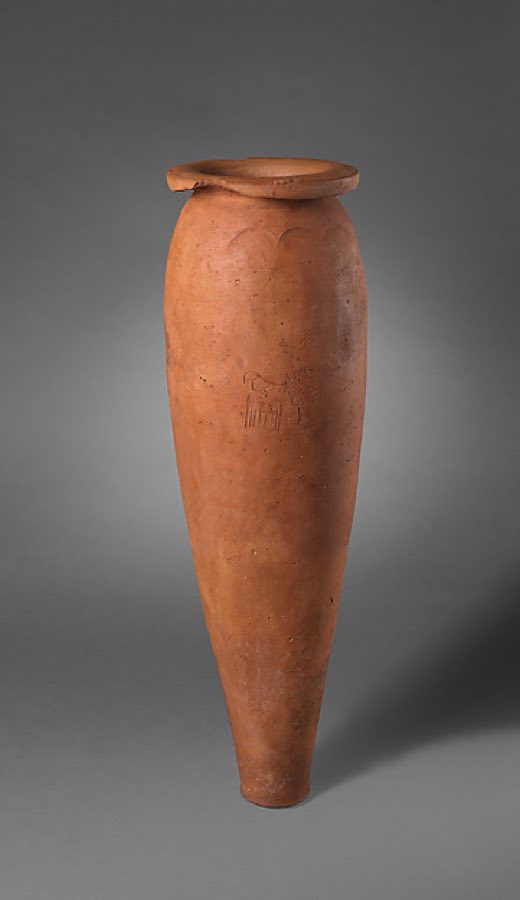
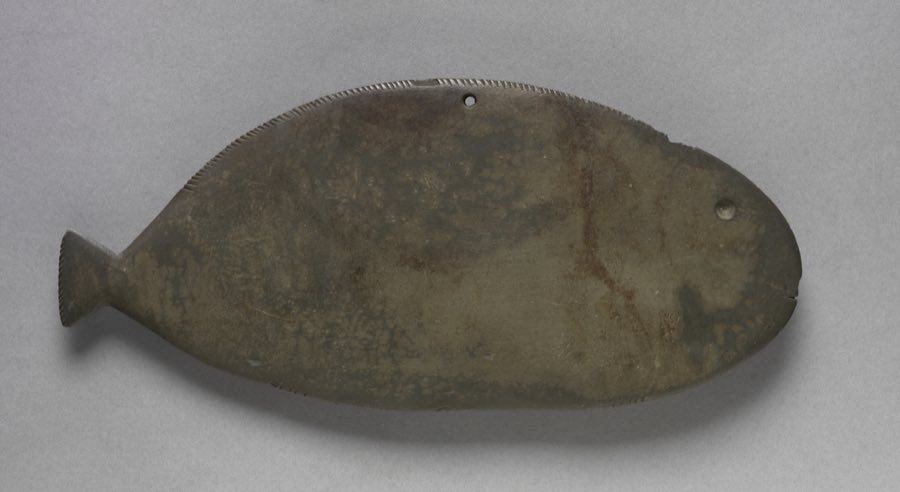
Naqada is the Predynastic culture of Upper Egypt from about 4,000 to 3,100 BCE, subdivided into Naqada I to III, which developed into the unified Egyptian state. Its cemeteries at Naqada, Abydos, Hierakonpolis and Gebelein yielded pottery, palettes and stone vessels that were widely dispersed by early excavators. Collectors hold black-topped red jars, decorated ware with boats and flamingos, slate cosmetic palettes, ripple-flaked flint knives, mace-heads and stone vessels.
| Dates | 4000–3100 BCE |
|---|---|
| Period | Predynastic |
| Region | Egypt & Nile Valley |
| Areas | Upper Egypt |
| Typical objects | Jar, Vessel, Figurine, Bead |
| Typical materials | Terracotta, Flint, Slate |
Identification
Black-topped red-polished jars, white cross-lined ware (Naqada I), and buff decorated ware painted in red with boats and dancing figures (Naqada II) are the pottery hallmarks. Slate palettes in animal and rhomboid shapes, ripple-flaked flint knives, disc and pear-shaped mace-heads and vessels in breccia and porphyry are the other signature objects. Wavy-handled jars mark the late phase.
Legality
Egypt's 1983 antiquities law makes all antiquities state property with no legal export, and the United States has a CPIA agreement with Egypt in force since 2016. Predynastic material was exported legally in large quantities before 1983 through partage, so museum deaccessions and old collections are the legitimate sources.
Reproductions and fakes
Predynastic pottery and palettes have been forged since the early twentieth century; black-topped jars are reproduced in Luxor and decorated ware is painted on genuine plain pots. Ripple-flaked knives are difficult to fake but modern attempts appear. Look for uniform fresh surfaces, absence of salt encrustation and modern pigment.
Photographs
Elsewhere
- met: 545804
- Wikidata: Q753391
- Wikipedia: Naqada culture
Cite this article
Stratum Strata. "Naqada" (Culture). Stratum Strata pack 2026.09, as of 2026-09-21. https://stratum.black/strata/cultures/naqada. Accessed 2026-09-21.
@misc{stratum-naqada,
  title        = {Naqada},
  author       = {{Stratum Strata}},
  howpublished = {\url{https://stratum.black/strata/cultures/naqada}},
  year         = {2026},
  note         = {Culture article, Stratum Strata pack 2026.09, as of 2026-09-21; sources: stratum, wikidata, met, cleveland. Accessed 2026-09-21.}
}
Citations carry the pack version and the article's as-of date so they resolve to the same text later. The facts themselves belong to the sources listed below; cite those for the science.