Culture · Kofun
Kofun
250–538 CE, East Asia
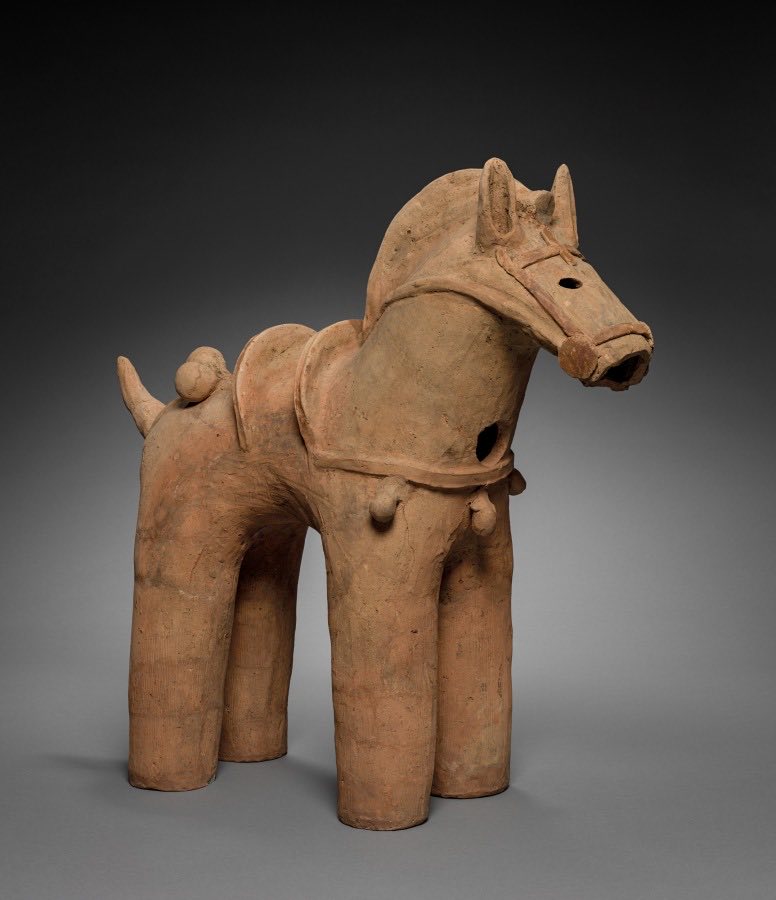
The Kofun period (about 250–538 CE) is defined by the giant keyhole-shaped burial mounds of the emerging Yamato state, the largest of which, the Daisen Kofun at Sakai, is nearly 500 m long. The mounds were ringed with haniwa, hollow terracotta cylinders and figures of warriors, horses, houses and shrine maidens, and the burial chambers held bronze mirrors, iron swords and armour, jasper and jade magatama beads and, later, gilt-bronze horse trappings and crowns imported from or influenced by Korea. Sue stoneware, a grey high-fired ware from Korean technology, appears in the fifth century. The period ends with the introduction of Buddhism in 538.
| Dates | 250–538 CE |
|---|---|
| Period | Kofun |
| Region | East Asia |
| Areas | Japan (Kinai: Nara, Osaka), Kyushu, Kanto |
| Typical objects | Figurine, Mirror, Sword, Bead, Vessel, Jar |
| Typical materials | Terracotta, Bronze, Iron, Jade, Gold |
Identification
Haniwa are unglazed reddish terracotta with simple cut-out eyes and mouths, hollow and made in cylinder segments; Han and Tang Chinese tomb figures are mould-made and glazed or painted. Kofun mirrors are Japanese-made copies of Chinese types, often with the triangular-rimmed deity-and-beast design. Comma-shaped magatama beads in jasper, jade and glass are characteristic.
Legality
Japan's Law for the Protection of Cultural Properties (1950) makes excavated objects reportable buried cultural property and prohibits export of designated items; the Imperial Household Agency controls the great mounds as imperial tombs, which cannot be excavated. Haniwa on the market come largely from early twentieth-century collections, and export permits are required for items of any significance.
Reproductions and fakes
Haniwa heads and figures are reproduced in Japan and are sometimes sold as ancient; genuine haniwa show weathered, crumbly surfaces, root marks and a fabric consistent with the known kilns. Magatama beads are made in modern jade and glass as souvenirs.
Elsewhere
- Wikidata: Q459939
- Wikipedia: Kofun period
Cite this article
Stratum Strata. "Kofun" (Culture). Stratum Strata pack 2026.09, as of 2026-09-21. https://stratum.black/strata/cultures/kofun. Accessed 2026-09-21.
@misc{stratum-kofun,
  title        = {Kofun},
  author       = {{Stratum Strata}},
  howpublished = {\url{https://stratum.black/strata/cultures/kofun}},
  year         = {2026},
  note         = {Culture article, Stratum Strata pack 2026.09, as of 2026-09-21; sources: stratum, wikidata, cleveland. Accessed 2026-09-21.}
}
Citations carry the pack version and the article's as-of date so they resolve to the same text later. The facts themselves belong to the sources listed below; cite those for the science.