
Culture · Late Prehistoric
Fremont
400–1300 CE, North America — Great Basin & Plateau
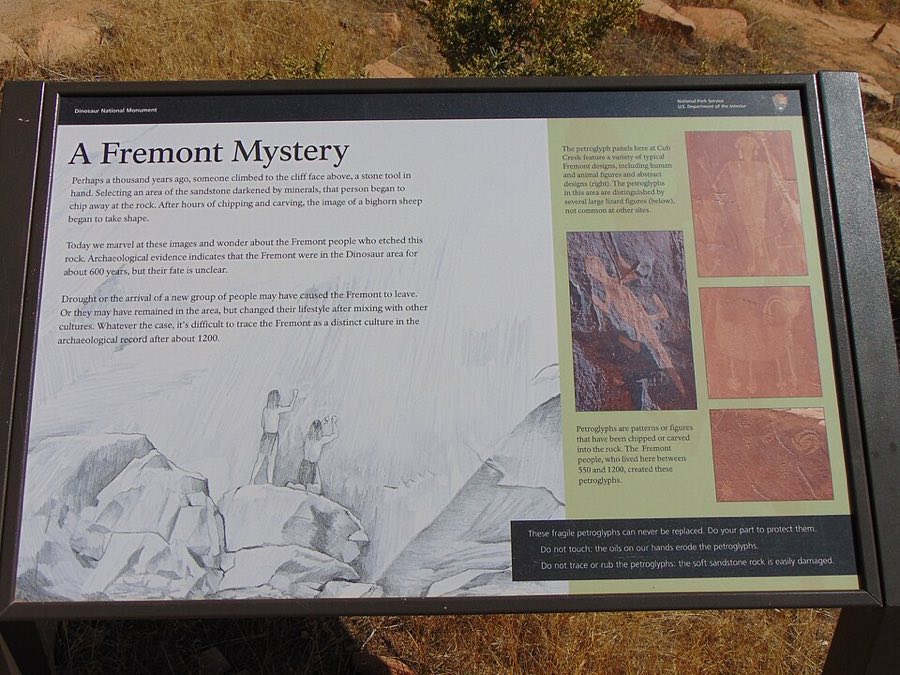
The Fremont were part-time farmers and foragers of Utah and adjacent Nevada and Colorado from about 400 to 1,300 CE, neighbours of the Ancestral Puebloans but distinct in basketry, figurines and rock art. Their trapezoidal anthropomorphic petroglyphs and unfired clay figurines are their best-known art. Collectors hold grey ware pottery, Rose Springs and Bull Creek arrowpoints, obsidian tools and occasional figurines, which are rare and often from caves.
| Dates | 400–1300 CE |
|---|---|
| Period | Late Prehistoric |
| Region | North America — Great Basin & Plateau |
| Areas | Utah, Eastern Nevada, Western Colorado |
| Typical objects | Projectile point, Figurine, Bowl, Pendant |
| Typical materials | Obsidian, Chert, Terracotta |
Identification
Fremont grey ware is plain or has coiled or incised decoration, with Snake Valley and Emery grey the commonest types. One-rod-and-bundle basketry, moccasins made from deer hock skin, Utah-type metates with a shelf and unfired clay figurines with applied ornaments are unique to the culture. Points are small corner-notched and side-notched forms.
Legality
In the United States, prehistoric artifacts may be collected and sold only when they come from private land with the landowner's permission; removal from federal, tribal or most state land is prohibited under ARPA and state statutes. Funerary objects, human remains and sacred items are covered by NAGPRA and are not legitimately traded, and Canadian provinces treat archaeological finds as Crown or provincial property. Most Fremont territory is BLM, Forest Service or Utah state trust land, and Utah has prosecuted collectors under ARPA.
Reproductions and fakes
Fremont clay figurines are faked because genuine ones are so rare; fakes are fired rather than sun-dried, or modelled in modern clay with painted decoration. Rock art panels are sometimes cut from cliff faces and sold, which is both illegal and destructive; such 'portable' petroglyphs should never be bought.
Elsewhere
- Wikidata: Q1455209
- Wikipedia: Fremont culture
Cite this article
Stratum Strata. "Fremont" (Culture). Stratum Strata pack 2026.09, as of 2026-09-21. https://stratum.black/strata/cultures/fremont. Accessed 2026-09-21.
@misc{stratum-fremont,
  title        = {Fremont},
  author       = {{Stratum Strata}},
  howpublished = {\url{https://stratum.black/strata/cultures/fremont}},
  year         = {2026},
  note         = {Culture article, Stratum Strata pack 2026.09, as of 2026-09-21; sources: stratum, wikidata, commons. Accessed 2026-09-21.}
}
Citations carry the pack version and the article's as-of date so they resolve to the same text later. The facts themselves belong to the sources listed below; cite those for the science.