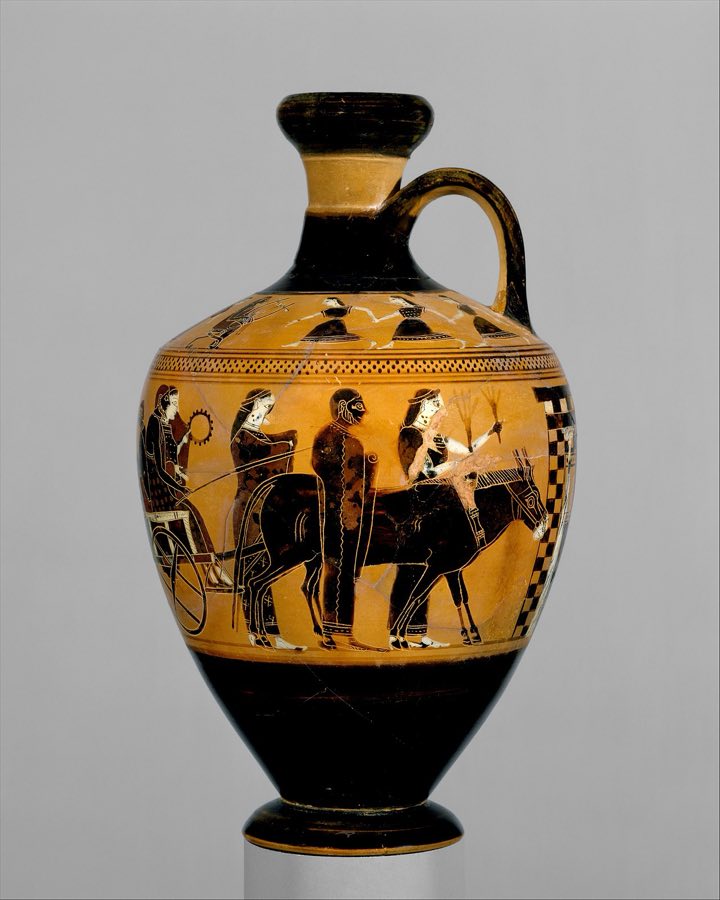

Vessel · Classical Greek
Lekythos
600–300 BCE, Ancient Greece
The lekythos is the narrow-necked Greek oil flask with a single handle and small mouth, about 600 to 300 BCE, used for perfumed oil and, in white-ground form, as a funerary offering at Athenian graves. Black-figure, red-figure and white-ground lekythoi survive in large numbers. Small squat lekythoi are common.
| Object | Vessel |
|---|---|
| Dates | 600–300 BCE |
| Period | Classical Greek |
| Cultures | Ancient Greece |
| Regions | Europe — Mediterranean |
Diagnostic traits
Narrow-necked oil flask with a single handle and a small mouth; white-ground examples were made for funerary use.
Identification
The tall cylindrical body, narrow neck and single handle distinguish it from the alabastron and aryballos; white-ground lekythoi have a chalky white slip with polychrome funerary scenes. Squat lekythoi are late and small. Deianeira lekythoi are early and ovoid.
Reproductions and fakes
White-ground lekythoi are repainted because their fugitive colours fade; fakes and completed fragments exist. Black-figure lekythoi are so common that fakes are rare.
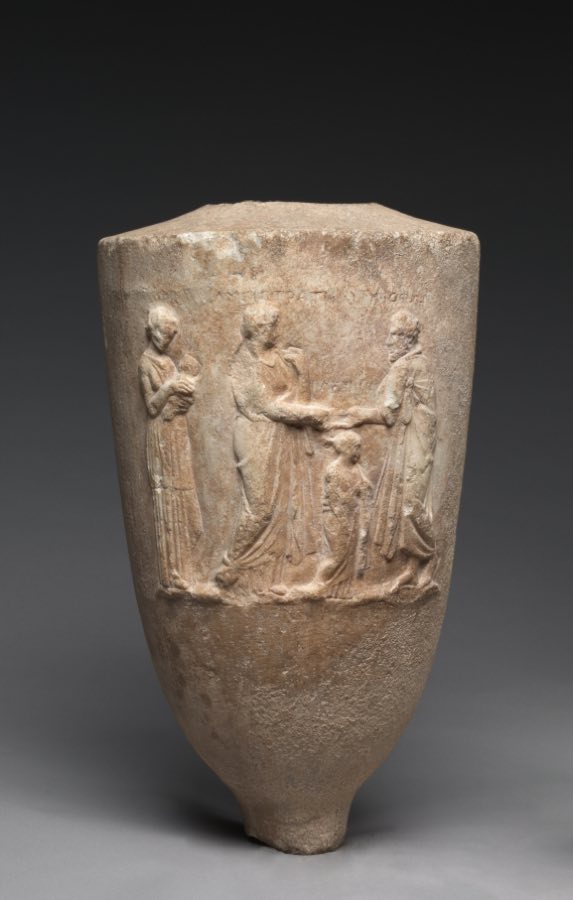
Photographs
Elsewhere
- Wikidata: Q579418
- Wikipedia: lekythos
Cite this article
Stratum Study. "Lekythos" (Artifact type). Stratum Study pack 2026.09, as of 2026-09-21. https://stratum.black/study/types/lekythos. Accessed 2026-09-21.
@misc{stratum-lekythos,
  title        = {Lekythos},
  author       = {{Stratum Study}},
  howpublished = {\url{https://stratum.black/study/types/lekythos}},
  year         = {2026},
  note         = {Artifact type article, Stratum Study pack 2026.09, as of 2026-09-21; sources: stratum, wikidata, commons, cleveland. Accessed 2026-09-21.}
}
Citations carry the pack version and the article's as-of date so they resolve to the same text later. The facts themselves belong to the sources listed below; cite those for the science.