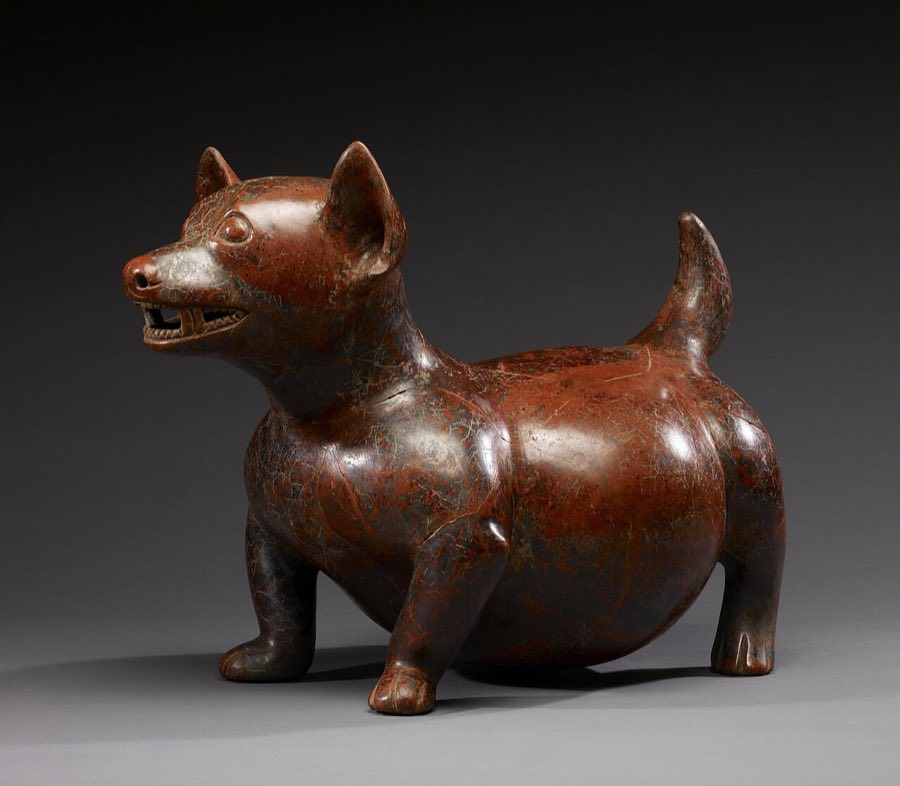

Figurine · Late Preclassic
Colima dog figure
300 BCE–300 CE, Shaft Tomb Tradition
Colima dogs are the best-known product of the shaft-tomb cultures of west Mexico, placed in tombs in Colima between about 300 BCE and 300 CE as companions and food for the dead. They come with the same tomb groups as Colima warriors, parrots and vessels, all in the polished red slip that defines the Colima style. Thousands were looted in the mid twentieth century and they remain a staple of the pre-Columbian market, so provenance is essential.
| Object | Figurine |
|---|---|
| Dates | 300 BCE–300 CE |
| Period | Late Preclassic |
| Cultures | Shaft Tomb Tradition |
| Regions | Mesoamerica |
Diagnostic traits
A hollow, burnished red-slipped earthenware effigy of a plump hairless dog, standing or seated, with a spout or opening at the neck or back, 150–400 mm long.
Identification
Colima figures are red-burnished and hollow with a smooth surface; Jalisco figures are larger, cream-and-red slipped and more angular; Nayarit figures are polychrome with exaggerated features and often show couples. Dogs from Colima have rounded bodies, folded ears and often a maize cob in the mouth.
Reproductions and fakes
Colima dogs have been reproduced since the 1950s in Colima itself, often fired from moulds and finished with manganese-stained 'root marks'; genuine pieces show irregular burnishing, genuine mineral deposits within cracks and a gritty pale core at any break. Thermoluminescence dating is routine for high-value pieces.
Cite this article
Stratum Study. "Colima dog figure" (Artifact type). Stratum Study pack 2026.09, as of 2026-09-21. https://stratum.black/study/types/colima-dog-figure. Accessed 2026-09-21.
@misc{stratum-colima-dog-figure,
  title        = {Colima dog figure},
  author       = {{Stratum Study}},
  howpublished = {\url{https://stratum.black/study/types/colima-dog-figure}},
  year         = {2026},
  note         = {Artifact type article, Stratum Study pack 2026.09, as of 2026-09-21; sources: stratum, commons. Accessed 2026-09-21.}
}
Citations carry the pack version and the article's as-of date so they resolve to the same text later. The facts themselves belong to the sources listed below; cite those for the science.