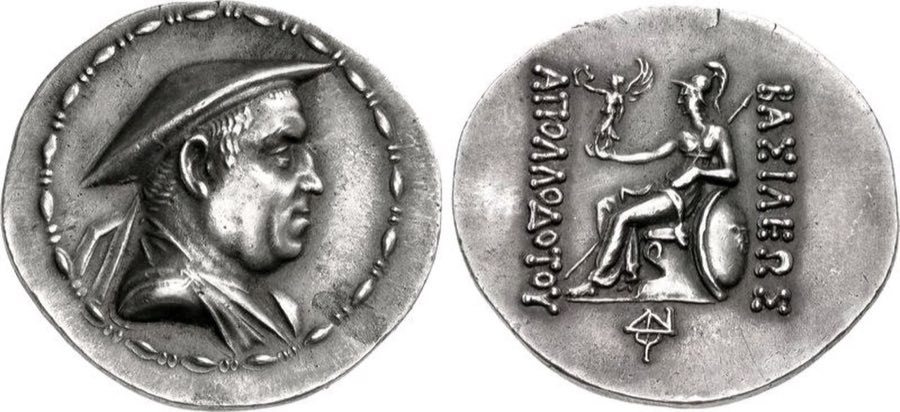

Coin · Classical Greek
Attic tetradrachm
510–100 BCE, Ancient Greece
The Attic tetradrachm is the silver coin of Athens with the helmeted head of Athena and an owl on the reverse, struck from about 510 to 100 BCE and the dominant trade coin of the Classical Mediterranean. Archaic, Classical and New Style series date it. Owls are among the most collected ancient coins.
| Object | Coin |
|---|---|
| Dates | 510–100 BCE |
| Period | Classical Greek |
| Cultures | Ancient Greece |
| Regions | Europe — Mediterranean |
Diagnostic traits
Thick silver coin of about 17 g with the helmeted head of Athena and an owl with olive sprig and AΘE on the reverse.
Identification
The thick flan of about 17 g, Athena's crested helmet with olive leaves and the owl with olive sprig and AΘE distinguish it; Classical owls have a profile eye, Archaic a frontal eye, and New Style owls stand on an amphora within a wreath. Eastern imitations are known. Test cuts are common.
Reproductions and fakes
Extensively faked by casting and modern striking, and Bulgarian and Chinese fakes are numerous; check weight, style, die axis and surface. Genuine coins have flow lines and crystalline surfaces.
Cite this article
Stratum Study. "Attic tetradrachm" (Artifact type). Stratum Study pack 2026.09, as of 2026-09-21. https://stratum.black/study/types/attic-tetradrachm. Accessed 2026-09-21.
@misc{stratum-attic-tetradrachm,
  title        = {Attic tetradrachm},
  author       = {{Stratum Study}},
  howpublished = {\url{https://stratum.black/study/types/attic-tetradrachm}},
  year         = {2026},
  note         = {Artifact type article, Stratum Study pack 2026.09, as of 2026-09-21; sources: stratum, commons. Accessed 2026-09-21.}
}
Citations carry the pack version and the article's as-of date so they resolve to the same text later. The facts themselves belong to the sources listed below; cite those for the science.