
Bivalve
Gryphaea
Devil's toenail
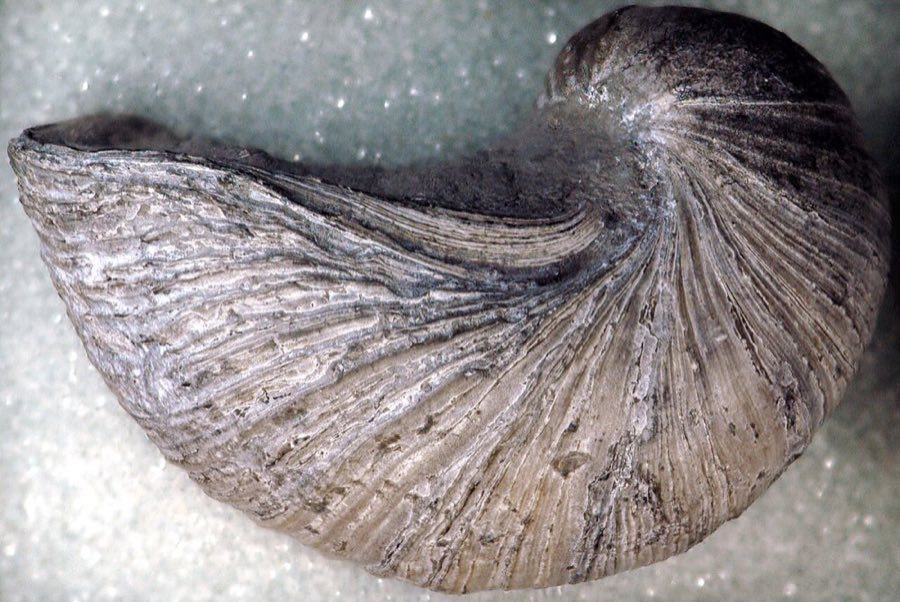
Gryphaea is the thick, incurved Jurassic oyster known in England as the devil's toenail, picked up by the bucket on Lias beaches and in the Oxford Clay. G. arcuata from the Lower Lias and G. dilatata from the Oxford Clay are the common species. They are cheap, robust and ideal for children; polished halves are also sold.
| Phylum | Mollusca |
|---|---|
| Class | Bivalvia |
| Order | Ostreida |
| Family | Gryphaeidae |
| Group | Bivalve |
| Rank (PBDB) | genus· Paleobiology Database |
| Author | Lamarck 1801· Paleobiology Database |
| Classification (PBDB) | Mollusca › Bivalvia › Ostreida › Gryphaeidae· Paleobiology Database |
| Range (PBDB) | 241–33.9 Ma· Paleobiology Database |
| PBDB occurrences | 1214· Paleobiology Database |
| Authority (WoRMS) | Lamarck, 1801 <i>sensu</i> Ranson, 1955· WoRMS / MolluscaBase |
| Status (WoRMS) | misapplication· WoRMS / MolluscaBase |
| Valid name (WoRMS) | Crassostrea· WoRMS / MolluscaBase |
| Classification (WoRMS) | Animalia › Mollusca › Bivalvia › Ostreida › Ostreidae· WoRMS / MolluscaBase |
Elsewhere
- WoRMS AphiaID: 1742736
- GBIF: 4595513
- PBDB: 16691
- Wikidata: Q129290
- PBDB taxon page
- WoRMS / MolluscaBase record
- Wikipedia: Gryphaea
- PBDB search: Gryphaea
Cite this article
Stratum Study. "Gryphaea" (Taxon). Stratum Study pack 2026.09, as of 2026-09-19. https://stratum.black/study/taxa/gryphaea. Accessed 2026-09-20.
@misc{stratum-gryphaea,
  title        = {Gryphaea},
  author       = {{Stratum Study}},
  howpublished = {\url{https://stratum.black/study/taxa/gryphaea}},
  year         = {2026},
  note         = {Taxon article, Stratum Study pack 2026.09, as of 2026-09-19; sources: stratum, pbdb, worms, wikidata, commons. Accessed 2026-09-20.}
}
Citations carry the pack version and the article's as-of date so they resolve to the same text later. The facts themselves belong to the sources listed below; cite those for the science.