
Mineral · Beryl group
Beryl
Be3Al2(Si6O18)
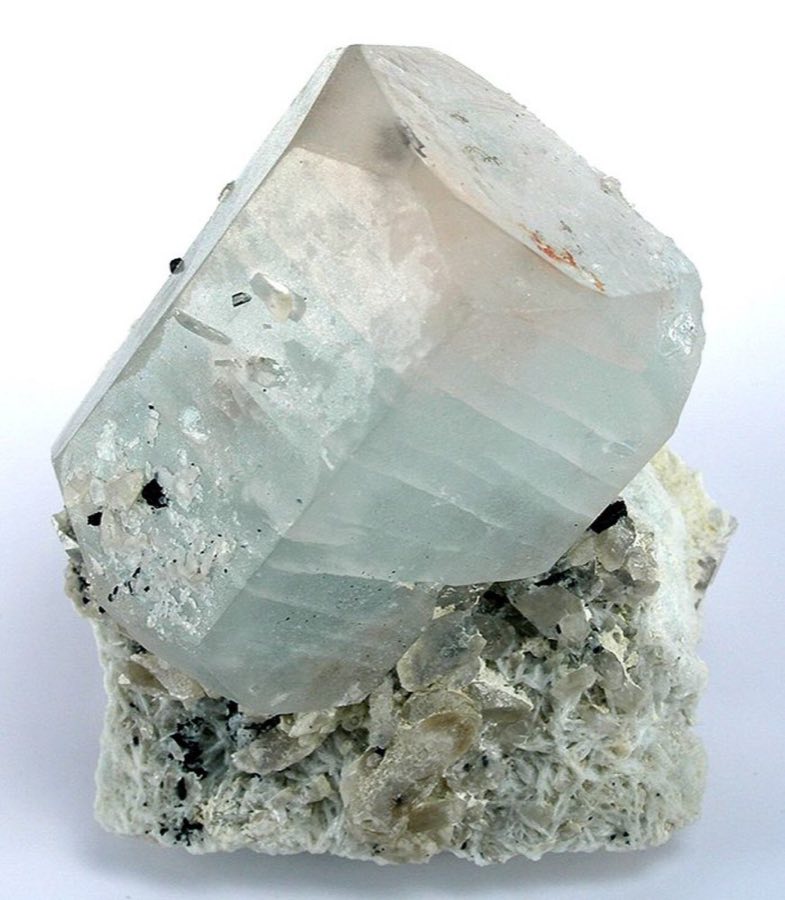
Beryl is beryllium aluminium silicate, the species behind emerald (green), aquamarine (blue), morganite (pink), heliodor (yellow), goshenite (colourless) and red beryl of the Wah Wah Mountains, Utah. Hexagonal prisms with flat terminations from Brazil, Pakistan, Madagascar and Ukraine (Volodarsk heliodor) are common; giant opaque beryl from Maine and New Hampshire pegmatites is a curiosity. Hardness 7.5–8 and the hexagonal habit identify it.
| Formula | Be3Al2(Si6O18) |
|---|---|
| IMA status | grandfathered |
| Crystal system | Hexagonal |
| Mohs hardness | 7.5–8 |
| Group | Beryl group |
| Type locality | None (known since antiquity) |
| Streak | White |
| Specific gravity | 2.7 |
| Reference list | IMA List of Minerals (RRUFF) — verify formula and status against the current list |
Fakes and treatments
Synthetic beryl (hydrothermal emerald) and heated or irradiated colours are routine in gem rough; sell natural specimens with the treatment history.
Elsewhere
Cite this article
Stratum Study. "Beryl" (Mineral). Stratum Study pack 2026.09, as of 2026-09-19. https://stratum.black/study/minerals/beryl. Accessed 2026-09-20.
@misc{stratum-beryl,
  title        = {Beryl},
  author       = {{Stratum Study}},
  howpublished = {\url{https://stratum.black/study/minerals/beryl}},
  year         = {2026},
  note         = {Mineral article, Stratum Study pack 2026.09, as of 2026-09-19; sources: stratum, wikidata, commons. Accessed 2026-09-20.}
}
Citations carry the pack version and the article's as-of date so they resolve to the same text later. The facts themselves belong to the sources listed below; cite those for the science.