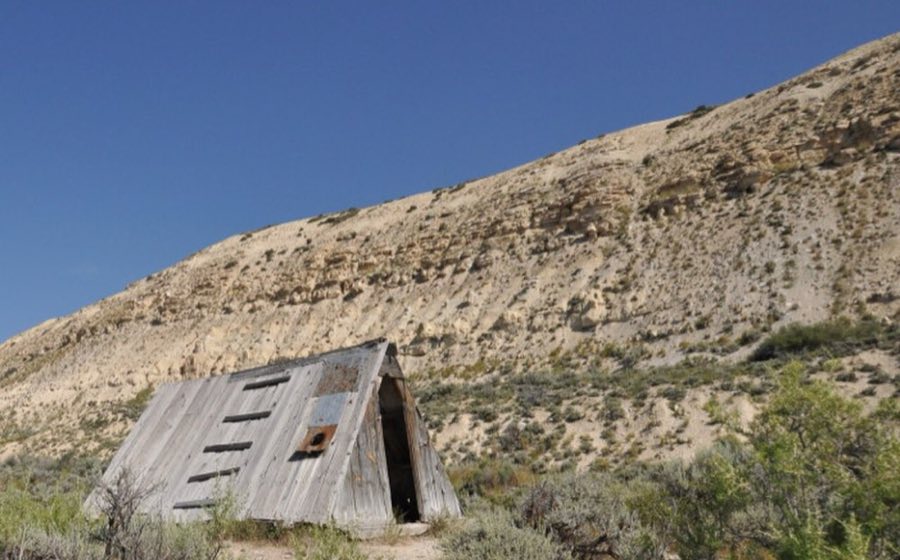

Formation · Paleogene
Green River Formation
Eocene unit, Wyoming · Utah · Colorado
The Green River Formation records three Eocene lakes in Wyoming, Utah and Colorado, and Fossil Lake near Kemmerer is the most productive fossil fish deposit in the world. Knightia and Diplomystus plates are entry-level collectibles, while Phareodus, Mioplosus, stingrays, gars, birds and palm fronds reach four and five figures. Prepared plates are routinely inlaid, so ask whether a fish is on its original matrix, whether it is a natural or a 'sandwiched' composite, and how much of the outline has been painted; the 18-inch layer produces dark, well-preserved fish and the split-fish layer lighter, quicker-prepared ones.
| Country | United States |
|---|---|
| Region | Wyoming, Utah, Colorado |
| Age | Ypresian, Eocene |
| Age range | ~52–50 Ma |
| Member | Fossil Butte Member |
| Macrostrat rank | Fm· Macrostrat |
| Macrostrat age | 58.4–34.9 Ma· Macrostrat |
| Lithology | shale, limestone, claystone, sandstone, marl, carbonate· Macrostrat |
| Environment | lacustrine indet., non-marine, playa· Macrostrat |
| Macrostrat columns | 8 column(s) sampled from 8 unit(s)· Macrostrat |
| Members (Macrostrat) | Laney, Parachute Creek· Macrostrat |
| PBDB collections | 235 collections, 1337 occurrences· Paleobiology Database |
Collecting and legality
Fossil Butte National Monument is closed to all collecting. The commercial fish plates come from private and state-leased quarries near Kemmerer (Warfield, Ulrich, American Fossil, Tynsky), several of which sell dig-your-own days; keep the quarry name on the label.
Lithology and setting
Laminated lacustrine limestone, oil shale and marlstone of Fossil Lake, Lake Gosiute and Lake Uinta; the 18-inch layer and split-fish layer of the Fossil Butte Member yield the classic plates.
Commonly recorded taxa (PBDB)
Genera most often recorded from this unit in the Paleobiology Database (first 200 occurrences): Omomys (7), Hyrachyus (6), Lambdotherium (6), Microsyops (6), Nyctitherium (6), Equidae (4), Herpetotherium (4), Hyopsodus (4), Populus (4), Sciuravus (4), Smilodectes (4), Apatemys (3), Asplenium (3), Notharctus (3), Quercus (3).
Source: Paleobiology Database
Elsewhere
- Macrostrat: 795
- macrostratConcept: 8483
- PBDB: strata:Green River
- Wikidata: Q741367
- Macrostrat stratigraphic name
- PBDB occurrences for this unit
- Wikipedia: Green River Formation
- Mindat: Green River Formation
Cite this article
Stratum Study. "Green River Formation" (Formation). Stratum Study pack 2026.09, as of 2026-09-19. https://stratum.black/study/formations/green-river-formation. Accessed 2026-09-20.
@misc{stratum-green-river-formation,
  title        = {Green River Formation},
  author       = {{Stratum Study}},
  howpublished = {\url{https://stratum.black/study/formations/green-river-formation}},
  year         = {2026},
  note         = {Formation article, Stratum Study pack 2026.09, as of 2026-09-19; sources: stratum, macrostrat, pbdb, wikidata, commons. Accessed 2026-09-20.}
}
Citations carry the pack version and the article's as-of date so they resolve to the same text later. The facts themselves belong to the sources listed below; cite those for the science.