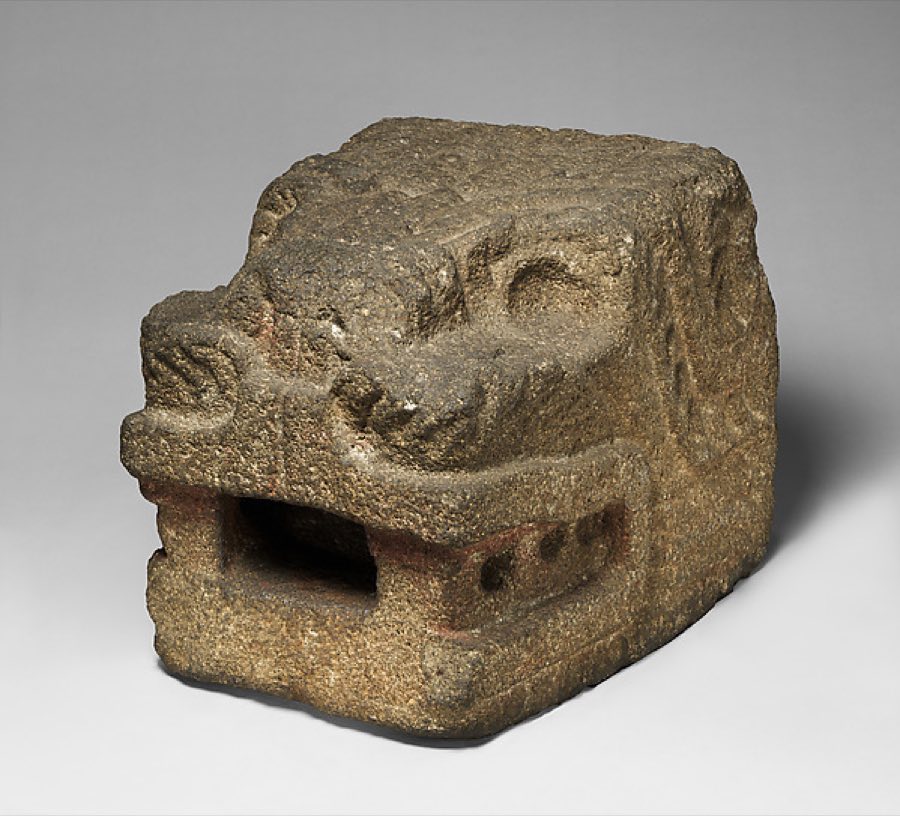
Culture · Early Classic
Teotihuacan
100–650 CE, Mesoamerica
Teotihuacan was the great Classic-period city of the Basin of Mexico, flourishing from about 100 to 650 CE with a population perhaps exceeding 100,000. Its Pyramids of the Sun and Moon and the Avenue of the Dead are among the largest constructions in the Americas. Collectors hold green Pachuca obsidian blades and cores, mould-made clay figurines and heads, Thin Orange pottery, composite censers and stone masks, though the masks and censers are heavily faked and restricted.
| Dates | 100–650 CE |
|---|---|
| Period | Early Classic |
| Region | Mesoamerica |
| Areas | Basin of Mexico |
| Typical objects | Figurine, Vessel, Blade, Mask |
| Typical materials | Obsidian, Terracotta, Greenstone |
Identification
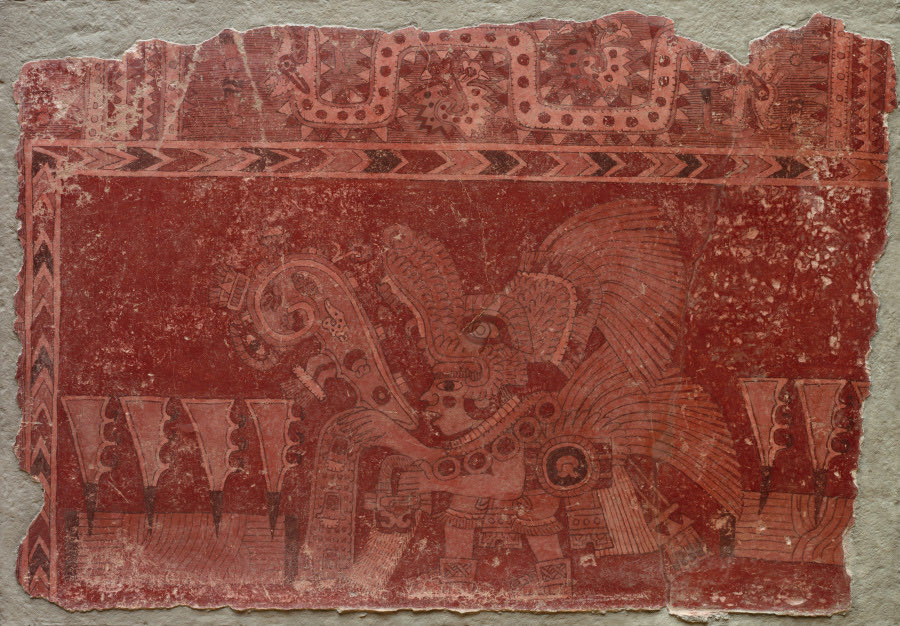
Teotihuacan obsidian is often green and the blades are struck from prismatic cores; figurine heads are mould-made with flat faces and elaborate headdresses. Thin Orange ware, cylindrical tripod vessels with slab feet and stuccoed painted decoration, and greenstone masks with a flat back are the classic signature. Candeleros, small two-chambered incense holders, are ubiquitous.
Legality
As with all Mexican pre-Hispanic material, Teotihuacan objects are federal property of Mexico and subject to the 1972 law, the US Pre-Columbian statute and the CPIA. Only pieces with documented pre-1972 export histories are legitimately traded.
Reproductions and fakes
Stone masks in Teotihuacan style are widely faked, and museum studies have found many 'Teotihuacan' masks to be modern; tell-tales include rotary-tool marks, artificial iron staining and inconsistencies in the stone. Clay figurine heads are reproduced from ancient moulds and modern ones. Obsidian blades are rarely faked but frequently misattributed from other sites.
Photographs
Elsewhere
- met: 320347
- Wikidata: Q116795888
Cite this article
Stratum Study. "Teotihuacan" (Culture). Stratum Study pack 2026.09, as of 2026-09-21. https://stratum.black/study/cultures/teotihuacan. Accessed 2026-09-21.
@misc{stratum-teotihuacan,
  title        = {Teotihuacan},
  author       = {{Stratum Study}},
  howpublished = {\url{https://stratum.black/study/cultures/teotihuacan}},
  year         = {2026},
  note         = {Culture article, Stratum Study pack 2026.09, as of 2026-09-21; sources: stratum, wikidata, met, cleveland. Accessed 2026-09-21.}
}
Citations carry the pack version and the article's as-of date so they resolve to the same text later. The facts themselves belong to the sources listed below; cite those for the science.