
Culture · Chalcolithic
Corded Ware
2900–2350 BCE, Europe — Western & Central
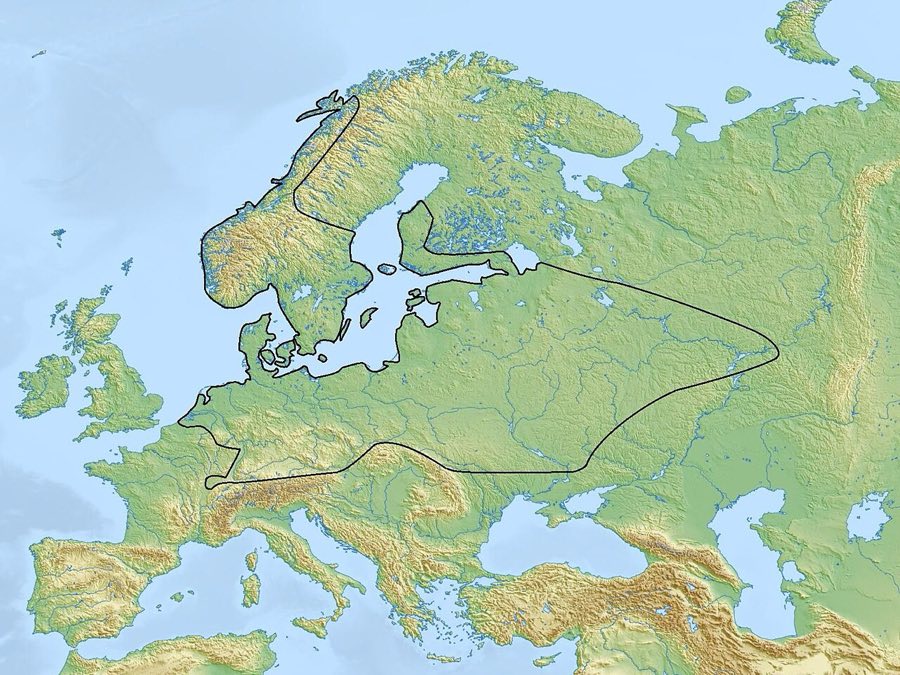
Corded Ware is the widespread late Neolithic and Chalcolithic culture of northern and central Europe from about 2,900 to 2,350 BCE, associated with the arrival of steppe ancestry and single burials under mounds. It is named for cord-impressed pottery and is also called the Battle Axe culture for its polished stone shaft-hole axes. Collectors hold battle-axes, flint axes and blades and cord-decorated beakers, mainly from Germany, Poland, Scandinavia and the Baltic.
| Dates | 2900–2350 BCE |
|---|---|
| Period | Chalcolithic |
| Region | Europe — Western & Central |
| Areas | Northern and Central Europe, Baltic |
| Typical objects | Axe head, Vessel |
| Typical materials | Greenstone, Terracotta, Flint |
Identification
The stone battle-axe with a drooping blade and hammer butt, often in dark banded rock, is the signature object; boat-shaped variants occur in Scandinavia. Beakers and amphorae with horizontal cord impressions on the neck, thick-butted flint axes and amber beads complete the set. Burials are flexed with men on the right side and women on the left.
Legality
Corded Ware finds are state property in Germany, Poland, the Czech Republic and the Baltic states and archaeological finds are regulated in Scandinavia, with export controls; private holdings are largely old collection material. Battle-axes surface in Scandinavian markets from documented nineteenth-century finds.
Reproductions and fakes
Battle-axes are reproduced with modern tooling and have been since the nineteenth century, when they were also faked for museum sales; genuine examples show pecking under the polish, hourglass or straight drilling with rotational striations, and asymmetric wear. Modern copies have perfectly cylindrical bores and power-tool polish.
Elsewhere
- Wikidata: Q933996
- Wikipedia: Corded Ware culture
Cite this article
Stratum Study. "Corded Ware" (Culture). Stratum Study pack 2026.09, as of 2026-09-21. https://stratum.black/study/cultures/corded-ware. Accessed 2026-09-21.
@misc{stratum-corded-ware,
  title        = {Corded Ware},
  author       = {{Stratum Study}},
  howpublished = {\url{https://stratum.black/study/cultures/corded-ware}},
  year         = {2026},
  note         = {Culture article, Stratum Study pack 2026.09, as of 2026-09-21; sources: stratum, wikidata, commons. Accessed 2026-09-21.}
}
Citations carry the pack version and the article's as-of date so they resolve to the same text later. The facts themselves belong to the sources listed below; cite those for the science.