
Culture · Early Horizon
Chavín
900–200 BCE, South America — Andes
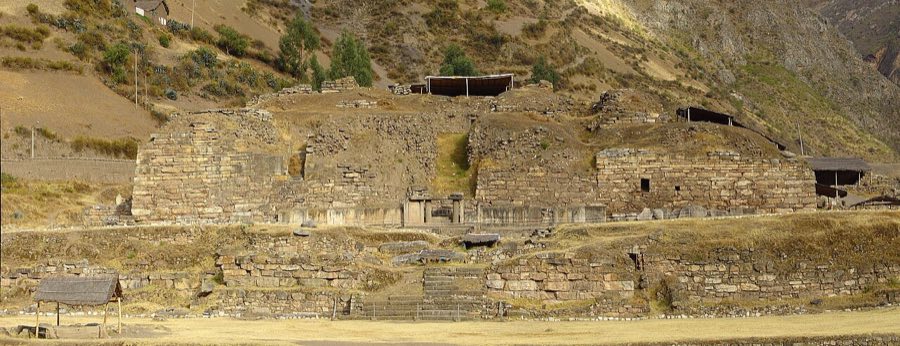
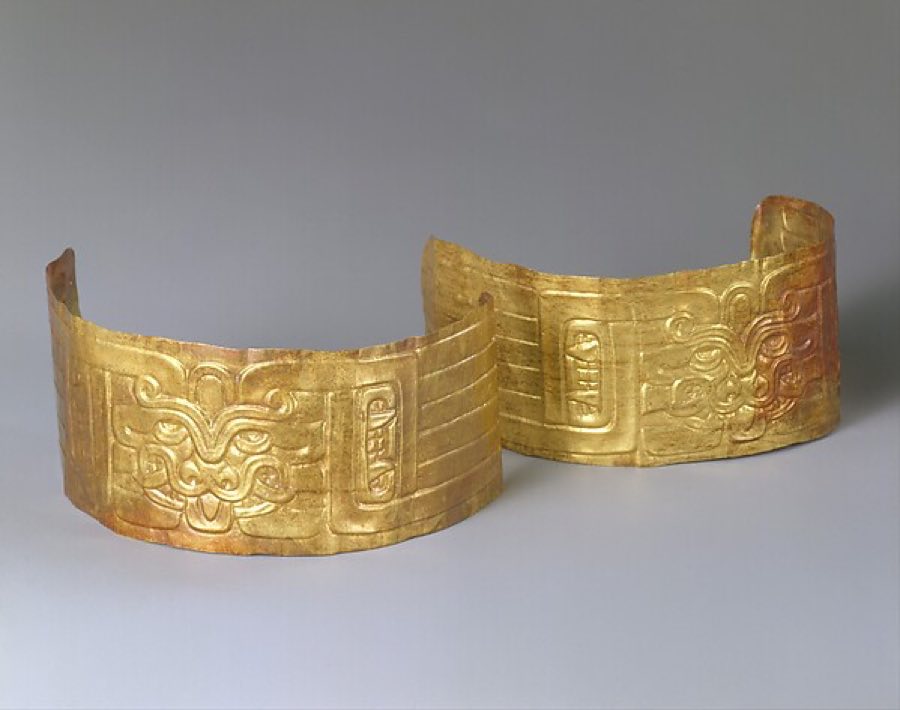
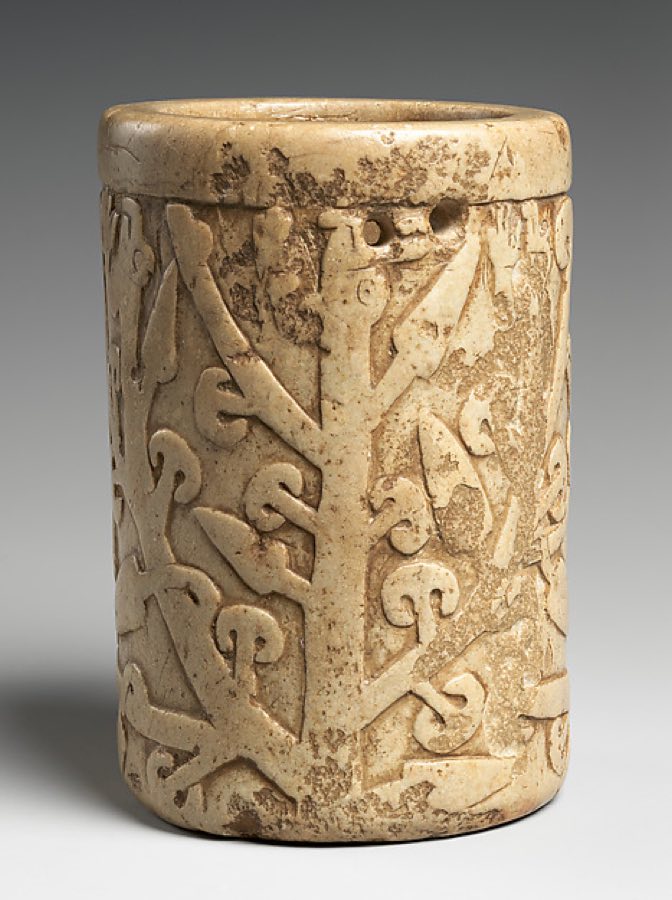
Chavín is the Early Horizon religious tradition of the central Andes, about 900 to 200 BCE, radiating from the temple at Chavín de Huántar in the Peruvian highlands. Its art fuses jaguar, serpent, eagle and human features in dense, contour-rivalry compositions. Collectors hold stirrup-spout bottles in dark burnished ware, carved bone and shell, gold ornaments from the related Cupisnique coast and, rarely, textiles; Chavín-associated gold and stone sculpture are museum objects.
| Dates | 900–200 BCE |
|---|---|
| Period | Early Horizon |
| Region | South America — Andes |
| Areas | Northern and Central Peru |
| Typical objects | Bottle, Vessel, Pendant |
| Typical materials | Terracotta, Gold, Marine shell |
Identification
Chavín ceramics are monochrome black, grey or brown, highly burnished with stamped circles, rocker stamping and modelled feline heads; stirrup spouts are thick with a flanged lip. Stone work is carved in low relief with interlocking fangs and eyes, and gold is hammered sheet with repoussé designs. Strombus trumpets and Spondylus shell appear as ritual objects.
Legality
Peru declares all pre-Hispanic objects national patrimony and forbids export, and the United States restricts import of Peruvian archaeological material under a CPIA agreement in force since 1997. Only objects with documented histories before that date are legitimately traded.
Reproductions and fakes
Chavín-style bottles are faked in northern Peru alongside Cupisnique wares, with modern burnishing and stamped designs on new clay; thermoluminescence is the standard test. Gold 'Chavín' crowns and plaques are also forged in low-karat gold with electrochemically applied patina.
Photographs
Elsewhere
- met: 319265
- Wikidata: Q732554
- Wikipedia: Chavin de Huantar
Cite this article
Stratum Study. "Chavín" (Culture). Stratum Study pack 2026.09, as of 2026-09-21. https://stratum.black/study/cultures/chavin. Accessed 2026-09-21.
@misc{stratum-chavin,
  title        = {Chavín},
  author       = {{Stratum Study}},
  howpublished = {\url{https://stratum.black/study/cultures/chavin}},
  year         = {2026},
  note         = {Culture article, Stratum Study pack 2026.09, as of 2026-09-21; sources: stratum, wikidata, commons, met. Accessed 2026-09-21.}
}
Citations carry the pack version and the article's as-of date so they resolve to the same text later. The facts themselves belong to the sources listed below; cite those for the science.