
Site · Peru
Ollantaytambo
Inca, 1440–1540 CE
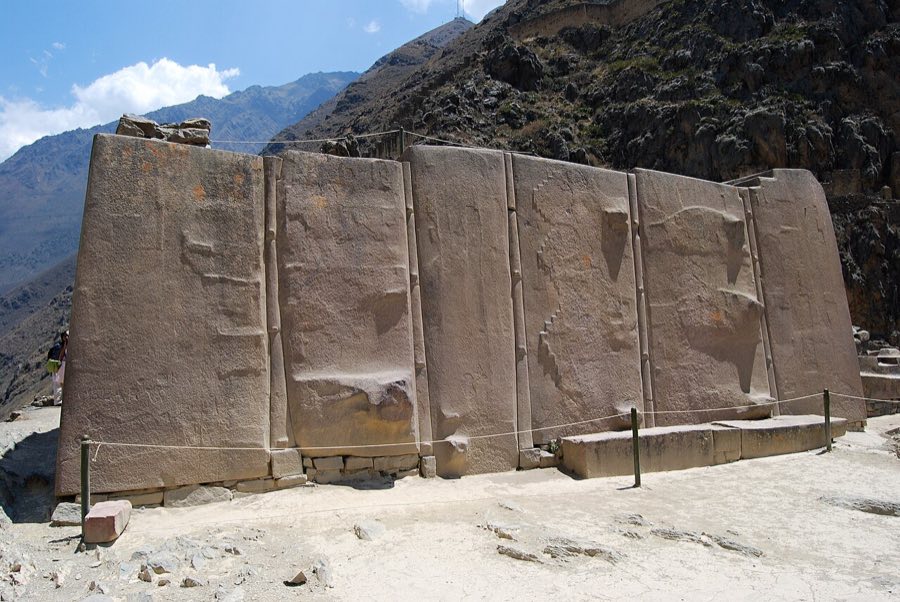
Ollantaytambo was the royal estate of the emperor Pachacuti in the mid fifteenth century and in 1537 the scene of Manco Inca's successful defence against a Spanish assault. The Temple of the Sun's six monoliths and the steep terraces were still under construction at the conquest, and the living town below is the best-preserved example of Inca urban planning. It is the starting point of the Inca Trail and the rail line to Machu Picchu.
| Country | Peru |
|---|---|
| Dates | 1440–1540 CE |
| Status | Archaeological Park within the Sacred Valley; visited on the Cusco Boleto Turístico |
| Managed by | Ministerio de Cultura del Perú, Dirección Desconcentrada de Cultura de Cusco |
| Access | Open daily; the terraces and Temple of the Sun are entered from the town plaza with the Cusco tourist ticket, and the town itself preserves its Inca street grid. |
| Coordinates | -13.258, -72.263 (public site) |
What was found
Investigation of the temple hill, storehouses and the quarry across the valley documented unfinished pink rhyolite monoliths, the ramp used to haul them, Inca polychrome pottery and the water channels and fountains of the royal estate.
Rules
Nothing may be collected or removed; Peru's Law 28296 on the National Cultural Heritage makes all pre-Columbian material national property and prohibits export. This article is for study and context only and is not a collecting locality.
Elsewhere
Cite this article
Stratum Strata. "Ollantaytambo" (Site). Stratum Strata pack 2026.09, as of 2026-09-21. https://stratum.black/strata/sites/ollantaytambo. Accessed 2026-09-21.
@misc{stratum-ollantaytambo,
  title        = {Ollantaytambo},
  author       = {{Stratum Strata}},
  howpublished = {\url{https://stratum.black/strata/sites/ollantaytambo}},
  year         = {2026},
  note         = {Site article, Stratum Strata pack 2026.09, as of 2026-09-21; sources: stratum, wikidata, commons. Accessed 2026-09-21.}
}
Citations carry the pack version and the article's as-of date so they resolve to the same text later. The facts themselves belong to the sources listed below; cite those for the science.