
Material · lithic
Greenstone
North America — Southeast, North America — Eastern Woodlands, Mesoamerica, Europe — Western & Central
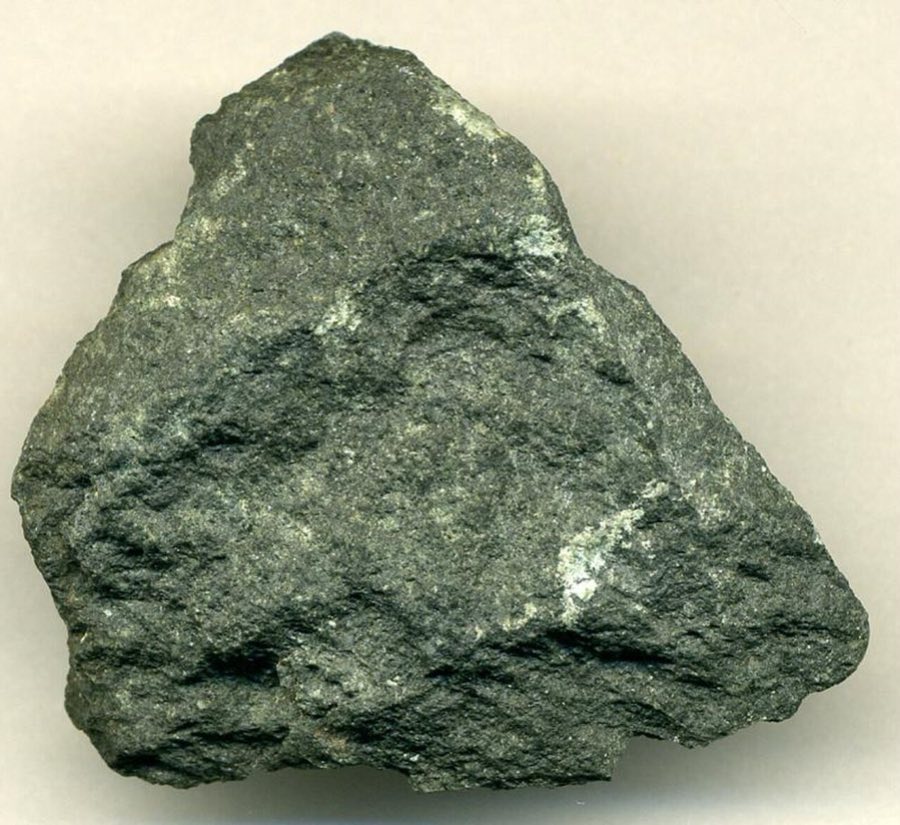
Greenstone is the field term for green metamorphic rocks such as metabasalt, chlorite schist and greenschist used for polished celts, axes and ornaments in the Southeast, Ohio Valley, Mesoamerica and Neolithic Europe. Mississippian greenstone celts and Olmec serpentine are among its products. It takes a high polish.
| Kind | lithic |
|---|---|
| Regions | North America — Southeast, North America — Eastern Woodlands, Mesoamerica, Europe — Western & Central |
Sources
Sources include the Hillabee greenstone of Alabama used for Moundville celts, the Piedmont of the Carolinas and Georgia, the Great Lakes, the Guerrero and Motagua belts of Mesoamerica and the Alpine greenstone of Neolithic Europe. Because the term covers several rock types, petrographic thin sections are needed to match a celt to a specific quarry.
Identification
Greenstone is dark to olive green, fine-grained and sometimes schistose, with a dull to waxy lustre and a smooth, hard polish when ground. It is heavier than slate and duller than jade. Weathering produces a lighter green or brown skin.
Substitutes and fakes
Greenstone celts are reproduced on power grinders, and serpentine 'Olmec' objects are a forgery staple. Genuine celts show pecking under the polish and bit wear.
Elsewhere
- Wikidata: Q5604583
- Wikipedia: greenstone
Cite this article
Stratum Strata. "Greenstone" (Material). Stratum Strata pack 2026.09, as of 2026-09-21. https://stratum.black/strata/materials/greenstone. Accessed 2026-09-21.
@misc{stratum-greenstone,
  title        = {Greenstone},
  author       = {{Stratum Strata}},
  howpublished = {\url{https://stratum.black/strata/materials/greenstone}},
  year         = {2026},
  note         = {Material article, Stratum Strata pack 2026.09, as of 2026-09-21; sources: stratum, wikidata, commons. Accessed 2026-09-21.}
}
Citations carry the pack version and the article's as-of date so they resolve to the same text later. The facts themselves belong to the sources listed below; cite those for the science.