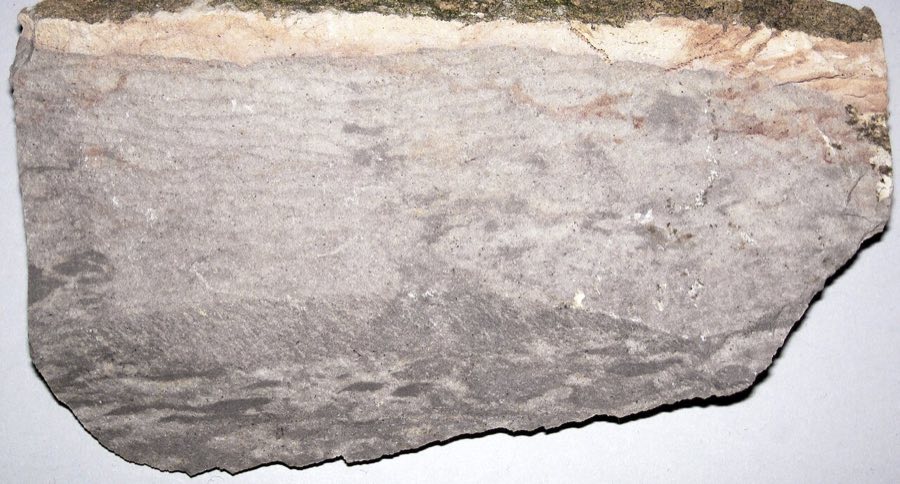

Material · lithic
Dover chert
North America — Southeast
Dover chert is the tan to brown chert of Stewart County, Tennessee, quarried in enormous quantities by Mississippian peoples for hoes, celts and the ceremonial swords and maces of the Southeastern Ceremonial Complex. Dover swords over half a metre long are among the finest flintwork in North America. The quarries are a National Historic Landmark.
| Kind | lithic |
|---|---|
| Regions | North America — Southeast |
Sources
The Fort Payne formation nodules are quarried around Dover in Stewart County, Tennessee, on the lower Cumberland River, with hundreds of quarry pits and workshop sites. Cobbles occur in Cumberland and Tennessee River gravels.
Identification
The chert is tan, brown or grey, often mottled, opaque with a matte to slightly waxy lustre and occasionally fossiliferous, and occurs in large nodules that allowed big bifaces. It is coarser than Flint Ridge. Weathering produces a lighter tan surface.
Substitutes and fakes
Mississippian swords and maces are reproduced in Dover chert by expert knappers and sold as art; such pieces later appear without labels. Genuine ceremonial pieces almost all came from burials and have museum-level provenance.
Cite this article
Stratum Strata. "Dover chert" (Material). Stratum Strata pack 2026.09, as of 2026-09-21. https://stratum.black/strata/materials/dover-chert. Accessed 2026-09-21.
@misc{stratum-dover-chert,
  title        = {Dover chert},
  author       = {{Stratum Strata}},
  howpublished = {\url{https://stratum.black/strata/materials/dover-chert}},
  year         = {2026},
  note         = {Material article, Stratum Strata pack 2026.09, as of 2026-09-21; sources: stratum, commons. Accessed 2026-09-21.}
}
Citations carry the pack version and the article's as-of date so they resolve to the same text later. The facts themselves belong to the sources listed below; cite those for the science.