Culture · Early Preclassic
Olmec
1500–400 BCE, Mesoamerica
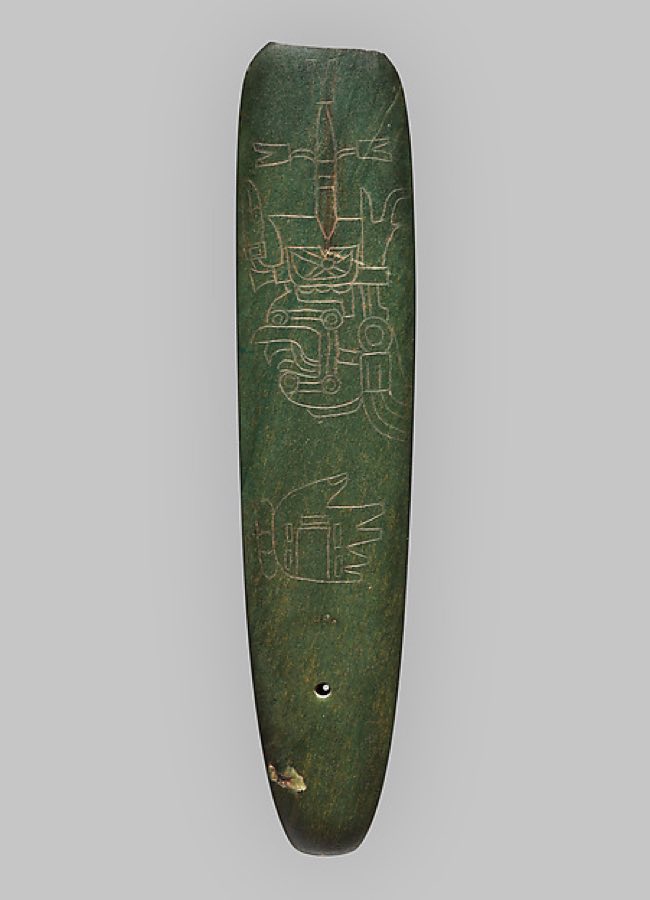
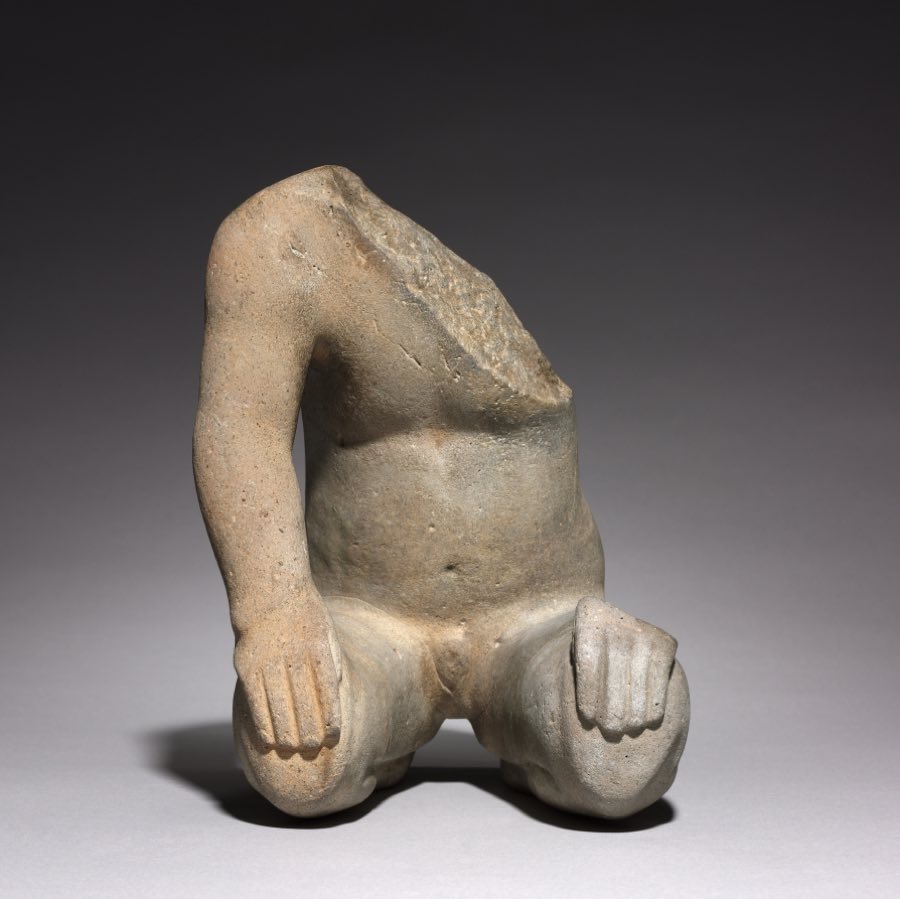
The Olmec of the Gulf Coast lowlands of Veracruz and Tabasco, roughly 1,500 to 400 BCE, are the earliest complex society in Mesoamerica, famous for colossal basalt heads at San Lorenzo and La Venta. Their style spread across Mexico and into Central America. Collectors hold hollow and solid clay figurines, jade and serpentine celts and masks, small jade figures and pendants, and blackware bowls, all of which are also the most intensely faked and legally restricted Mesoamerican material.
| Dates | 1500–400 BCE |
|---|---|
| Period | Early Preclassic |
| Region | Mesoamerica |
| Areas | Gulf Coast of Mexico, Veracruz, Tabasco |
| Typical objects | Figurine, Celt, Mask, Vessel |
| Typical materials | Jade, Terracotta, Basalt, Obsidian |
Identification
Olmec art shows the downturned mouth, cleft head and 'were-jaguar' features, with jadeite and serpentine polished to a wet lustre. Hollow baby-faced figurines in white kaolin clay, incised celts, spoon-shaped pendants and concave mirrors of iron ore are characteristic. Genuine jade shows drill-and-string cutting marks and a patina that follows the stone's structure.
Legality
All pre-Hispanic objects in Mexico are federal property under the 1972 monuments law and cannot be legally exported; the United States restricts import under the 1972 Pre-Columbian monumental sculpture statute and the CPIA bilateral agreements. Material can be traded only if it can be shown to have left Mexico before those laws, and provenance research is mandatory.
Reproductions and fakes
Olmec jade and ceramics have been forged for a century and a majority of pieces on the market are considered modern by specialists. Fakes are cut with rotary tools that leave circular striations, use jade from non-Motagua sources or dyed serpentine, and overdo the iconography. Thermoluminescence dating exposes modern ceramics, and old collection records are the only real defence.
Photographs
Elsewhere
- met: 310467
- Wikidata: Q135364
- Wikipedia: Olmecas
Cite this article
Stratum Strata. "Olmec" (Culture). Stratum Strata pack 2026.09, as of 2026-09-21. https://stratum.black/strata/cultures/olmec. Accessed 2026-09-21.
@misc{stratum-olmec,
  title        = {Olmec},
  author       = {{Stratum Strata}},
  howpublished = {\url{https://stratum.black/strata/cultures/olmec}},
  year         = {2026},
  note         = {Culture article, Stratum Strata pack 2026.09, as of 2026-09-21; sources: stratum, wikidata, met, cleveland. Accessed 2026-09-21.}
}
Citations carry the pack version and the article's as-of date so they resolve to the same text later. The facts themselves belong to the sources listed below; cite those for the science.