
Culture · Paleoindian
Folsom
10800–10200 BCE, North America — Great Plains
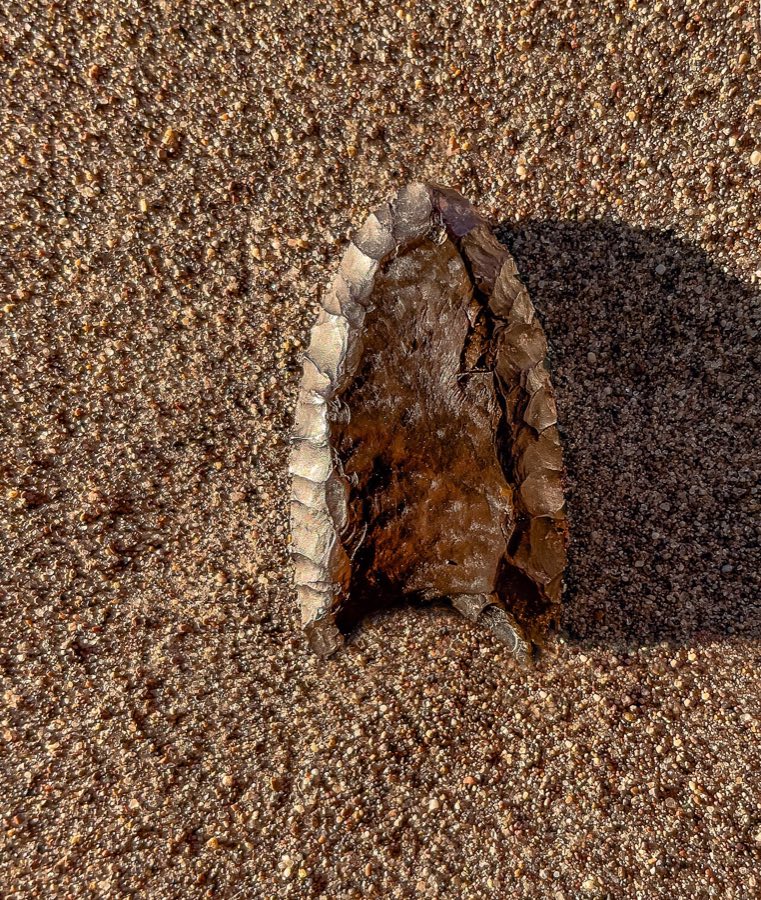
Folsom follows Clovis on the Great Plains and in the Southwest, from roughly 10,800 to 10,200 BCE, and is tied to hunters of the extinct giant bison. The type was defined at the Folsom site in New Mexico, where a point was found lodged between bison ribs in 1927 and settled the argument about Ice Age people in America. Collectors hold points, channel flakes struck from fluting, spurred end scrapers and ultra-thin preforms, most often from Texas, New Mexico, Colorado and Wyoming.
| Dates | 10800–10200 BCE |
|---|---|
| Period | Paleoindian |
| Region | North America — Great Plains |
| Areas | Great Plains, Southwest, Rocky Mountains |
| Typical objects | Projectile point, Scraper |
| Typical materials | Edwards chert, Alibates agatized dolomite, Knife River flint, Chert |
Identification
Folsom points are small, exceptionally thin and fluted nearly the full length of each face, leaving only a narrow margin of fine pressure retouch along the edges. The base is concave with small ears and the lower edges are ground. Channel flakes, the long thin flakes removed to create the flutes, are themselves collected and are diagnostic of the technique.
Legality
In the United States, prehistoric artifacts may be collected and sold only when they come from private land with the landowner's permission; removal from federal, tribal or most state land is prohibited under ARPA and state statutes. Funerary objects, human remains and sacred items are covered by NAGPRA and are not legitimately traded, and Canadian provinces treat archaeological finds as Crown or provincial property. Many classic Folsom localities are on ranch land in the Southern Plains where written landowner permission is the only defensible basis for a sale.
Reproductions and fakes
Reproductions exist but are harder to make than Clovis fakes because the full-length fluting on such a thin blank breaks most attempts. Fakes tend to be thicker than genuine points, have flutes that stop short or show hinge fractures, and lack the delicate marginal retouch. Genuine broken bases are sometimes reworked by modern hands into complete-looking points, so check for mismatched patina between the base and the blade.
Elsewhere
- Wikidata: Q1257815
- Wikipedia: Folsom tradition
Cite this article
Stratum Strata. "Folsom" (Culture). Stratum Strata pack 2026.09, as of 2026-09-21. https://stratum.black/strata/cultures/folsom. Accessed 2026-09-21.
@misc{stratum-folsom,
  title        = {Folsom},
  author       = {{Stratum Strata}},
  howpublished = {\url{https://stratum.black/strata/cultures/folsom}},
  year         = {2026},
  note         = {Culture article, Stratum Strata pack 2026.09, as of 2026-09-21; sources: stratum, wikidata, commons. Accessed 2026-09-21.}
}
Citations carry the pack version and the article's as-of date so they resolve to the same text later. The facts themselves belong to the sources listed below; cite those for the science.