
Culture · Old Babylonian
Babylonian
1900–539 BCE, Near East & Mesopotamia
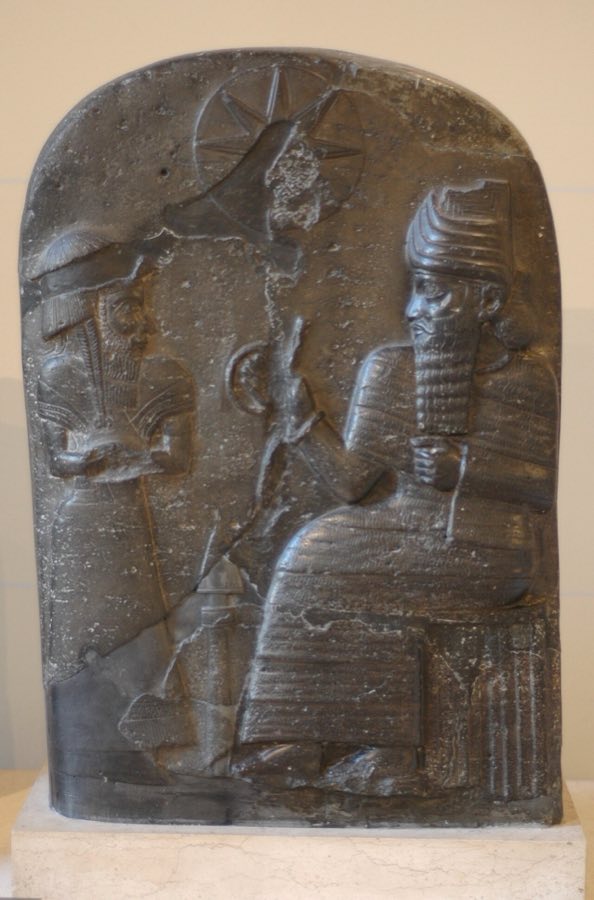
Babylonia is southern Mesopotamia under the rule of Babylon, from Hammurabi's Old Babylonian kingdom (about 1900–1595 BCE) through the Kassite dynasty and the Neo-Babylonian empire of Nebuchadnezzar II (626–539 BCE) that built the Ishtar Gate and destroyed Jerusalem. Old Babylonian material includes school and legal tablets in the hundreds of thousands, mould-made terracotta plaques of gods, musicians and couples, and hematite cylinder seals with presentation scenes; Neo-Babylonian material includes chalcedony stamp seals, glazed bricks and the archives of the great temples. Persia took Babylon in 539 BCE. Kassite kudurru boundary stones and the Middle Babylonian seals with long inscriptions belong to the intervening centuries.
| Dates | 1900–539 BCE |
|---|---|
| Period | Old Babylonian |
| Region | Near East & Mesopotamia |
| Areas | Southern Iraq (Babylon, Sippar, Nippur, Larsa, Ur, Uruk) |
| Typical objects | Tablet, Seal, Figurine, Amulet, Vessel, Bowl |
| Typical materials | Terracotta, Bronze, Faience, Glass |
Identification
Old Babylonian seals are hematite with a presentation scene and a cuneiform panel; Neo-Babylonian stamp seals are conoid chalcedony with a worshipper before the spade and stylus; Kassite seals have long prayer inscriptions and a single figure. Tablets are dated by script, shape and the year names or king's regnal years they carry. Terracotta plaques are moulded, flat-backed and often show the nude goddess or a god with a scimitar.
Legality
Iraq's Antiquities and Heritage Law No. 55 (2002) makes all antiquities state property with no private ownership or export; US import restrictions on Iraqi archaeological material (Emergency Protection Act 2004, CPIA designated list since 2008) bar entry of anything removed from Iraq after 1990. Cuneiform tablets are the most trafficked Iraqi object class, as the Hobby Lobby forfeiture of 2017 showed, and provenance documented before 1990 is essential.
Reproductions and fakes
Cuneiform tablets are forged in Iraq and Syria, often as casts from genuine tablets or with invented signs; genuine tablets are hand-formed with a consistent scribal impression and salt-crusted or fired fabric. Terracotta plaques are cast from originals in modern clay with a smooth, unweathered surface.
Elsewhere
- Wikidata: Q797930
Cite this article
Stratum Strata. "Babylonian" (Culture). Stratum Strata pack 2026.09, as of 2026-09-21. https://stratum.black/strata/cultures/babylonian. Accessed 2026-09-21.
@misc{stratum-babylonian,
  title        = {Babylonian},
  author       = {{Stratum Strata}},
  howpublished = {\url{https://stratum.black/strata/cultures/babylonian}},
  year         = {2026},
  note         = {Culture article, Stratum Strata pack 2026.09, as of 2026-09-21; sources: stratum, wikidata, commons. Accessed 2026-09-21.}
}
Citations carry the pack version and the article's as-of date so they resolve to the same text later. The facts themselves belong to the sources listed below; cite those for the science.