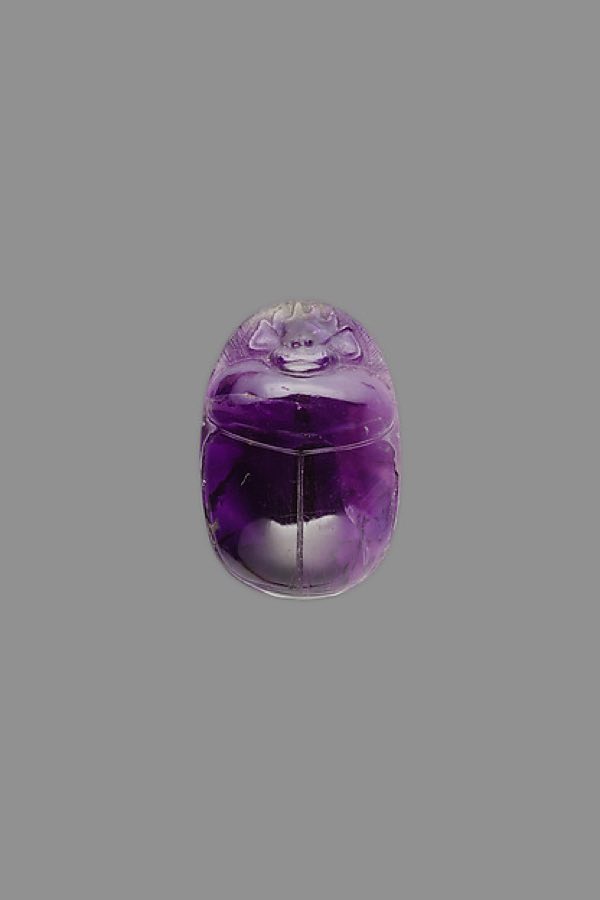
Amulet · Middle Kingdom
Scarab
2000–30 BCE, Dynastic Egypt
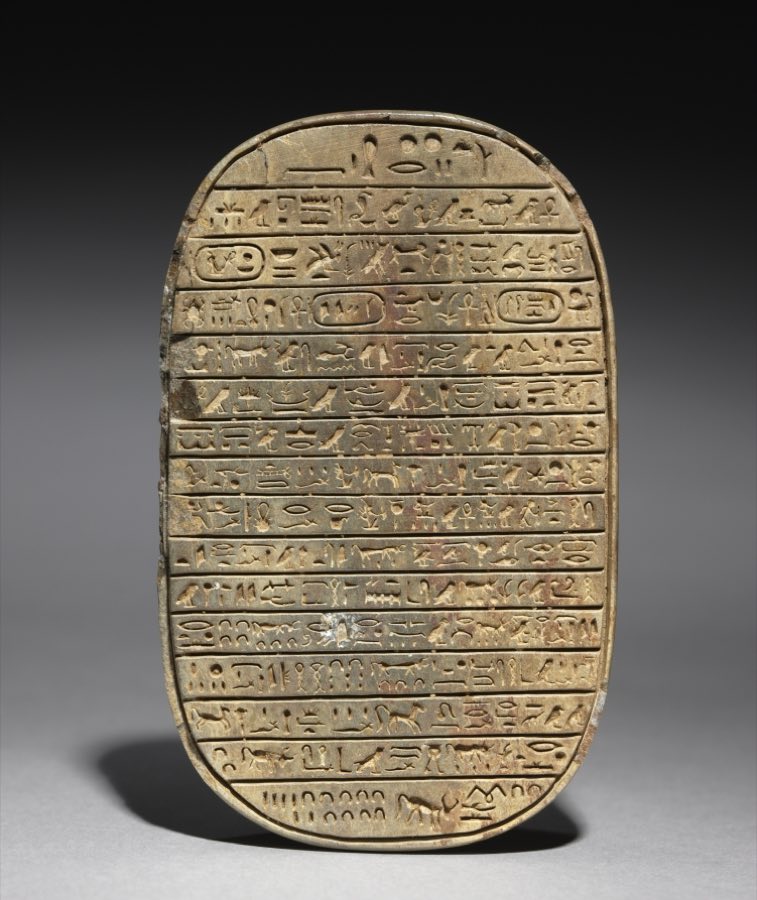
The scarab is the beetle-shaped amulet and seal of Egypt from the Middle Kingdom to the Roman period, about 2,000 to 30 BCE, and was also made and imitated across the Levant. The flat base carries a name, motto or design and the piece was strung on a ring or necklace. Heart scarabs are larger and inscribed with a spell.
| Object | Amulet |
|---|---|
| Dates | 2000–30 BCE |
| Period | Middle Kingdom |
| Cultures | Dynastic Egypt |
| Regions | Egypt & Nile Valley, Near East & Mesopotamia |
Diagnostic traits
Beetle-shaped steatite or faience amulet pierced lengthwise, with a flat base carved with a name, motto or design.
Identification
The beetle back with head, clypeus and elytra carved in steatite, faience or hard stone, a lengthwise perforation and a decorated base distinguish it from plaques and scaraboids; style of legs and back dates it. Royal-name scarabs are common for Thutmose III. Glazed steatite is the usual material.
Reproductions and fakes
Carved in bulk in Luxor and Cairo since the nineteenth century, often in steatite with fake glaze; genuine glaze is worn and the base cutting is crisp but weathered. Any scarab is guilty until proven innocent.
Photographs
Elsewhere
- met: 545088
Cite this article
Stratum Study. "Scarab" (Artifact type). Stratum Study pack 2026.09, as of 2026-09-21. https://stratum.black/study/types/scarab. Accessed 2026-09-21.
@misc{stratum-scarab,
  title        = {Scarab},
  author       = {{Stratum Study}},
  howpublished = {\url{https://stratum.black/study/types/scarab}},
  year         = {2026},
  note         = {Artifact type article, Stratum Study pack 2026.09, as of 2026-09-21; sources: stratum, met, cleveland. Accessed 2026-09-21.}
}
Citations carry the pack version and the article's as-of date so they resolve to the same text later. The facts themselves belong to the sources listed below; cite those for the science.