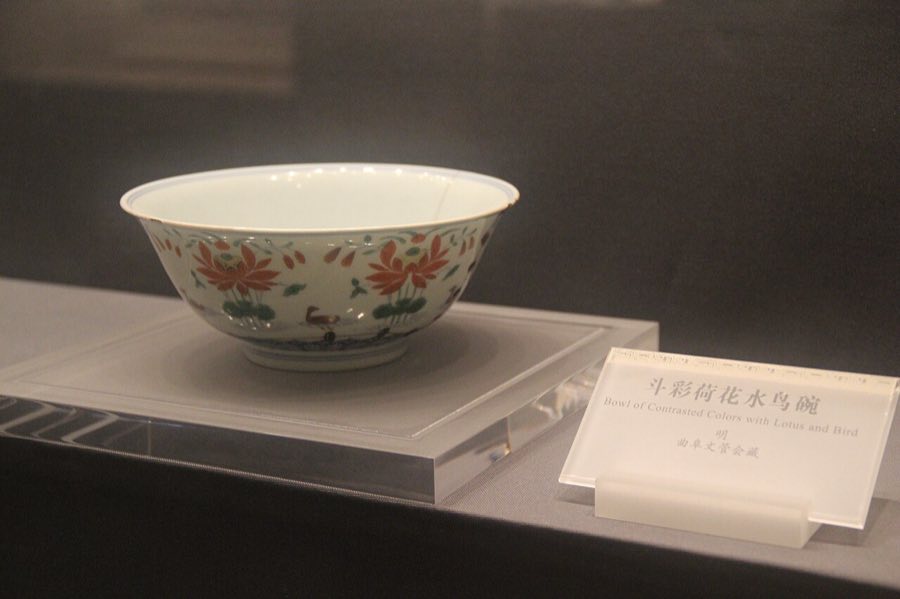

Bowl · Ming
Ming blue-and-white bowl
1368–1644 CE, Imperial China
Jingdezhen supplied blue-and-white porcelain to the court and to the export markets of Southeast Asia, the Islamic world and Europe throughout the Ming period, and bowls are the commonest surviving shape. Early Ming (Yongle, Xuande) bowls have a thick, heaped-and-piled cobalt; mid Ming (Chenghua, Hongzhi) are delicate and pale; late Ming Wanli and provincial 'kraak' and 'Swatow' wares are looser and cheaper. Dealers see far more sixteenth-century export bowls, often from shipwrecks, than imperial ones.
| Object | Bowl |
|---|---|
| Dates | 1368–1644 CE |
| Period | Ming |
| Cultures | Imperial China |
| Regions | East Asia |
Diagnostic traits
A wheel-thrown porcelain bowl with a white body and glaze, painted in cobalt blue under the glaze with dragons, lotus scrolls, figures or landscapes, and often a reign mark on the base.
Identification
Yuan blue-and-white is rarer and denser in decoration; Qing bowls are whiter, more even and have a perfectly finished foot rim; Japanese Arita copies have a greyer body and spur marks. Genuine Ming bowls show a slightly orange-tinged unglazed foot, an uneven glaze pooling to blue-green, and cobalt that sinks into the glaze rather than sitting on the surface. Reign marks are unreliable since later potters used them freely.
Reproductions and fakes
Jingdezhen still produces Ming-style bowls with apocryphal marks, and shipwreck cargoes are diluted with modern pieces; look for wear on the foot rim and interior, glaze pitting and the tone of the cobalt. A too-white body, a machine-even foot and sharp new glaze are warning signs.
Cite this article
Stratum Study. "Ming blue-and-white bowl" (Artifact type). Stratum Study pack 2026.09, as of 2026-09-21. https://stratum.black/study/types/ming-blue-and-white-bowl. Accessed 2026-09-21.
@misc{stratum-ming-blue-and-white-bowl,
  title        = {Ming blue-and-white bowl},
  author       = {{Stratum Study}},
  howpublished = {\url{https://stratum.black/study/types/ming-blue-and-white-bowl}},
  year         = {2026},
  note         = {Artifact type article, Stratum Study pack 2026.09, as of 2026-09-21; sources: stratum, commons. Accessed 2026-09-21.}
}
Citations carry the pack version and the article's as-of date so they resolve to the same text later. The facts themselves belong to the sources listed below; cite those for the science.