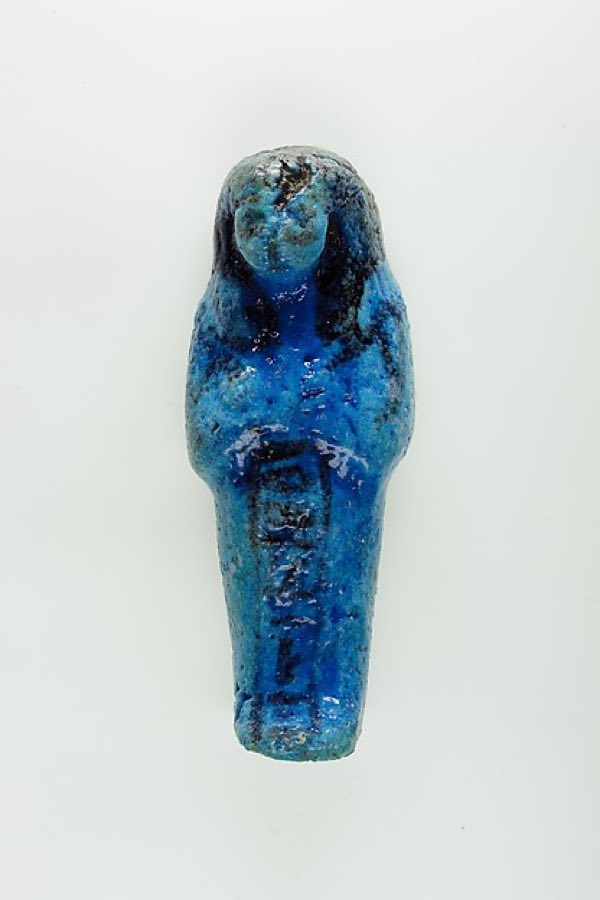
Ushabti · New Kingdom
Egyptian ushabti
2000–30 BCE, Dynastic Egypt
The Egyptian ushabti is the mummiform funerary figurine placed in tombs from the Middle Kingdom to the Ptolemaic period, about 2,000 to 30 BCE, to perform labour for the deceased in the afterlife. New Kingdom examples are inscribed with Chapter 6 of the Book of the Dead; Late Period faience examples come in sets of 401. Ushabtis are the most common Egyptian antiquity in collections.
| Object | Ushabti |
|---|---|
| Dates | 2000–30 BCE |
| Period | New Kingdom |
| Cultures | Dynastic Egypt |
| Regions | Egypt & Nile Valley |
Diagnostic traits
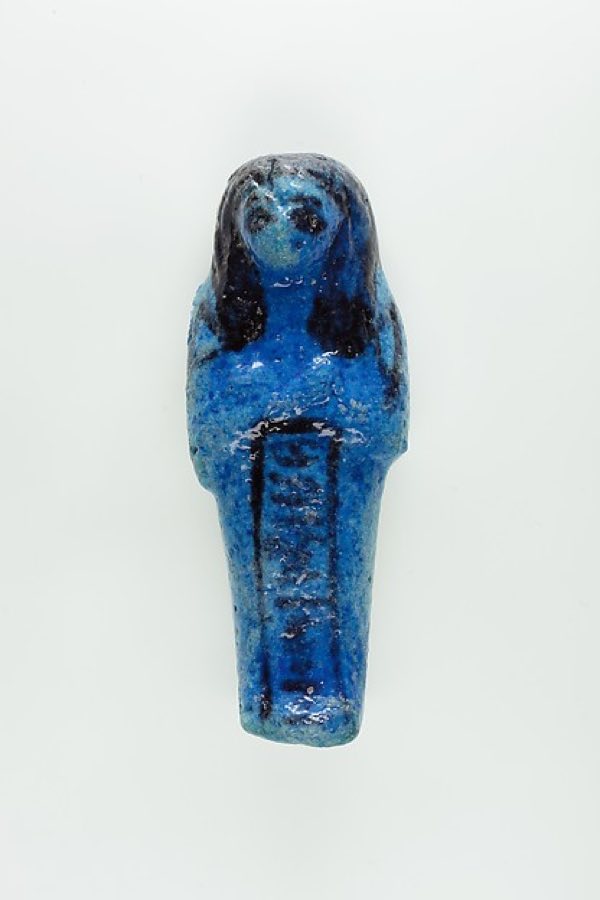
Mummiform funerary figurine, often faience, holding hoes and a seed bag, inscribed with a spell obliging it to work for the deceased.
Identification
Mummiform body with hoes and a seed bag, a back pillar on Late Period examples and an inscription column distinguish it; Middle Kingdom examples are wood or stone, New Kingdom painted wood or faience, Late Period blue-green faience with fine glaze. Overseers wear kilts. Size ranges from 5 to 30 cm.
Reproductions and fakes
Faked in huge numbers in modern faience, resin and stone; fakes have soft glaze, nonsensical hieroglyphs and a uniform brown stain. Genuine faience shows glaze crazing and wear on the high points.
Photographs
Elsewhere
- met: 625734
Cite this article
Stratum Study. "Egyptian ushabti" (Artifact type). Stratum Study pack 2026.09, as of 2026-09-21. https://stratum.black/study/types/egyptian-ushabti. Accessed 2026-09-21.
@misc{stratum-egyptian-ushabti,
  title        = {Egyptian ushabti},
  author       = {{Stratum Study}},
  howpublished = {\url{https://stratum.black/study/types/egyptian-ushabti}},
  year         = {2026},
  note         = {Artifact type article, Stratum Study pack 2026.09, as of 2026-09-21; sources: stratum, met. Accessed 2026-09-21.}
}
Citations carry the pack version and the article's as-of date so they resolve to the same text later. The facts themselves belong to the sources listed below; cite those for the science.