
Mammal
Aenocyon dirus
Dire wolf
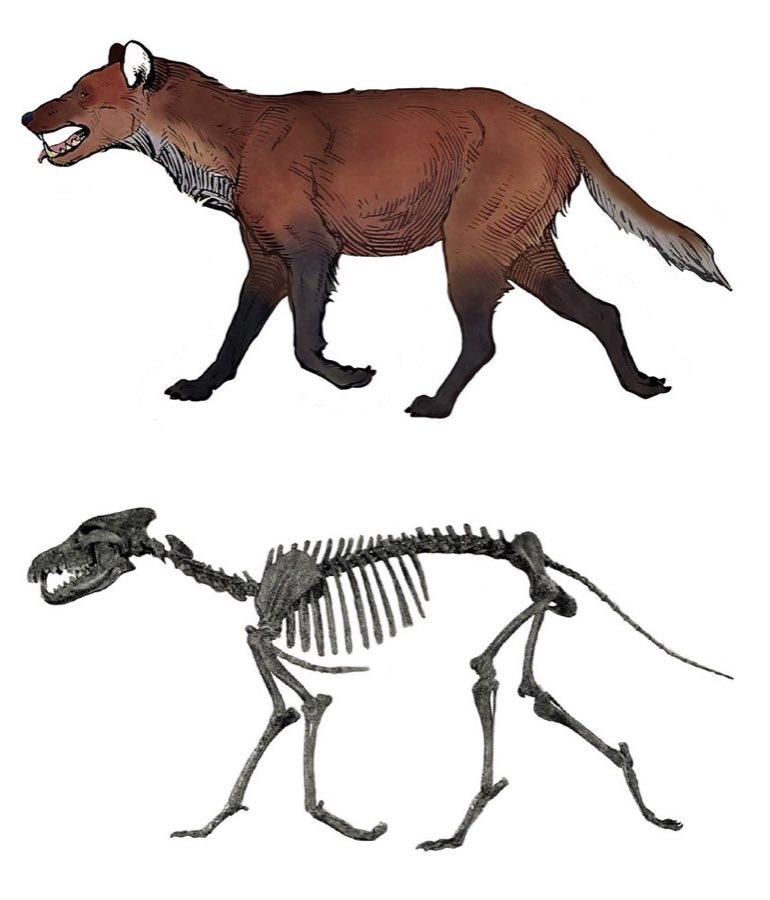
Aenocyon dirus, the dire wolf (Canis dirus until 2021), is the large Pleistocene canid of the Americas, known from thousands of La Brea individuals and from Florida and Texas river and cave deposits. Dire wolf teeth and jaws in trade come mostly from Florida rivers and are worth more than coyote or grey wolf; heavy, robust teeth with worn cusps are typical. Distinguishing dire wolf from grey wolf by isolated teeth is not always possible.
| Phylum | Chordata |
|---|---|
| Class | Mammalia |
| Order | Carnivora |
| Family | Canidae |
| Group | Mammal |
| Rank (PBDB) | species· Paleobiology Database |
| Author | (Leidy 1858)· Paleobiology Database |
| Common name (PBDB) | dire wolf· Paleobiology Database |
| Classification (PBDB) | Chordata › Mammalia › Carnivora › Canidae· Paleobiology Database |
| Range (PBDB) | 2.58–0.01 Ma· Paleobiology Database |
| PBDB occurrences | 86· Paleobiology Database |
Elsewhere
- GBIF: 5936116
- PBDB: 43789
- Wikidata: Q496689
- PBDB taxon page
- Wikipedia: dire wolf
- PBDB search: Aenocyon
Cite this article
Stratum Study. "Aenocyon dirus" (Taxon). Stratum Study pack 2026.09, as of 2026-09-19. https://stratum.black/study/taxa/aenocyon-dirus. Accessed 2026-09-20.
@misc{stratum-aenocyon-dirus,
  title        = {Aenocyon dirus},
  author       = {{Stratum Study}},
  howpublished = {\url{https://stratum.black/study/taxa/aenocyon-dirus}},
  year         = {2026},
  note         = {Taxon article, Stratum Study pack 2026.09, as of 2026-09-19; sources: stratum, pbdb, wikidata, commons. Accessed 2026-09-20.}
}
Citations carry the pack version and the article's as-of date so they resolve to the same text later. The facts themselves belong to the sources listed below; cite those for the science.