
Site · Guatemala
Tikal
Maya, 600 BCE–900 CE
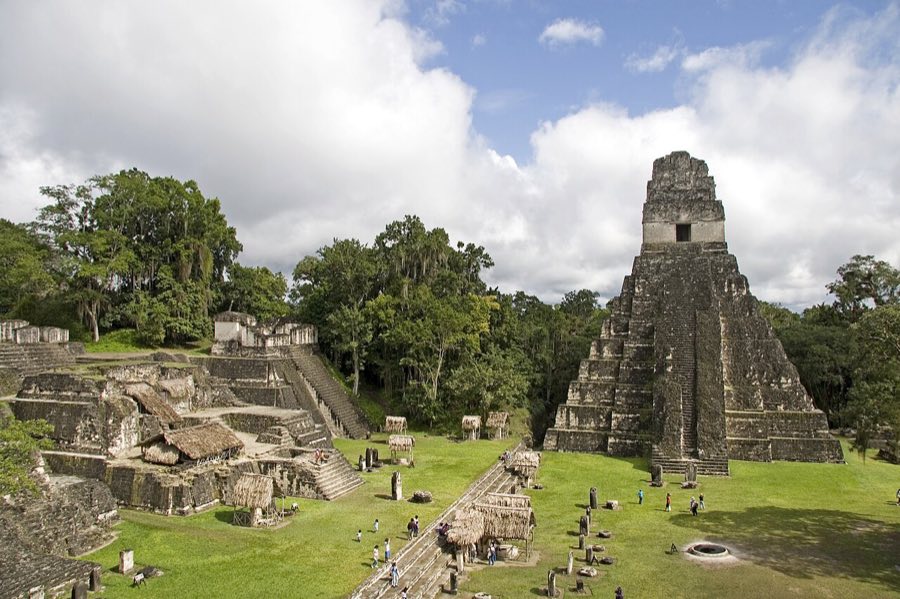
Tikal is the largest Classic Maya city of the southern lowlands, with six great temple pyramids rising over the Petén rainforest, occupied from about 600 BCE to its abandonment around 900. It is a World Heritage site for both culture and nature.
| Country | Guatemala |
|---|---|
| State / province | Petén |
| Dates | 600 BCE–900 CE |
| Status | National Park and UNESCO World Heritage Site |
| Managed by | Instituto de Antropología e Historia (IDAEH) with CONAP |
| Access | Open to the public with museums and guided tours |
| Coordinates | 17.222, -89.623 (public site) |
What was found
The University of Pennsylvania excavations recovered royal tombs with jade masks, polychrome vases, carved bones and stingray spines, stelae and altars with Long Count dates and the Temple I burial of Jasaw Chan K'awiil. Most of the finds are in the site museums and the national museum in Guatemala City.
Rules
Nothing may be collected, dug, moved or removed at Tikal; it is a protected archaeological site managed by Instituto de Antropología e Historia (IDAEH) with CONAP, and taking artifacts, stones or samples is an offence. Guatemalan law vests all pre-Hispanic cultural property in the state, and removal or export is a crime. This article is for study and context only and is not a collecting locality.
Elsewhere
Cite this article
Stratum Study. "Tikal" (Site). Stratum Study pack 2026.09, as of 2026-09-21. https://stratum.black/study/sites/tikal. Accessed 2026-09-21.
@misc{stratum-tikal,
  title        = {Tikal},
  author       = {{Stratum Study}},
  howpublished = {\url{https://stratum.black/study/sites/tikal}},
  year         = {2026},
  note         = {Site article, Stratum Study pack 2026.09, as of 2026-09-21; sources: stratum, wikidata, commons. Accessed 2026-09-21.}
}
Citations carry the pack version and the article's as-of date so they resolve to the same text later. The facts themselves belong to the sources listed below; cite those for the science.