
Site · Peru
Machu Picchu
Inca, 1450–1572 CE
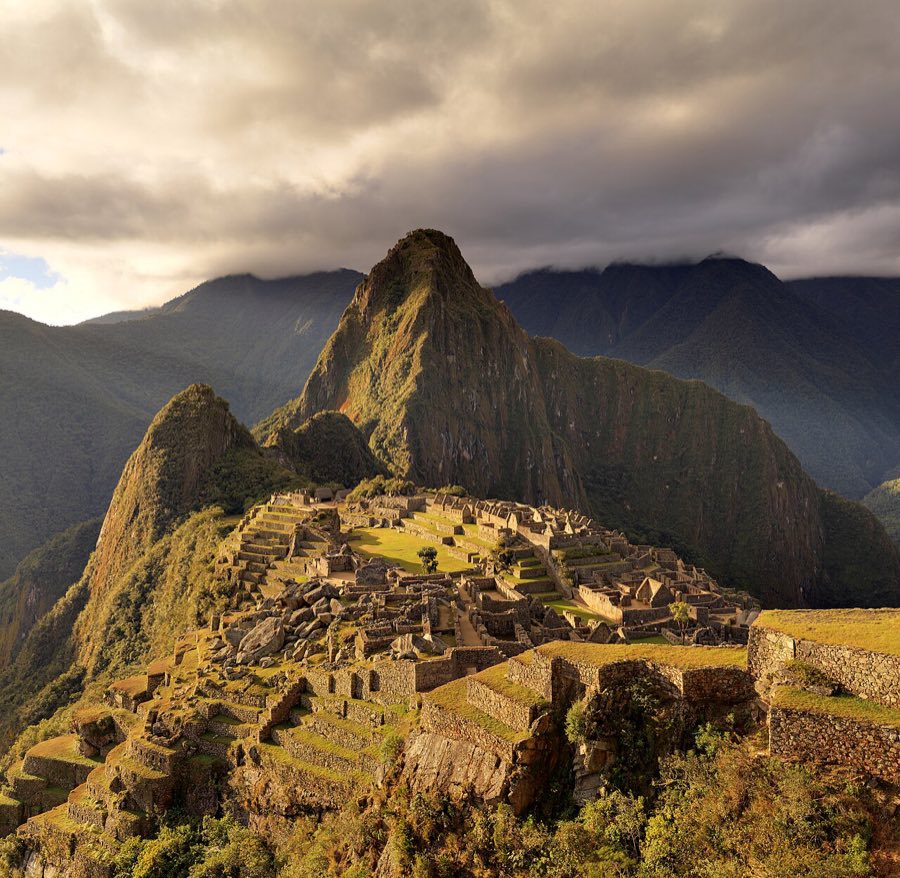
Machu Picchu is the Inca royal estate of Pachacuti on a ridge above the Urubamba, built around 1450 and abandoned after the conquest, brought to world attention by Hiram Bingham in 1911. It is the most famous site in South America.
| Country | Peru |
|---|---|
| State / province | Cusco |
| Dates | 1450–1572 CE |
| Status | Historic Sanctuary and UNESCO World Heritage Site |
| Managed by | Ministerio de Cultura del Perú with SERNANP |
| Access | Open to the public with timed tickets and fixed circuits |
| Coordinates | -13.163, -72.545 (public site) |
What was found
Bingham's 1912 excavations recovered Inca pottery including aryballos, bronze tupus and knives, silver and bronze figurines and over a hundred burials, most returned to Peru from Yale in 2011. The stonework, terraces and Intihuatana are the monuments.
Rules
Nothing may be collected, dug, moved or removed at Machu Picchu; it is a protected archaeological site managed by Ministerio de Cultura del Perú with SERNANP, and taking artifacts, stones or samples is an offence. Peruvian law declares all pre-Hispanic remains national patrimony and prohibits removal or export. This article is for study and context only and is not a collecting locality.
Elsewhere
Cite this article
Stratum Study. "Machu Picchu" (Site). Stratum Study pack 2026.09, as of 2026-09-21. https://stratum.black/study/sites/machu-picchu. Accessed 2026-09-21.
@misc{stratum-machu-picchu,
  title        = {Machu Picchu},
  author       = {{Stratum Study}},
  howpublished = {\url{https://stratum.black/study/sites/machu-picchu}},
  year         = {2026},
  note         = {Site article, Stratum Study pack 2026.09, as of 2026-09-21; sources: stratum, wikidata, commons. Accessed 2026-09-21.}
}
Citations carry the pack version and the article's as-of date so they resolve to the same text later. The facts themselves belong to the sources listed below; cite those for the science.