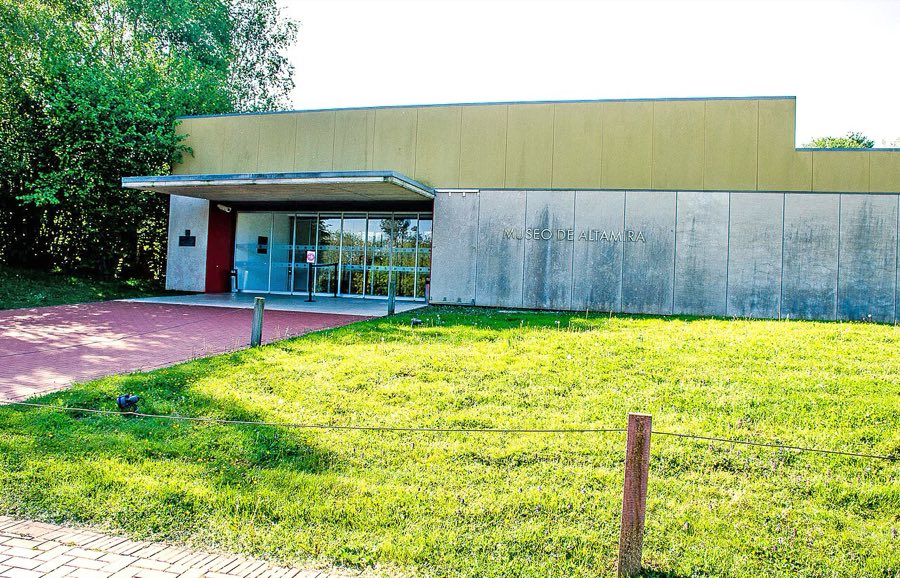

Site · Spain
Altamira
Magdalenian, Solutrean, 36000–13000 BCE
Altamira is the cave near Santillana del Mar whose painted bison ceiling, recognised in 1879, first proved the existence of Palaeolithic art. Paintings span the Aurignacian to the Magdalenian, with the polychromes about 14,000 to 15,000 years old.
| Country | Spain |
|---|---|
| State / province | Cantabria |
| Dates | 36000–13000 BCE |
| Status | Bien de Interés Cultural and UNESCO World Heritage Site; cave largely closed |
| Managed by | Museo Nacional y Centro de Investigación de Altamira |
| Access | The museum and Neocave replica are open; original cave access is by lottery for a few visitors weekly |
| Coordinates | 43.377, -4.123 (public site) |
What was found
The polychrome ceiling of bison, deer and horses is the famous find. Excavations of the entrance recovered Solutrean and Magdalenian flint tools, engraved shoulder blades, bone points and harpoons.
Rules
Nothing may be collected, dug, moved or removed at Altamira; it is a protected archaeological site managed by Museo Nacional y Centro de Investigación de Altamira, and taking artifacts, stones or samples is an offence. Spanish law vests all archaeological material in the state and the cave is closed to protect the paintings. This article is for study and context only and is not a collecting locality.
Elsewhere
Cite this article
Stratum Study. "Altamira" (Site). Stratum Study pack 2026.09, as of 2026-09-21. https://stratum.black/study/sites/altamira. Accessed 2026-09-21.
@misc{stratum-altamira,
  title        = {Altamira},
  author       = {{Stratum Study}},
  howpublished = {\url{https://stratum.black/study/sites/altamira}},
  year         = {2026},
  note         = {Site article, Stratum Study pack 2026.09, as of 2026-09-21; sources: stratum, commons. Accessed 2026-09-21.}
}
Citations carry the pack version and the article's as-of date so they resolve to the same text later. The facts themselves belong to the sources listed below; cite those for the science.