
Shell · Genus
Tridacna
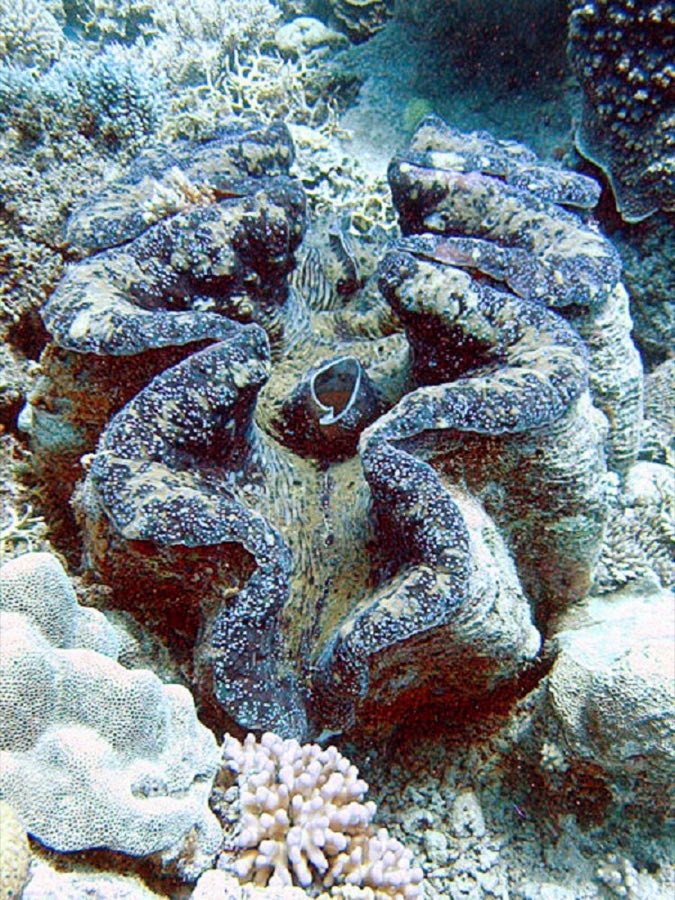
Giant clams
Tridacna includes the giant clam T. gigas, the largest living bivalve at over a metre, and the smaller T. squamosa, T. maxima and T. derasa with their fluted, scaly valves. Shells are sold as décor and, in the Pacific, carved as 'clam ivory' jewellery, all of which falls under CITES. Stratum flags Tridacna for the compliance gate; fossil Tridacna from Pleistocene reef terraces are exempt but should be provably fossil.
| Habitat | Shallow coral reefs, Indo-Pacific |
|---|---|
| Regions | Indo-Pacific, Red Sea, Great Barrier Reef, Philippines, Micronesia |
| Family | Cardiidae (Tridacninae) |
| Authority (WoRMS) | Bruguière, 1797· WoRMS / MolluscaBase |
| Status (WoRMS) | accepted· WoRMS / MolluscaBase |
| Extinct (WoRMS) | no· WoRMS / MolluscaBase |
| Classification (WoRMS) | Animalia › Mollusca › Bivalvia › Cardiida › Cardiidae· WoRMS / MolluscaBase |
CITES and protection
All Tridacna and Hippopus species are CITES Appendix II (since 1985): every shell crossing a border needs an export permit, and the USA proposed Endangered Species Act listing for several species in 2024. Large shells sold as garden ornaments and fonts are routinely seized when imported without permits.
Care (Byne's disease)
Giant clam shells are massive and stable but often carry boring organisms; clean and dry thoroughly.
Elsewhere
- WoRMS AphiaID: 205753
- Wikidata: Q2387255
- WoRMS / MolluscaBase record
- Wikipedia: Tridacna
- CITES Appendices
Cite this article
Stratum Study. "Tridacna" (Shell family). Stratum Study pack 2026.09, as of 2026-09-19. https://stratum.black/study/shells/tridacna. Accessed 2026-09-20.
@misc{stratum-tridacna,
  title        = {Tridacna},
  author       = {{Stratum Study}},
  howpublished = {\url{https://stratum.black/study/shells/tridacna}},
  year         = {2026},
  note         = {Shell family article, Stratum Study pack 2026.09, as of 2026-09-19; sources: stratum, worms, wikidata, commons. Accessed 2026-09-20.}
}
Citations carry the pack version and the article's as-of date so they resolve to the same text later. The facts themselves belong to the sources listed below; cite those for the science.