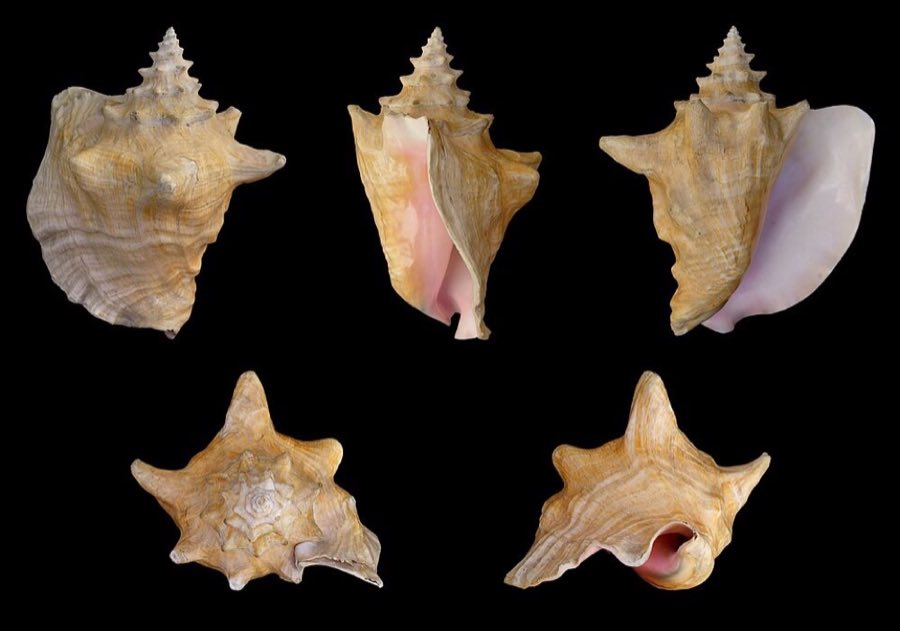

Shell · Species
Lobatus gigas
Queen conch
The queen conch, Lobatus (now Aliger) gigas, is the large pink-lipped conch of the Caribbean, harvested for meat and sold as a souvenir shell and lamp. Because it is CITES Appendix II, a specimen needs paperwork to be imported or exported, and Stratum's compliance gate flags it. Old shells in collections are legal to own but need documentation to sell across borders.
| Habitat | Seagrass beds and sand, 1–30 m, Caribbean and Gulf of Mexico |
|---|---|
| Regions | Caribbean, Bahamas, Florida, Gulf of Mexico |
| Family | Strombidae |
| Authority (WoRMS) | (Linnaeus, 1758)· WoRMS / MolluscaBase |
| Status (WoRMS) | accepted· WoRMS / MolluscaBase |
| Classification (WoRMS) | Animalia › Mollusca › Gastropoda › Littorinimorpha › Strombidae· WoRMS / MolluscaBase |
CITES and protection
CITES Appendix II since 1992: international trade in shells requires an export permit from the country of origin, and the USA lists it under the Endangered Species Act as threatened (2024). Florida prohibits harvest of live queen conch; shells picked up dead on beaches still need a CITES permit to cross borders. Tourists have been fined for carrying shells out of the Bahamas and Turks and Caicos.
Care (Byne's disease)
The thick shell is robust but the pink lip fades in sunlight; keep out of direct light.
Elsewhere
- WoRMS AphiaID: 1429769
- Wikidata: Q62603
- WoRMS / MolluscaBase record
- Wikipedia: Lobatus gigas
- CITES Appendices
Cite this article
Stratum Study. "Lobatus gigas" (Shell family). Stratum Study pack 2026.09, as of 2026-09-19. https://stratum.black/study/shells/lobatus-gigas. Accessed 2026-09-20.
@misc{stratum-lobatus-gigas,
  title        = {Lobatus gigas},
  author       = {{Stratum Study}},
  howpublished = {\url{https://stratum.black/study/shells/lobatus-gigas}},
  year         = {2026},
  note         = {Shell family article, Stratum Study pack 2026.09, as of 2026-09-19; sources: stratum, worms, wikidata, commons. Accessed 2026-09-20.}
}
Citations carry the pack version and the article's as-of date so they resolve to the same text later. The facts themselves belong to the sources listed below; cite those for the science.