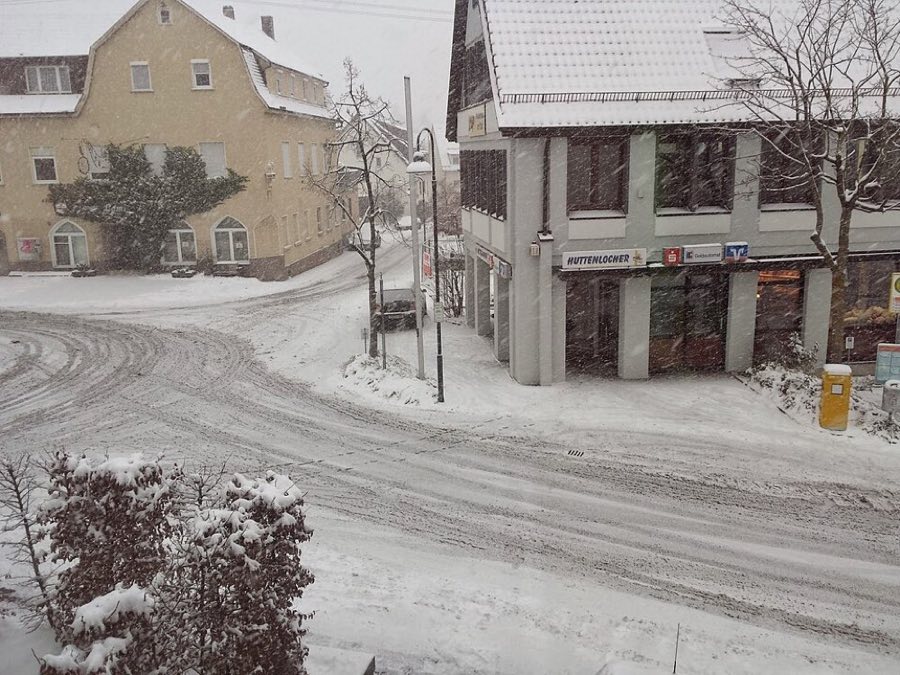

Locality · Pay-to-dig visitor quarries; museum
Holzmaden and Ohmden
Esslingen, Baden-Württemberg, Germany
Holzmaden and Ohmden southeast of Stuttgart are the home of the Posidonia Shale and the Urwelt-Museum Hauff, where the world's largest crinoid slab and rows of ichthyosaurs are displayed. The Kromer and Fischer quarries at Ohmden let visitors split the shale for Dactylioceras ammonites and belemnites, keeping the common finds. Professional preparation of Holzmaden vertebrates is a local craft and a Hauff or Kromer preparation history adds value.
| Country | Germany |
|---|---|
| State / province | Baden-Württemberg |
| County | Esslingen |
| Land manager / status | Private quarries (Kromer, Fischer) with public collecting areas; Urwelt-Museum Hauff |
| Access | Kromer and Fischer quarries at Ohmden open to collectors for a fee; Museum Hauff shows the Seirocrinus colony |
| Formations | Holzmaden (Posidonia Shale) |
| What is found | Dactylioceras, Harpoceras, belemnites, Pentacrinites, fish scales, rare ichthyosaur bone |
| Coordinates (public site) | 48.63, 9.52 |
Rules
Pay the quarry fee, split shale with your own tools, keep common finds; the quarries and Baden-Württemberg's heritage law reserve vertebrates and exceptional specimens, and the state museum in Stuttgart has first refusal. Do not enter the working faces.
Source: https://www.urweltmuseum.de/ (checked 2026-09-16).
Collecting rules
Elsewhere
Cite this article
Stratum Study. "Holzmaden and Ohmden" (Locality). Stratum Study pack 2026.09, as of 2026-09-19. https://stratum.black/study/localities/holzmaden-and-ohmden. Accessed 2026-09-20.
@misc{stratum-holzmaden-and-ohmden,
  title        = {Holzmaden and Ohmden},
  author       = {{Stratum Study}},
  howpublished = {\url{https://stratum.black/study/localities/holzmaden-and-ohmden}},
  year         = {2026},
  note         = {Locality article, Stratum Study pack 2026.09, as of 2026-09-19; sources: stratum, commons. Accessed 2026-09-20.}
}
Citations carry the pack version and the article's as-of date so they resolve to the same text later. The facts themselves belong to the sources listed below; cite those for the science.