
Formation · Cambrian
Burgess Shale
Miaolingian unit, British Columbia
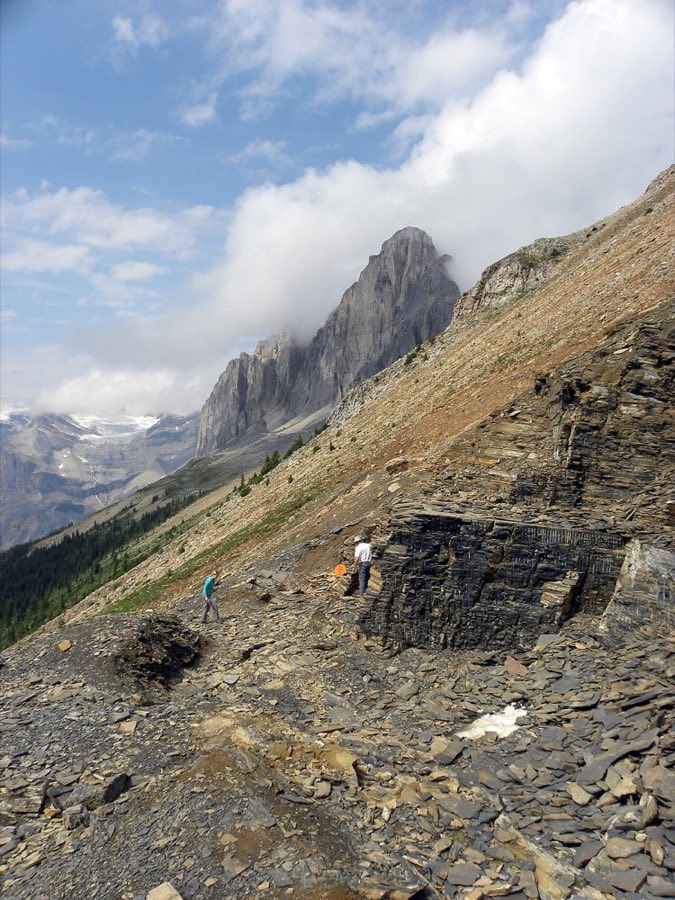
The Burgess Shale in the Canadian Rockies is the Cambrian Lagerstätte that defined our picture of the Cambrian explosion: Anomalocaris, Marrella, Opabinia, Hallucigenia and the trilobites Olenoides and Ogygopsis. It is included here for reference only: the sites are national park land and the material is not for sale. Collectors who want comparable Cambrian soft-bodied fossils look to the Wheeler and Marjum formations of Utah or the Chengjiang biota (which China also bans from export).
| Country | Canada |
|---|---|
| Region | British Columbia |
| Age | Wuliuan, Miaolingian |
| Age range | ~508–505 Ma |
| PBDB collections | 51 collections, 1645 occurrences· Paleobiology Database |
Collecting and legality
The Burgess Shale lies within Yoho and Kootenay National Parks and is a UNESCO World Heritage Site; collecting is prohibited and specimens cannot be legally sold. Anything offered as Burgess Shale is either pre-1920s material with impeccable history or, far more often, mislabelled Wheeler, Spence or Chinese material.
Lithology and setting
Fine-grained calcareous mudstone deposited at the base of the Cathedral Escarpment, with soft tissue preserved as carbon films.
Commonly recorded taxa (PBDB)
Genera most often recorded from this unit in the Paleobiology Database (first 200 occurrences): Diraphora (15), Ehmaniella (15), Hazelia (15), Liangshanella (14), Burgessia (12), Selkirkia (12), Wiwaxia (12), Canadaspis (11), Marrella (11), Pentagnostus (11), Morania (10), Scenella (10), Yohoia (10), Waptia (9), Haplophrentis (8).
Source: Paleobiology Database
Elsewhere
Cite this article
Stratum Study. "Burgess Shale" (Formation). Stratum Study pack 2026.09, as of 2026-09-19. https://stratum.black/study/formations/burgess-shale. Accessed 2026-09-20.
@misc{stratum-burgess-shale,
  title        = {Burgess Shale},
  author       = {{Stratum Study}},
  howpublished = {\url{https://stratum.black/study/formations/burgess-shale}},
  year         = {2026},
  note         = {Formation article, Stratum Study pack 2026.09, as of 2026-09-19; sources: stratum, pbdb, wikidata, commons. Accessed 2026-09-20.}
}
Citations carry the pack version and the article's as-of date so they resolve to the same text later. The facts themselves belong to the sources listed below; cite those for the science.