
Culture · Late Prehistoric
Thule
1000–1600 CE, North America — Arctic & Subarctic
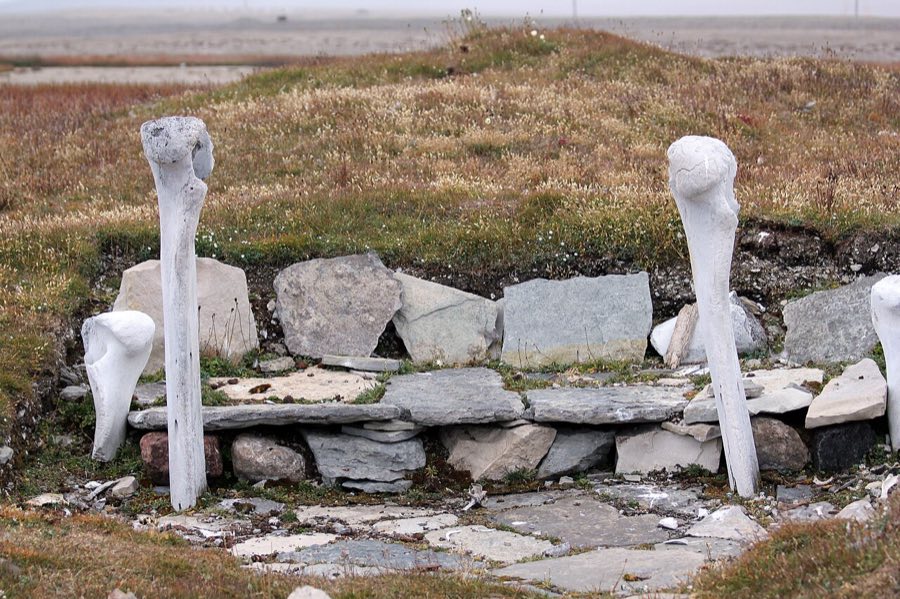
Thule is the ancestral Inuit culture that spread from the Bering Strait across the Canadian Arctic to Greenland between about 1,000 and 1,600 CE, replacing the earlier Dorset. Thule people hunted bowhead whales from skin boats, lived in winter houses of sod, stone and whale bone and used dog sleds. Collectors hold toggling harpoon heads, ulu blades, snow knives, needle cases and adze blades of ground slate, ivory and antler, most of which surface through old expedition or trading collections.
| Dates | 1000–1600 CE |
|---|---|
| Period | Late Prehistoric |
| Region | North America — Arctic & Subarctic |
| Areas | Alaska, Canadian Arctic, Greenland |
| Typical objects | Harpoon head, Ulu, Adze, Pendant |
| Typical materials | Bone and antler, Slate, Native copper |
Identification
Thule harpoon heads have an open or closed socket, a line hole and a slot for an end blade of slate or, late, iron; specific types map to time and region. Ground slate ulus and knives, whale-bone sled shoes, ivory snow goggles and drilled needle cases are diagnostic. Native copper was used in the Coronation Gulf area.
Legality
Archaeological material in Canada is provincial or territorial Crown property and Nunavut, the Northwest Territories and Greenland forbid export; in Alaska, finds from Native corporation or federal land are protected and only older collected pieces with documentation are traded. Walrus ivory sales are also constrained by the Marine Mammal Protection Act and CITES.
Reproductions and fakes
Modern Inuit carvers work in ivory and antler, and old pieces are sometimes 'improved' with new carving; genuine Thule ivory has a deep cream to brown patina and a dry, slightly porous surface. Harpoon heads are also carved new from old walrus ivory and sold as artifacts, so look for tool marks made by stone or iron rather than rotary bits.
Elsewhere
- Wikidata: Q72813
- Wikipedia: Thule people
Cite this article
Stratum Study. "Thule" (Culture). Stratum Study pack 2026.09, as of 2026-09-21. https://stratum.black/study/cultures/thule. Accessed 2026-09-21.
@misc{stratum-thule,
  title        = {Thule},
  author       = {{Stratum Study}},
  howpublished = {\url{https://stratum.black/study/cultures/thule}},
  year         = {2026},
  note         = {Culture article, Stratum Study pack 2026.09, as of 2026-09-21; sources: stratum, wikidata, commons. Accessed 2026-09-21.}
}
Citations carry the pack version and the article's as-of date so they resolve to the same text later. The facts themselves belong to the sources listed below; cite those for the science.