
Culture · Early Intermediate Period
Nazca
100 BCE–800 CE, South America — Andes
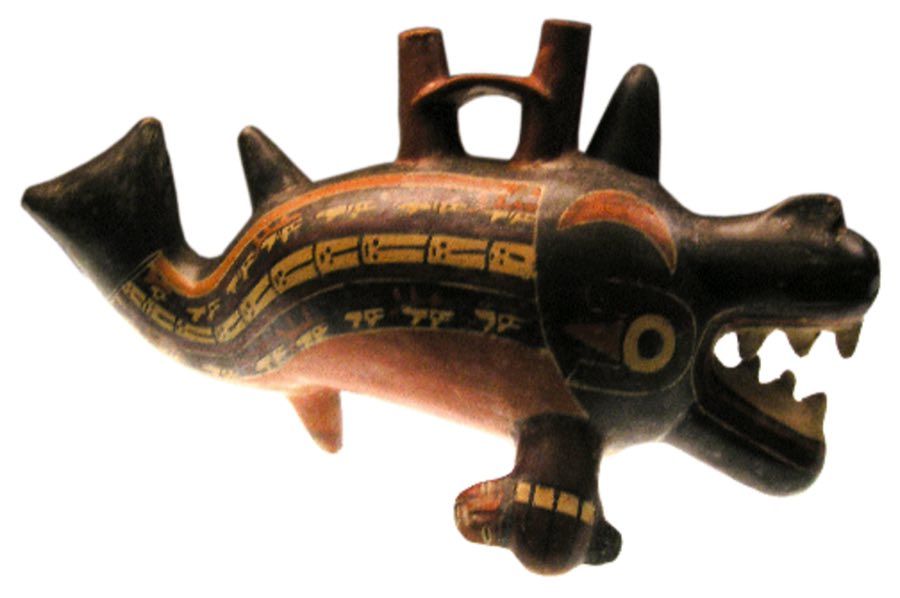
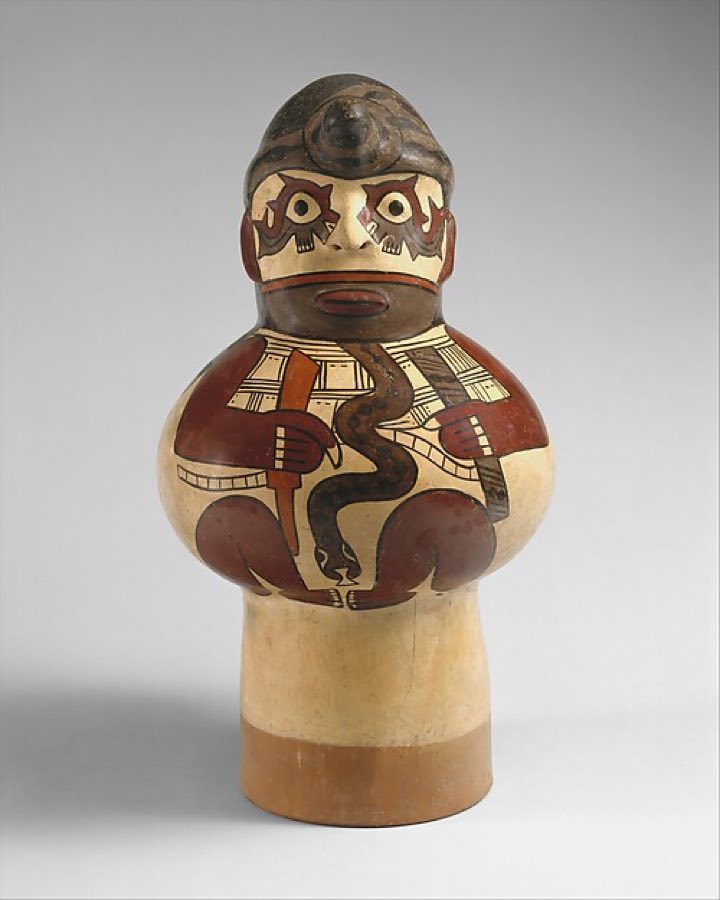
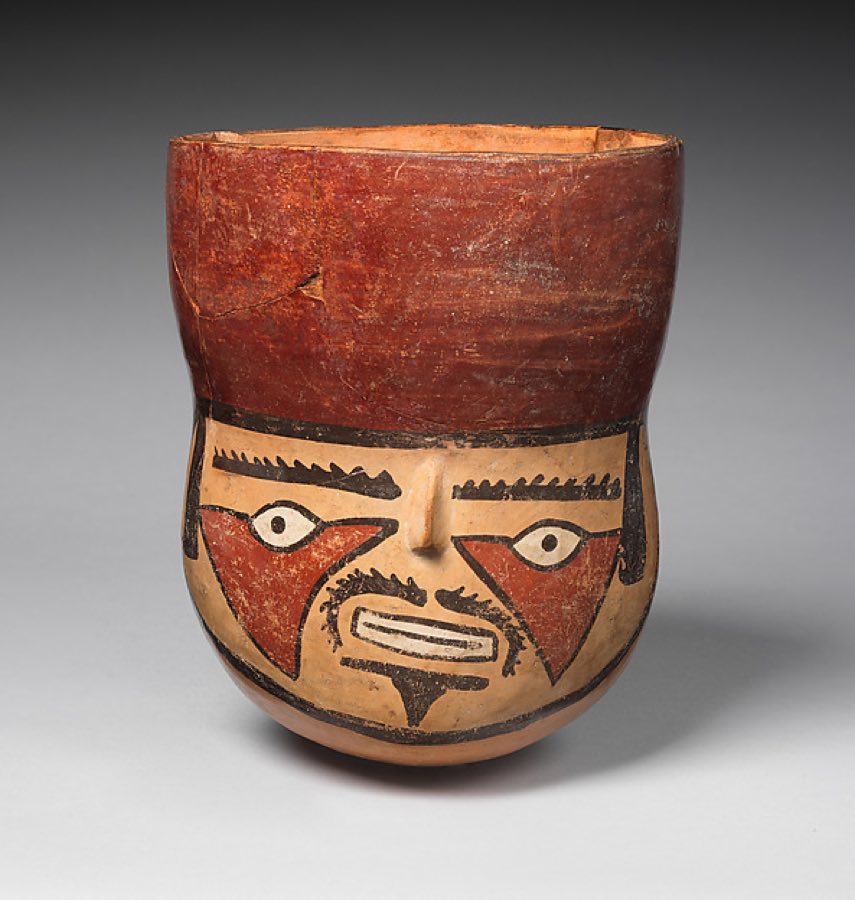
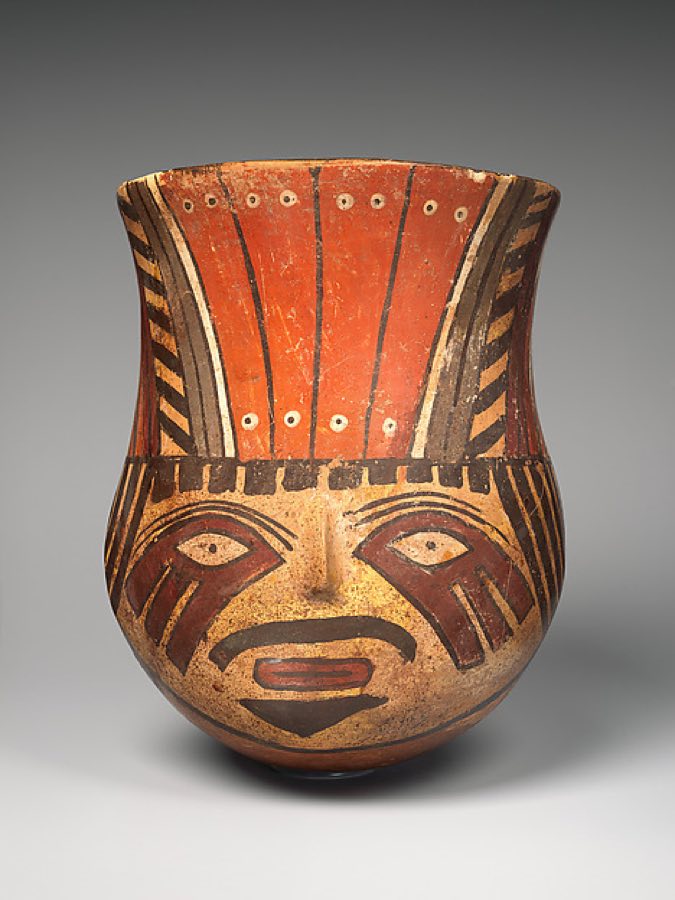
The Nazca people of the south coast of Peru, about 100 BCE to 800 CE, are known for the desert geoglyphs, the ceremonial centre of Cahuachi and polychrome pottery painted in up to a dozen slip colours. They also wove extraordinary textiles and constructed underground aqueducts still in use. Collectors hold polychrome bowls, double-spout-and-bridge bottles, effigy vessels, textile fragments and trophy-head vessels, with textiles and complete vessels most subject to restriction and forgery.
| Dates | 100 BCE–800 CE |
|---|---|
| Period | Early Intermediate Period |
| Region | South America — Andes |
| Areas | South Coast of Peru |
| Typical objects | Bowl, Vessel, Bottle |
| Typical materials | Terracotta |
Identification
Nazca pottery is thin, slip-painted before firing in red, orange, cream, black, purple and grey, then burnished; designs show the Anthropomorphic Mythical Being, killer whales, birds, fruits and trophy heads. Double-spout bottles with a bridge handle are the signature form. Later phases become abstract and proliferous.
Legality
Nazca material is Peruvian national patrimony, export is prohibited and the CPIA agreement restricts import into the United States. Textiles and vessels with no documented pre-1997 history are treated as illicit by museums and most auction houses.
Reproductions and fakes
Nazca polychrome is faked with modern slips and often shows too-bright colours, glossy surfaces and painting after firing; genuine slip is matte and integral with the body. Textiles are forged by re-weaving ancient yarn or by painting modern cotton. Restoration of Nazca vessels is routine and should be disclosed.
Photographs
Elsewhere
- met: 310563
- Wikidata: Q210570
- Wikipedia: Nazca culture
Cite this article
Stratum Study. "Nazca" (Culture). Stratum Study pack 2026.09, as of 2026-09-21. https://stratum.black/study/cultures/nazca. Accessed 2026-09-21.
@misc{stratum-nazca,
  title        = {Nazca},
  author       = {{Stratum Study}},
  howpublished = {\url{https://stratum.black/study/cultures/nazca}},
  year         = {2026},
  note         = {Culture article, Stratum Study pack 2026.09, as of 2026-09-21; sources: stratum, wikidata, commons, met. Accessed 2026-09-21.}
}
Citations carry the pack version and the article's as-of date so they resolve to the same text later. The facts themselves belong to the sources listed below; cite those for the science.