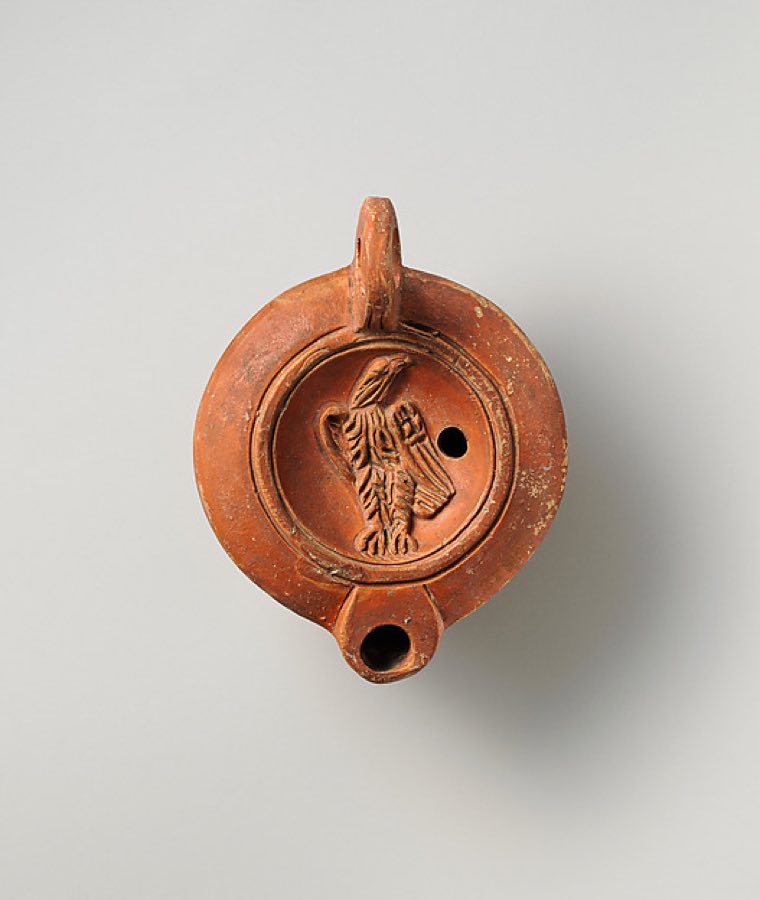
Oil lamp · Roman Empire
Roman oil lamp
100 BCE–400 CE, Roman
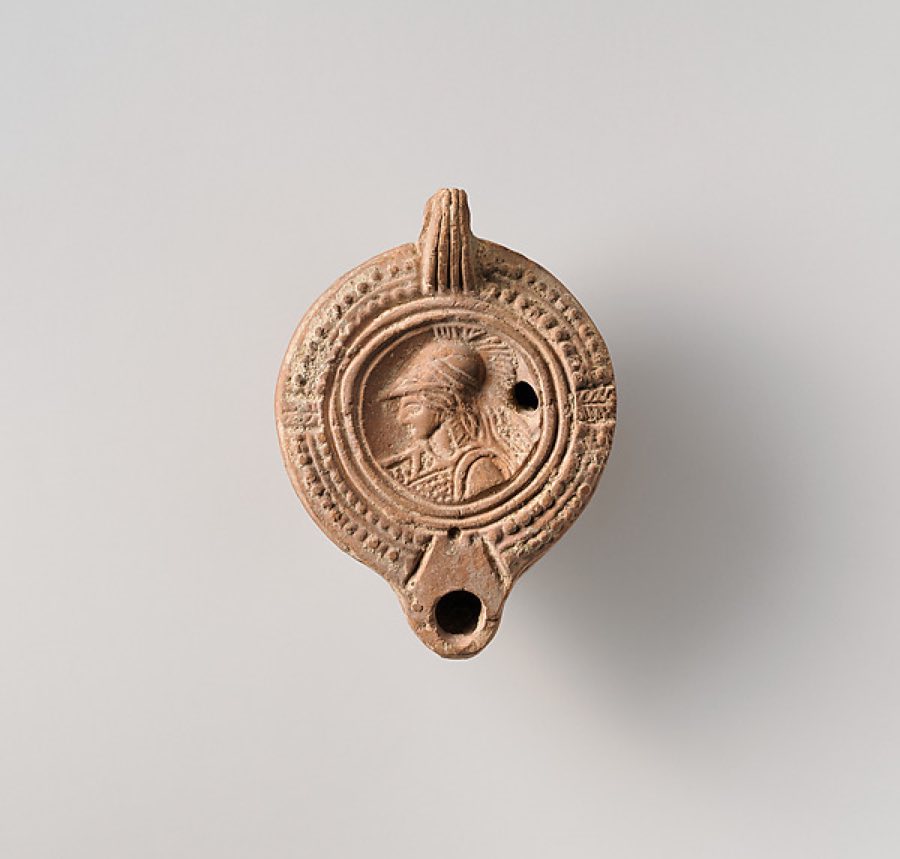
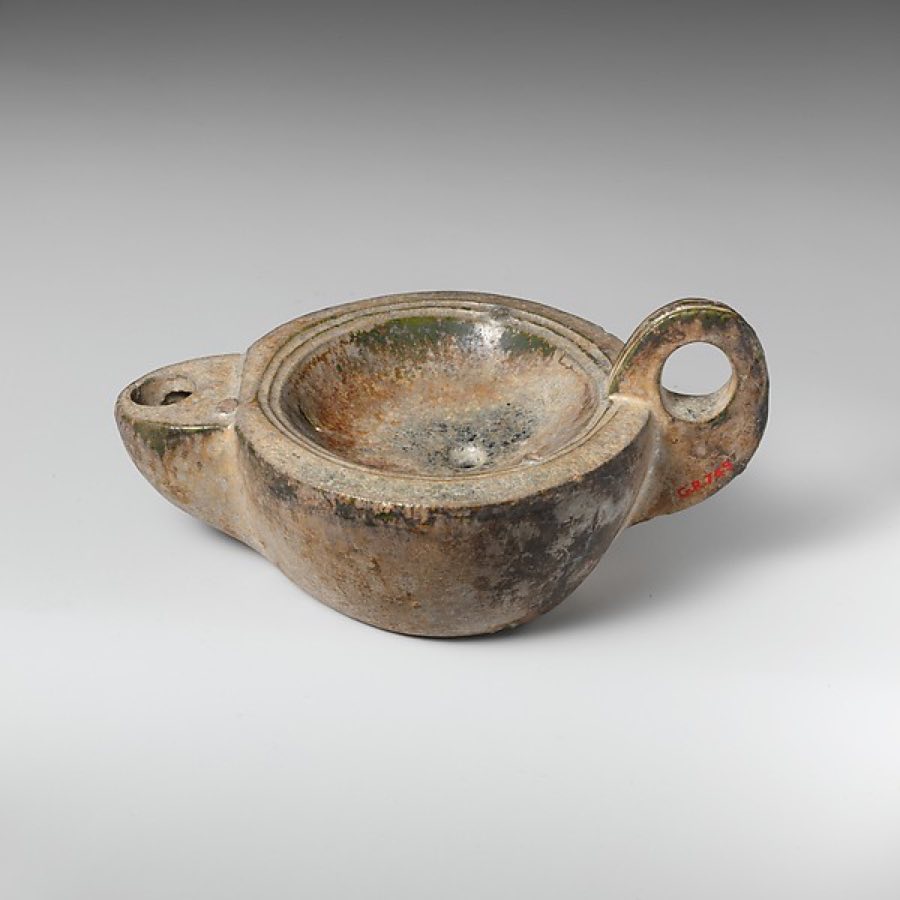
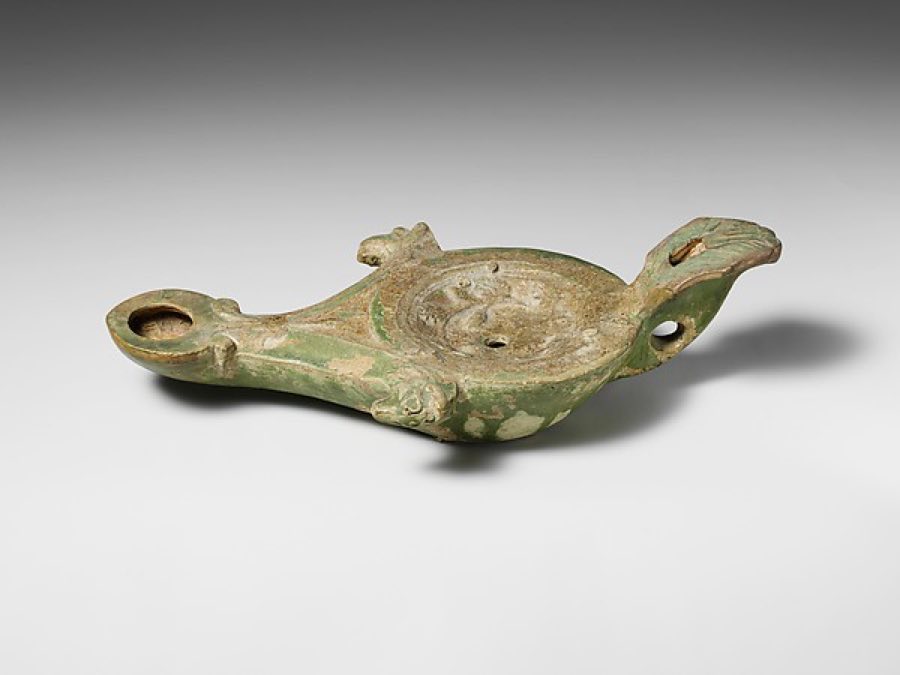
The Roman oil lamp is the mould-made terracotta lamp used across the empire from about 100 BCE to 400 CE, with a decorated discus, filling hole and one or more nozzles. Volute lamps, factory lamps (Firmalampen) with maker's stamps and round-nozzled Loeschcke types date sites. It is the commonest Roman object after coins.
| Object | Oil lamp |
|---|---|
| Dates | 100 BCE–400 CE |
| Period | Roman Empire |
| Cultures | Roman |
| Regions | Europe — Mediterranean, Europe — Western & Central, Egypt & Nile Valley, Near East & Mesopotamia |
Diagnostic traits
Mould-made terracotta lamp with a decorated discus, filling hole and one or more nozzles; volute, factory (Firmalampen) and round-nozzled forms.
Identification
Roman lamps are mould-made with a discus relief, unlike Greek wheel-made lamps and unlike later Byzantine and North African lamps with channel nozzles; Firmalampen have a plain discus and base stamp. Fabric and slip vary by region. Nozzle form and shoulder profile define Loeschcke types.
Reproductions and fakes
Made from ancient moulds and modern ones in Tunisia, Turkey and Bulgaria; fakes have sharp relief, soft fabric and a uniform stain. Genuine lamps show soot at the nozzle and wear on the base.
Photographs
Elsewhere
- met: 241625
- Wikidata: Q141352945
Cite this article
Stratum Strata. "Roman oil lamp" (Artifact type). Stratum Strata pack 2026.09, as of 2026-09-21. https://stratum.black/strata/types/roman-oil-lamp. Accessed 2026-09-21.
@misc{stratum-roman-oil-lamp,
  title        = {Roman oil lamp},
  author       = {{Stratum Strata}},
  howpublished = {\url{https://stratum.black/strata/types/roman-oil-lamp}},
  year         = {2026},
  note         = {Artifact type article, Stratum Strata pack 2026.09, as of 2026-09-21; sources: stratum, wikidata, met. Accessed 2026-09-21.}
}
Citations carry the pack version and the article's as-of date so they resolve to the same text later. The facts themselves belong to the sources listed below; cite those for the science.